Putin says Russia would target foreign troops deployed to Ukraine
Hardline remarks come as Ukrainian military faces disruptions to Elon Musk’s Starlink satellite service Vladimir Putin warned US negotiators that Russia would target any foreign troops deployed to Ukraine, in a series of hardline remarks that came as the Ukrainian military faced renewed disruptions to Elon Musk’s Starlink satellite service. During the talks at the Kremlin with the US envoys Jared Kushner and Steve Witkoff on Thursday, the Russian president refused to soften his territorial demands, insisting on full control over four Ukrainian regions that Moscow claims to have annexed.
Hardline remarks come as Ukrainian military faces disruptions to Elon Musk’s Starlink satellite service
Vladimir Putin warned US negotiators that Russia would target any foreign troops deployed to Ukraine, in a series of hardline remarks that came as the Ukrainian military faced renewed disruptions to Elon Musk’s Starlink satellite service.
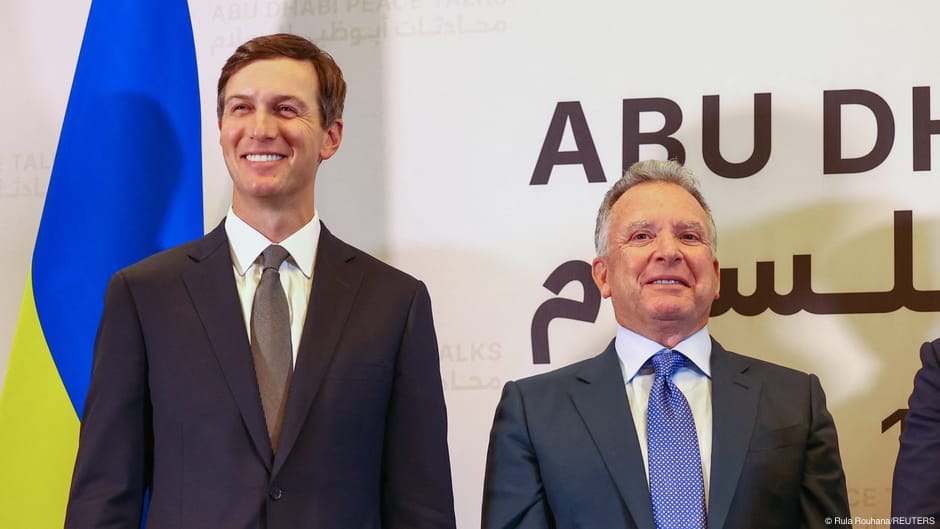
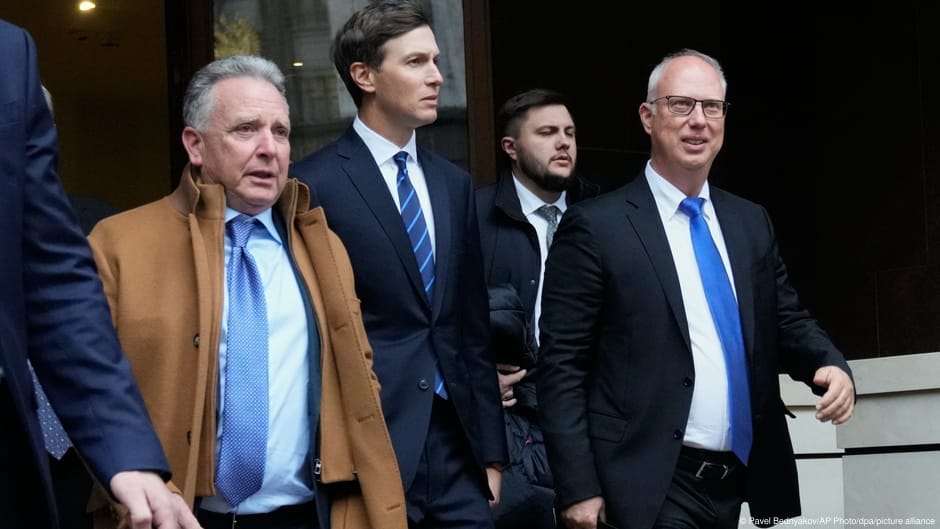
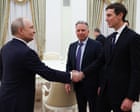
During the talks at the Kremlin with the US envoys Jared Kushner and Steve Witkoff on Thursday, the Russian president refused to soften his territorial demands, insisting on full control over four Ukrainian regions that Moscow claims to have annexed.
He also ruled out accepting the deployment of foreign peacekeeping troops in Ukraine, describing such a move as a “continuation of war”.
Putin’s comments appeared to severely dampen hopes that a peace deal could be within reach, after Volodymyr Zelenskyy said there was a “window of opportunity” to reach an agreement before the end of 2026.
The latest trip to Moscow by Witkoff and Kushner, who have made numerous visits to Russia, was partly aimed at securing European participation in future negotiations, according to two people familiar with the talks.
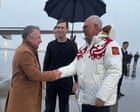
Speaking after the meeting, Witkoff confirmed that European representatives would join the next round of talks. “They’re our partners, and it’s important for them to be involved,” he told reporters as he boarded a plane leaving Moscow.
The US envoys will now travel to Dublin, Ireland, where they will meet Zelenskyy and debrief him on the Moscow meeting.
Amid a flurry of diplomatic activity, including the recent talks in Abu Dhabi, the Kremlin appears to have succeeded in reframing negotiations over the war in Ukraine as part of a broader discussion about European security.
But Europe is wary of Russian attempts to focus discussions on a European security architecture, while Moscow continues to pound Ukraine with bombs and missiles.
The EU foreign policy chief, Kaja Kallas, told reporters: “We already have a European security architecture in place.” Kallas pointed to the cold war-era Helsinki accords and the Budapest memorandum, which guaranteed the territorial integrity of Ukraine. “The problem is that Russia is not keeping to those agreements, so right now the focus should be that Russia actually keeps to their obligations … and they don’t attack another country again.” Focusing on a European security architecture was a “distraction” without a ceasefire, she added.
Both Washington and Moscow have been urging European leaders to appoint a single representative to lead negotiations on their behalf.
“Once a representative is appointed, a chief negotiator authorised to speak on Europe’s behalf, there will be a four-way dialogue,” Putin said on Thursday.
EU leaders are due to discuss the issue of who speaks for Europe on Friday, but so far have declined to nominate one person to speak for the bloc. One EU official said the EU would be represented by its institutions when issues concerning the union were on the table, but played down any imminent appointment. They said: “Do I expect an agreement on a special representative? My answer is no, I don’t.”
Kallas suggested she – as the EU’s high representative for foreign and security policy – should represent the EU in talks, alongside António Costa, the president of the European Council.
More than 45 European leaders are meeting in Dublin for the European Political Community summit, a gathering that brings together nearly every country on the continent, apart from the leaders of Belarus and Russia.
The French president, Emmanuel Macron, played down the importance of having a single European negotiator, saying “the content determines the format”. “There is no more US support. So there [are] some mediations, fine,” he said, referring to the process led by Kushner and Witkoff. “But at the end of the day we will be the one to define and decide for our future security as Europeans.”
The German chancellor, Friedrich Merz, said it was first necessary to get Putin to the negotiating table before deciding on a European envoy. Merz said: “It’s not about individuals. What matters is that Putin is prepared to hold talks.”
Meanwhile, Zelenskyy accused Musk’s Starlink satellite service of damaging Ukraine’s ability to defend itself against Russian drone attacks, after Ukrainian military officials reported new restrictions on the system.
According to Zelenskyy, Starshield, a military version of Starlink funded by the Pentagon, has for several days been subject to speed limits of 100mph (161km/h) along the frontline and in Russian-occupied territory.
Similar restrictions last month prompted confusion over who had ordered them, with Musk and the Trump administration pointing fingers at each other before the service was partly restored.
The latest restrictions had made it harder for Ukrainian forces to intercept Russia’s increasingly sophisticated jet-powered drones, Zelenskyy said, accusing the service of “helping the Russians kill more Ukrainians and carry out more accurate strikes against Ukraine”.
Kyiv has contacted Washington to seek an explanation for the disruption, which Zelenskyy said appeared to be deliberate rather than a technical fault.
- putin
- russia
- ukraine
- troop
- remark
- military
- disruption
- elon