Why aren’t African economists winning Nobel Prizes?, By ‘Tope Fasua

There are many observations around the subject of economics that African economists are better suited to understand. We could write and research around the impact of history on economies,
There are many observations around the subject of economics that African economists are better suited to understand. We could write about informality, for instance, for we have the world’s largest informal economies, products of past dislocations and distrust of imported systems of government. We could write and research around the impact of history on economies, or the paucity of data to make economic decisions. What about the calculation of domestic investment in informal economies, where capital formation at the informal level is more rapid and exceedingly more robust but largely ignored?
I had it in mind to question why there have been no Nobel Prize winners in Economics from Africa, ever. Is it because most of the economies in Africa are underdeveloped, going by the standards set by top global economies and so the Nobel committee thinks we have nothing to offer? Is it because the economies of Africa are mostly not industrialised? Or are they considered not to be complex enough? Just what does it take for economists in Africa to get noticed, and for some of their work to be taken seriously? Perhaps African economists themselves are not doing enough intellectual work, which they can put out there in top journals. Another problem could be around the fact that those same journals are involved in hard gatekeeping, which can sometimes be termed as discriminatory. African economists themselves must be daring, and articulate. They must be proud of their work too and depend less on foreign funding. A lot can even be done with little local funding in the field of Economics. I believe that what matters for global recognition, whether at the level of the Nobel Prize or other genuine platforms, is the profundity of the work that economists do.
Or maybe Africa and the global South may create their own equivalents of the Nobel Prize that recognises their work and encourages economists – we could even include other sciences – along the lines of impact and excellence. I believe we have enough private sector entities that can take this opportunity and etch their names in the annals of history just like Alfred Nobel and – for the purpose of Economics – the Sverige Riksbank (Swedish Central Bank) have done. We have successful banks, mining and oil companies in Africa – even Nigeria – that can occupy this space if, as it now seems, African scientists, and economists are not considered worthy of the Swedish Prize. But that could be termed reactionary. Let us stick to the 131 years old Nobel Prize for science, and the 58 years old Swedish Central Bank prize for economics, for now. I hope we know the importance of Economics in Africa? It affects everything. Like Lord Maynard Keynes once wrote, no field of human endeavour is beyond the contemplation and influence of an economist. So, creating awards that recognise the profundity of thought and research that inches the continent forward, or that makes a case for recognition at extant platforms, is no waste of time at all.
These thoughts came rushing back to me recently at the Bank of Industry annual economic lecture when Professor Asad Alam presented Robert Solow’s Total Factor Productivity function, which explains the part of an economy’s output that is not explained by labour and capital. I was quick to point out the fact that Nigerian scholars should be interrogating Solow’s formula to see how we can decompress the residual that is known as Total Factor Productivity – which is a larger residual for countries like Nigeria, where so many interactions and activities that lead to growth go uncaptured because of our large informal economy, and cultural differences that Solow and other Economic greats may not have contemplated. Now, this takes us back to the four factors of production that we were taught in secondary school – land, labour, capital and entrepreneurship – and which is still being taught the same way today, up to university level. In fact, some PhDs in Economics will swear by that formula till today. In previous articles, I had challenged this theory developed in the times of Adam Smith and proposed that there are other productivity functions in today’s world, which can stand on their own, and which are often more powerful than the usual land, labour, capital, and entrepreneurship. These include factors such as technology, information, data, knowledge, and even now, AI. Some of these could stand alone, in terms of their impact. So, the understanding of factors of production in economics must change.
The above example is just one instance in which we can successfully challenge some economic theories using African peculiarities and experiences. There are many other instances where the kind of complexity that adds to the body of knowledge will come from Africa, and among the deluge of economists that saturate Africa, I believe there are many notable, hardworking, and smart ones who have dedicated their researches to such good causes. We have an overhang of economic shock (the sudden shift from our traditional systems to the modern system via colonisation), we have the phenomenon of slavery that emptied our population into the Caribbeans, the Americas and elsewhere (who knows what we could have been without that happening), we have our abundant resources, which has often been blamed for our legendary complacency, we have our cultures, we have espionage, the Cold War, etc, as well as geopolitics (the China-Western play), to analyse as variables when we discuss our economies and project into the future. Some of these factors are difficult to quantify and this is what makes them more fascinating and tough to explain. And if we don’t write about what makes our economies peculiar and our honest challenges at advancing our economies, certainly nobody will.
We could even research about how relatively low levels of literacy and underdeveloped political systems affect economics or conduct new research around resource dependency. The point is that we must never assume that all the research work relevant to our situation and to the study of economics have already been done, or that only non-Africans are better suited to think and postulate about peculiar issues. That will be the worst defeat that we would have conferred upon ourselves. African economists must be bold, must be articulate, and daring.
We had an example in the health sector of what I am talking about. The biggest tragedy of the COVID-19 era was how African scientists and African opinions were totally rejected, minimised, silenced, ignored, denigrated, pooh-poohed. The other day I ran into videos of African leaders fearfully agonising about how we were going to find vaccines to prevent whole populations from dying. In the beginning of the pandemic, what we had were Western scientists and leaders projecting that poverty-laden Africa was going to be the worst hit continent, after all, in their heads, we were already disease-ridden. The few who thought differently, who tried to think through the pathology of the flu or postulated about local remedies or lifestyle advantages that Africans had, were labelled as conspiracy theorists, crazies, and frauds. But by the time the world was tired and needed to move on, Africa had the lowest numbers of casualties in all the continents. A country like Nigeria had less than 5,000 deaths, even though I saw with my own eyes on TV when Mrs Bill Gates said we would have so many deaths, such that we will have to leave corpses on the streets! Did the world learn from that episode or did we treat it like it was nothing? Were there things we did in Africa that made us less-susceptible to dying from COVID-19? Are there African remedies that could benefit the world? Or is there subtle racism or classism involved in these matters?
Another recent example came from geography but was also profoundly linked to economics. Flemish geographer Geraldus Mercator developed a map of the world in 1569, which was convenient and suitable for navigational purposes. But it minimised the size of the African continent especially. I recall a young white American guy speaking about that matter on social media about three years ago. I shared his video on my social media timelines. But he was ignored and made to look like a fraud. Until Togo took the matter up, pursued it through the United Nations, and got the World Map rightsized. Still a lot of African analysts said it doesn’t matter. That victory itself was another opportunity for self-deprecation, self-minimisation, and the heaping of blame on ourselves in what has now become ‘learned helplessness’.
Some asked if that was going to help us manage our resources better. Others answered that it was not, since we were destined to be this way. In their minds, everything could be explained away with corruption and our relative backwardness. They ignored the principle behind it. They justified the miseducation that has defined our thinking and destinies so far. They would rather work with wrong information in all spheres, in all disciplines, rather than take the effort to research the truth about ourselves and the world, or support and affirm those who do. The simple questions are: Would Africa have been taken more seriously if the true size was known since 1569? Would we have fought colonialism more stridently if we knew the true size of the land annexed? Could we have a bigger say in world fora like the United Nations? Could our own understanding of our own potentials be more enhanced? And why teach the untruth to our children for so long? It is this same type of tragedy that has us relying on economic theories propounded by Adam Smith, with Scottish data and realities in 1776, or David Ricardo’s Comparative Advantage theory of 1820, till today. We must think for ourselves!
There are many observations around the subject of economics that African economists are better suited to understand. We could write about informality, for instance, for we have the world’s largest informal economies, products of past dislocations and distrust of imported systems of government. We could write and research around the impact of history on economies, or the paucity of data to make economic decisions. What about the calculation of domestic investment in informal economies, where capital formation at the informal level is more rapid and exceedingly more robust but largely ignored? We could even research about how relatively low levels of literacy and underdeveloped political systems affect economics or conduct new research around resource dependency. The point is that we must never assume that all the research work relevant to our situation and to the study of economics have already been done, or that only non-Africans are better suited to think and postulate about peculiar issues. That will be the worst defeat that we would have conferred upon ourselves. African economists must be bold, must be articulate, and daring. The earlier we start along these lines, the earlier we will get the required recognition, but more importantly, our economies and people will be most positively impacted.
For the year 2026, Robert E Hall and Michael Woodford won the Sverige Riksbank Prize for research that generated a paradigm shift in ‘stabilisation’ policy. New Keynesian models, a result of their research, allow us to explain and quantify how stabilisation policy affects business cycles and are now used by central banks and finance ministries around the world. The achievements of Nigeria’s Central Bank under Olayemi Cardoso should be documented along these lines and it was a practical deployment in real time, not of Hall and Woodford’s ideas but our own organic thinking, which repositioned our economy.
Let us now look at those topics which have earned people around the world the best prizes in economics, with a view not to denigrating any, but to draw inspiration that we too can do this. I will select just a few:
For the year 2026, Robert E Hall and Michael Woodford won the Sverige Riksbank Prize for research that generated a paradigm shift in ‘stabilisation’ policy. New Keynesian models, a result of their research, allow us to explain and quantify how stabilisation policy affects business cycles and are now used by central banks and finance ministries around the world. The achievements of Nigeria’s Central Bank under Olayemi Cardoso should be documented along these lines and it was a practical deployment in real time, not of Hall and Woodford’s ideas but our own organic thinking, which repositioned our economy. In 2025, Joel Mokyr, Phillipe Aghton and Peter Howitt got the Nobel in Economics for demonstrating how innovation and new technology drive sustained economic growth and counteract historical stagnation. This should be an African story, really. And should not be so difficult for a bunch of African economists to put together. I believe it piggybacks on Joseph Schumpeter’s ideas of Creative Destruction and Innovative Entrepreneurship, which were the bedrock of my PhD dissertation.
In 2024, Daron Acemoglu and Simon Johnson got the Nobel in Economics for studies of how institutions are formed and affect prosperity. Their chunky book, Why Nations Fail, is a testimony to their world. I personally find the book onerous and cumbersome, and many economists around the world have now criticised their logic. In 2023, Claudia Goldin received the Nobel for ‘advancing our understanding of women’s labour market outcomes.’ I believe we have female economists in Africa that could have a lot to say about female contributions to the GDP, to entrepreneurship, to the family unit and general development of nations, even from a historical angle. I conclude that the world now suffers from a deficit of African opinions.
Other awardees include Ben Bernanke, Philip Dybvig and Douglas Diamond in 2022 for research into banks and financial crises; David Card, Joshua D Angrist, and Guido W Imbens in 2021 for contributions to labour economics and the analysis of causal relationships; Paul R Milgrom and Robert B Wilson in 2020 for improvements to auction theory and new auction formats; Abhijit Banerjee, Esther Duflo, and Michael Kremer in 2019 for research into experimental approach to alleviating global poverty; Richard H Thaler in 2018 for contributions to behavioural economics, and so on. I don’t think any of these topics upon which the prizes were given were esoteric. I think they all tell human stories around the discipline, and by now, Africa has more human stories to tell. African economists, rise up, speak up, and boldly showcase your work. Our time is now!
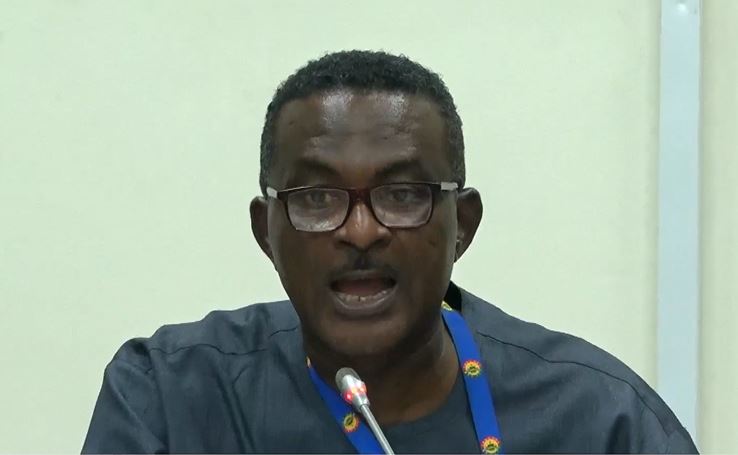
‘Tope Fasua is the special adviser to the President on Economic Matters.
- economist
- nobel
- prizes
- tope
- fasua
- economy
- observation
- subject