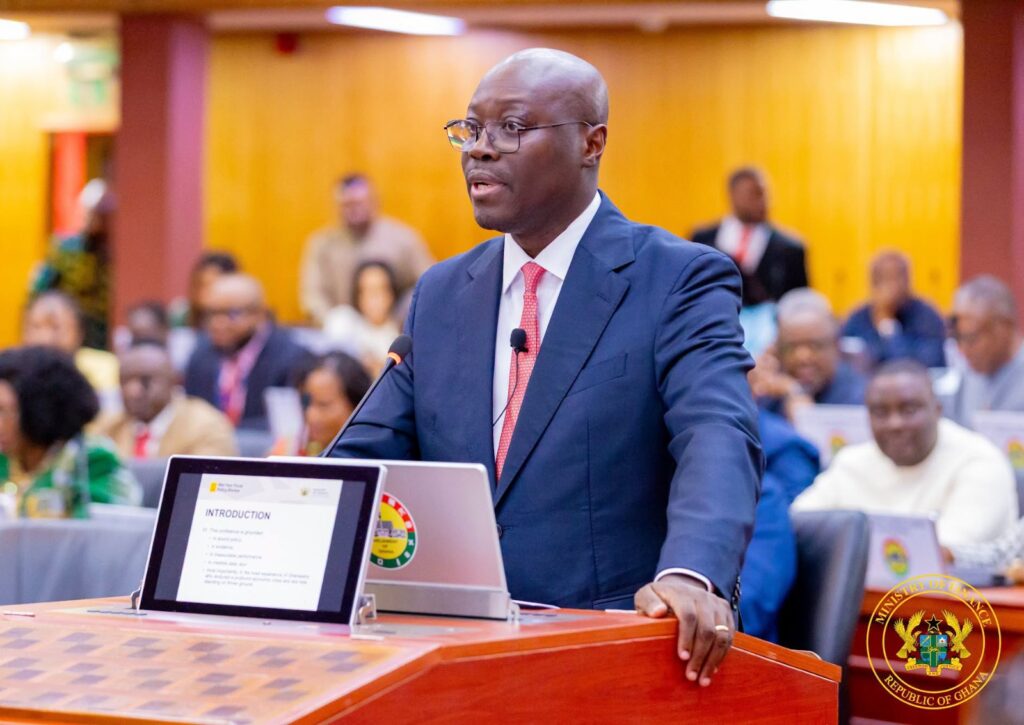
Government to invest over $200 million in nuclear power readiness from 2027 to 2028

Finance Minister Dr Cassiel Ato Forson has announced that the government will invest US$200 million in a 24-month nuclear energy readiness programme as part of efforts to strengthen Ghana’s energy sector and support its industrialisation drive. “Ghana will invest 200 million United States dollars in a 24-month nuclear readiness programme from January 2027 to December 2028,” the Finance Minister told Parliament.
Finance Minister Dr Cassiel Ato Forson has announced that the government will invest US$200 million in a 24-month nuclear energy readiness programme as part of efforts to strengthen Ghana’s energy sector and support its industrialisation drive.
The programme, which will run from January 2027 to December 2028, is expected to prepare the country for the construction of a fully state-owned nuclear power plant to provide reliable electricity for households and businesses.
Presenting the 2027 Budget and the New Economy Agenda in Parliament, the Finance Minister said the government intends to complete all necessary preparations for the nuclear power project by December 2028.
He explained that the target was to reach the required level of readiness and sign the engineering, procurement, construction and financing (EPCF) contract for the proposed plant.
"Ghana will invest 200 million United States dollars in a 24-month nuclear readiness programme from January 2027 to December 2028," the Finance Minister told Parliament.
According to him, the investment will support the technical, regulatory, financial and environmental preparations needed before the country commits to the construction of the facility.
He said that completing the readiness programme by 2028 should not be mistaken for the start of nuclear electricity generation in the same year.
He said the deadline was intended to ensure that Ghana had met all the requirements to enter into a construction contract.
"By December 2028, our target is to complete nuclear power readiness and sign the engineering, procurement, construction, and financing contract for a fully state-owned nuclear base load power plant," he stated.
The Finance Minister further explained that nuclear readiness would involve several critical stages, including site suitability assessments, the selection of an appropriate nuclear technology, environmental assessments and the preparation of financing arrangements.
Other requirements, he said, would include licensing preparations, nuclear safeguards, emergency planning and the development of a comprehensive safety case to meet international standards.
Clarifying the government's timeline, he said, "Nuclear power readiness in 2028 does not mean nuclear power generation in 2028."
"It means that site suitability, technology selection, environmental assessment, financing, licensing preparation, safeguards, emergency planning, and safety case have reached the standard where we can sign a contract," he added.
Dr Forson also announced that the proposed nuclear power plant would remain a strategic national asset under full state ownership.
He said the government had no intention of developing the facility under an independent power producer (IPP) arrangement, where a private company owns and operates a power plant and sells electricity to the state.
Instead, international partners would be engaged to provide the technical and financial support required to develop the project, while ownership of the facility would remain with Ghana.
"The nuclear power plant will remain a strategic national asset, and it will not be developed as an independent power producer," the Finance Minister told Parliament.
He further clarified the role expected of foreign partners, stressing that their involvement would be limited to providing the expertise and resources needed to support the project.
"International partners will only provide technology, financing, engineering, and specialist services," he said.
- power
- readiness
- government
- plant
- finance
- minister
- construction
- preparation