‘Pretty weird’: How a viral video shows a striking discrepancy in men and women’s knitwear
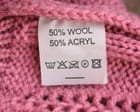
Men are routinely getting more wool for their money – are women really paying a pink tax when they buy a jumper? Abercrombie & Fitch is facing a pink tax backlash, sparked by a video on TikTok that highlights the difference between the materials used in menswear and womenswear jumpers that cost the same.
Men are routinely getting more wool for their money – are women really paying a pink tax when they buy a jumper?
Don’t get Fashion Statement delivered to your inbox? Sign up here
It’s officially cosy season. But before you treat yourself to a new wooly jumper, you may want to take a closer look at the care label.
Abercrombie & Fitch is facing a pink tax backlash, sparked by a video on TikTok that highlights the difference between the materials used in menswear and womenswear jumpers that cost the same.
Last month, while browsing the American brand’s site, Rachael Brownfield, a fashion content creator, noticed that it was selling a 100% merino wool jumper in its menswear section for $95 (£71), while a jumper for the same price in the womenswear section consisted of only 30% wool. While the styles of jumpers are different, they were marketed alongside each other in a social media post.
“Pretty weird,” she wrote below a video in which she questioned why a synthetic women’s jumper should cost the same as a men’s jumper made of pure wool. The Guardian has approached Abercrombie & Fitch for comment.
Previous examples of gender-based price disparities, where women’s items cost more than the men’s equivalent, include deodorant, razors and dry-cleaning services. Two million views and nearly 10k comments later, Brownfield’s video has led to many now questioning if a knitwear gender gap also exists.
This week, inspired by the video, the data platform Style Analytics delved into the subject. According to its findings, men’s jumpers that cost under $100 are up to five times more likely to be made of 100% natural fibres such as wool, cotton or cashmere, than women’s. This was calculated by looking at the full-price knitwear offerings on the US sites of six major US brands – many of which are also sold in the UK.
Style Analytics’ founder Molly Rooyakkers describes being “floored” by the results. She also found that, in the under-$100 bracket, women’s jumpers are twice as likely to contain polyester as men’s, and the knitwear gender gap only closes once you spend $100 or more. While the data is limited – Rooyakkers only provides a snapshot of six fashion brands’ sites on a particular day – it has sparked a wider debate on the differences between the composition of women’s and men’s clothing, particularly when it comes to knitwear, and why those differences might occur.
Roni Brunn, a designer and fashion educator who uses her popular Instagram account to teach shoppers how to identify quality clothing, says the trend cycle plays a role in the addition of synthetics such as elastane, nylon and polyester to women’s knitwear. Sizing is also a contributing factor.
“Elastane gives stretch, synthetics can add fluidity, and they’re inexpensive,” Brunn says. “Men take fewer risks, so brands are incentivised to churn out the same things for men season after season, which means they can buy more yarn in bulk and optimise production.”
In a tough economic climate, and with consumer confidence low, brands are increasingly looking at ways to cut costs. Petroleum-derived fabrics such as polyester are cheaper to produce than natural fibres such as wool and cotton. But brands also regularly blend the two categories, allowing them to lower production costs while still marketing products as high quality.
Deciphering the differences relies on the shopper to pay careful attention to labelling and to marketing terms such as “wool blend” – where the wool content can be as little as 15%. Gap’s bestselling CashSoft range, which it describes as “knitwear that’s soft like cashmere”, doesn’t actually contain any cashmere wool. Instead it’s made up of a blend of cotton, nylon and acrylic. Brunn compares these kinds of ranges to beauty products “that contain trace amounts of a buzzy ingredient and then overhype the entire formula”.
“Trends sell above anything else for women,” she says. “A lot of the low quality that we see now is the result of fast fashion training consumers that they can have the trend for less. Other brands are forced to compete with that, and that’s how we get much of the synthetics.”
It could also be argued, of course, that women are made to feel more societal pressure to subscribe to these trends – and therefore to buy more clothes, more frequently than men.
“Men have never been targeted by the trend cycle in the way women have, and the only way you can keep up with that churn is if you cheapen the product,” says Aja Barber, a sustainable fashion expert and writer. “The best-made clothing in my wardrobe at this point is mostly menswear,” she says pointing to coats, sweaters and shirts as particularly good finds. “There are a few womenswear designers I wear but as a plus-size person, I size out of a lot of luxury, so I turned to menswear. Coincidentally it’s not only better made but it fits.”
For Brunn, however, buying menswear is tricky. “Button-up [shirts] with a fitted men’s cut have a hip that’s too small for me,” she says while also pointing out that at 5ft 7in, sleeves are usually too long for her frame.
Instead, particularly when on the hunt for knitwear, Brunn says shoppers need to “know their trade-offs”. This includes questioning how long you expect a piece to last and whether you are willing to hand-wash it and de-pill it.
“The answer isn’t ‘shop like men’,” she says. “Menswear is mostly drab and utilitarian on purpose. Finding quality means educating yourself about what you need and what items offer it.”
To read the complete version of this newsletter – complete with this week’s trending topics in The Measure – subscribe to receive Fashion Statement in your inbox every Thursday.
- video
- jumper
- discrepancy
- man
- woman
- knitwear
- tax
- wool