Can the media announce election results before INEC’s official declaration?, By Samson Itodo

…media organisations can responsibly share and aggregate officially announced results as part of their public information role, but they must be careful not to present such reporting as a final declaration of the election outcome. Until INEC officially declares and returns a winner, all reported figures should be understood as part of an ongoing results
…media organisations can responsibly share and aggregate officially announced results as part of their public information role, but they must be careful not to present such reporting as a final declaration of the election outcome. Until INEC officially declares and returns a winner, all reported figures should be understood as part of an ongoing results management process.
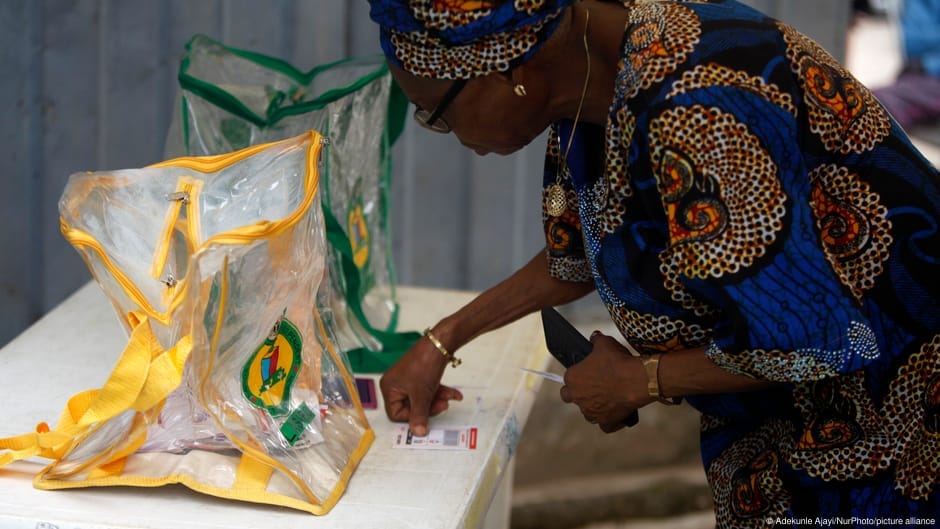
To address this issue, it is important to understand the election results management process. Election results are first announced at the polling unit level and immediately made public through verbal declaration and the posting of result sheets. The purpose of this public announcement is to promote transparency. Once results are announced at the polling unit, they become public information.
Furthermore, the introduction of the INEC Result Viewing Portal (IReV) was designed to deepen transparency in the electoral process. The objective is to make results accessible to citizens and stakeholders, enabling them to follow the results management process, while reducing opportunities for manipulation during collation. In that context, the media can report results that have already been officially announced at polling units because those results are already in the public domain.
This is particularly important given the widespread concerns and distrust surrounding the results management process. Historically, the collation stage has often been viewed as the weakest link in the electoral process and the point at which political actors may seek to compromise outcomes. Media and citizen oversight therefore serve several important purposes:
INEC is the constitutional authority empowered to declare election results and return a candidate as duly elected. Declaration goes beyond publishing polling unit outcomes; it is the formal legal pronouncement that a candidate has won an election and has been returned as the winner. Until INEC makes that declaration, no candidate can legally be regarded as having won the election.
At the same time, it is important to distinguish between announcing results and declaring a winner. INEC is the constitutional authority empowered to declare election results and return a candidate as duly elected. Declaration goes beyond publishing polling unit outcomes; it is the formal legal pronouncement that a candidate has won an election and has been returned as the winner. Until INEC makes that declaration, no candidate can legally be regarded as having won the election.
However, reporting or aggregating results that have already been officially announced at polling units does not amount to declaring a winner. The media may report and analyse such publicly available results, provided this is done responsibly, accurately, and within established professional and ethical standards. That said, media organisations must remain conscious of the realities of the results management process. During collation, several factors can affect the final outcome. INEC may cancel results where there is confirmed over-voting, while adjustments may also arise from polling units where elections did not hold, were postponed, or were disrupted by violence or other incidents. These considerations are taken into account during the collation process and can ultimately influence the final results.
For instance, there are constitutional thresholds that candidates must satisfy before they can be declared and returned as winners. It is therefore possible for election results to be announced without an immediate declaration and return of a winner, if those constitutional requirements have not been met. In presidential and governorship elections, for example, the Constitution requires not only that a candidate secure the highest number of lawful votes cast, but also that s/he obtain at least 25 per cent of the votes cast in no fewer than two-thirds of the states in a presidential election, or two-thirds of the local government areas in a governorship election.
The publication of false, inaccurate, or misleading results can undermine public trust and attract legitimate institutional sanctions. However, where the media responsibly reports and analyses results that have already been officially announced by INEC, such reporting enhances transparency, strengthens public oversight, and contributes to democratic accountability without encroaching on INEC’s exclusive constitutional mandate to declare and return a winner.
Determining whether these conditions have been satisfied requires a comprehensive assessment of the final collated results, a responsibility that rests exclusively with INEC. This underscores the distinction between reporting results and declaring a winner. While the media may responsibly share and aggregate results that have already been officially announced at polling unit, ward, local government, and state levels, only INEC has the constitutional authority to determine whether all legal thresholds have been met and to formally declare and return a candidate as the winner of an election.
This is precisely why all actors, including the media, should avoid declaring winners before INEC completes the collation process and makes its official declaration. Reporting results that have already been announced by INEC at the polling unit, ward, local government, or state level is entirely different from declaring an electoral outcome. The former promotes transparency and public oversight, while the latter remains the exclusive constitutional responsibility of INEC.
Therefore, media organisations can responsibly share and aggregate officially announced results as part of their public information role, but they must be careful not to present such reporting as a final declaration of the election outcome. Until INEC officially declares and returns a winner, all reported figures should be understood as part of an ongoing results management process. Ultimately, all actors, including the media, civil society organisations, and observers, must operate in accordance with the principles of integrity, professionalism, accuracy, and ethical conduct.
Samson Itodo is an election, democracy, and public policy enthusiast. Itodo serves as the Executive Director of Yiaga Africa, Principal Partner of the Election Law Center and Chairperson of the African Union Advisory Group on AI in Peace, Security and Governance. He is also a member of the Kofi Annan Foundation board and the Board of Advisers of the International Institute for Democracy and Electoral Assistance (IDEA).
- election
- inec
- declaration
- result
- medium
- samson
- itodo
- organisation