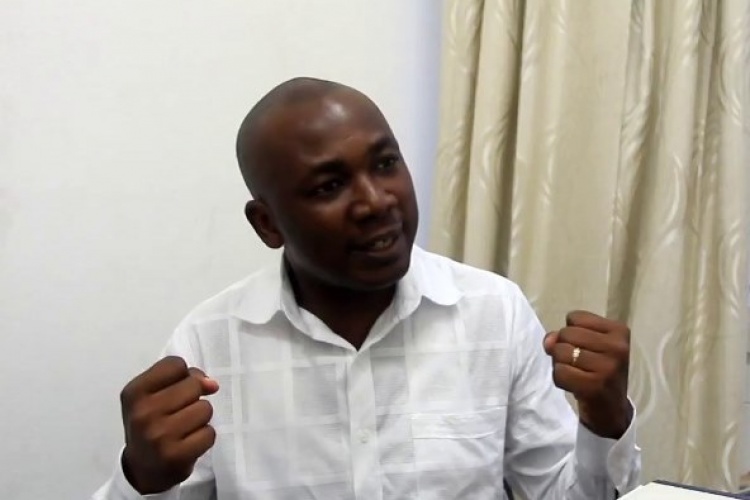
Prof. Bokpin urges gov’t to use PPPs to fund major road projects and free up resources for social infrastructure
Professor of Finance and Economics at the University of Ghana Business School, Prof. Godfred Bokpin, has urged the government to adopt Public-Private Partnerships (PPPs) to finance major road infrastructure projects, saying that the approach would ease pressure on public finances and free up funds for schools, hospitals and other essential services across the country. Prof. Bokpin also drew attention to the economic cost of road crashes, saying Ghana loses more than $4 billion annually through accidents and their associated effects.
Professor of Finance and Economics at the University of Ghana Business School, Prof. Godfred Bokpin, has urged the government to adopt Public-Private Partnerships (PPPs) to finance major road infrastructure projects, saying that the approach would ease pressure on public finances and free up funds for schools, hospitals and other essential services across the country.
He said Ghana could not continue to rely heavily on limited tax revenue to finance expensive road projects while communities across the 16 regions struggled with inadequate public infrastructure, including poor roads, insufficient school facilities and a shortage of doctors.
Speaking on Joy FM's Super Morning Show on Friday, November 13, during a discussion on the review of the 2027 Budget, Prof. Bokpin said the government needed to reconsider its approach to infrastructure financing and allow private investors to take the lead in projects capable of generating revenue.
He said that sound public finance principles required governments to avoid committing scarce public resources to commercially viable infrastructure that could be financed through private investment.
“When the country has a huge deficit in the provision of public goods across the 16 regions, and you don't have the fiscal space, sound public finance theory tells us that the economic infrastructure that can pay for itself, that can get self-liquidated private investment and generate excludable, bankable cash flows, should not be loaded on the national budget,” he said.
“Let's not go against that sound theory. It has worked in so many countries.”
Prof. Bokpin questioned the decision to commit substantial public funds to major road projects, particularly when other parts of the country urgently needed investment in basic infrastructure.
He acknowledged the importance of improving major transport routes but argued that relying solely on the national budget to finance such projects would leave little room for investment in other critical areas.
He cited the Accra-Kumasi and Accra-Takoradi roads as examples of projects that could attract private sector financing through properly structured PPP arrangements.
According to him, the volume of traffic on these routes, coupled with their economic importance, provides a strong basis for considering private investment.
He said the government should identify commercially viable infrastructure projects and develop financing arrangements that would attract investors, rather than using limited tax revenue to meet the entire cost.
Prof. Bokpin also drew attention to the economic cost of road crashes, saying Ghana loses more than $4 billion annually through accidents and their associated effects.
He said that improving major roads could reduce accidents, save travel time and increase productivity, making investment in such infrastructure economically worthwhile.
“Road crashes alone impose a significant economic burden, costing Ghana over $4 billion annually. Road crashes alone,” he stressed.
He explained that reducing accidents and travel delays would deliver savings to the economy, while a more efficient road network would support businesses and improve the movement of people and goods.
The economist maintained that well-designed PPP arrangements could provide the funding needed for major infrastructure projects without placing the full financial burden on government.
He acknowledged that some PPP projects in Ghana had not delivered the expected results but said that should not discourage the government from exploring the model.
He cited Terminal 3 at Kotoka International Airport as an example of a project that demonstrated the potential of private sector participation in infrastructure development.
For him, the success or failure of PPPs depends largely on the legal, financial and contractual arrangements put in place.
“PPPs, some of them haven't worked in this country, but we know some that have also worked, including Terminal 3. It's about the structure, the framework that we put in place. Let's look at that,” he said.
Prof. Bokpin further said that private sector involvement could result in lower construction and maintenance costs because investors would have an incentive to build durable infrastructure and manage it efficiently to recover their investments.
He said investors would be more willing to participate if projects were properly planned, financially viable, and supported by a clear legal framework.
“I am confident that if the private sector is doing it, the cost may be lower than the public sector doing it. And the longevity can be guaranteed, and the maintenance cost will be lower because the private sector will do it in such a way that the maintenance cost will be lower so that they can get their money from the excludable, bankable cash flows,” he explained.
He therefore urged the government to prioritise key transport corridors, including Accra-Kumasi, Accra-Takoradi and Accra-Aflao, and explore PPP arrangements to develop them into modern expressways.
He said such projects could attract capital from both local and international investors, reducing the need for the government to depend on tax revenue to finance major infrastructure development.
Prof. Bokpin said one of the major benefits of adopting this approach would be the opportunity to redirect public funds towards infrastructure that might not be commercially attractive to private investors.
He said that government revenue should be used to improve access to quality education, healthcare and other essential public services, particularly in underserved districts and regions.
He said communities should not have to depend on major cities for basic services because of inadequate facilities in their own areas.
The professor also linked Ghana's persistent traffic congestion to uneven development, saying that many people were forced to travel long distances to access better schools, hospitals and other services.
According to him, more balanced development across the country could reduce unnecessary travel and ease pressure on urban roads.
“If we can ensure structurally and spatially inclusive development, we can eliminate close to 20 per cent of the traffic you see in town,” he said.
He explained that people often spend between two and two-and-a-half hours commuting to access services that should be available closer to their communities.
He believes that investing in quality schools, hospitals and other facilities at the district and regional levels would reduce these journeys while improving living standards.
Prof. Bokpin said the government could achieve this by using private capital for commercially viable projects and directing its limited revenue towards public infrastructure that does not generate direct financial returns.
The economist cautioned that the government risked achieving only limited progress if it continued with its current infrastructure financing approach without considering the wider economic and social costs.
He said focusing heavily on a few major projects could mean sacrificing investment in other areas that were equally important to national development.
Using a major expressway as an example, he warned that celebrating the completion of one high-profile project could conceal the development needs left unmet elsewhere.
“If you do that analysis, you will realise that four years to come, you celebrate an Accra expressway as a big project, but the denial and the sacrifice in all other areas will be such that, if you put everything together, if you are not careful, you may end up with a negative-sum game,” he said.
- road
- infrastructure
- project
- bokpin
- ppp
- government
- investment
- ghana