France: Hundreds arrested after nationwide protests
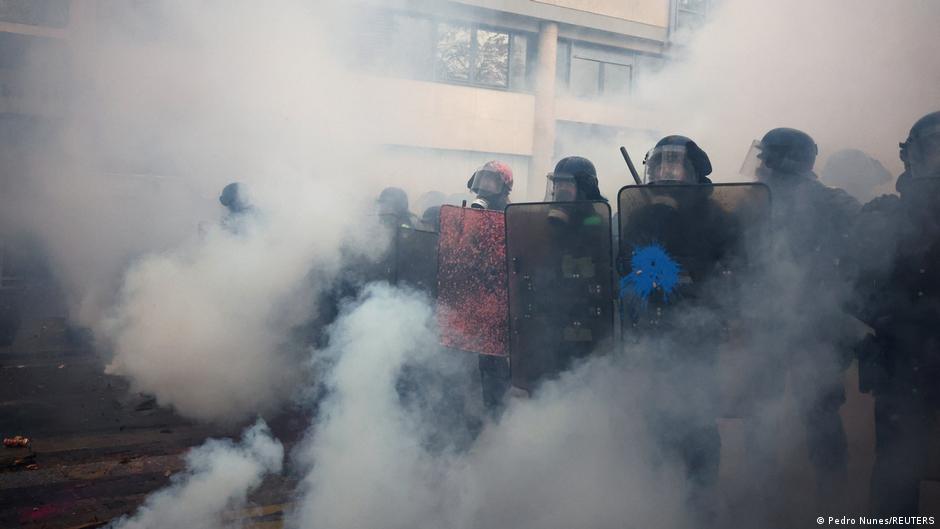
The French government says more than 1,000 people were arrested following nationwide protests on Saturday. Police and elite security forces were out in force across the country as clashes broke out.
You can read all our updates on the protests and unrest in France and other parts of Europe on October 24 and 25, 2026, below.
French authorities detained 1,314 people during nationwide protests on Saturday, according to a provisional Interior Ministry tally.
The ministry said 53 police officers and other security personnel were injured, firefighters responded to 75 fires and 24 businesses were looted. It did not provide a figure for injured protesters.
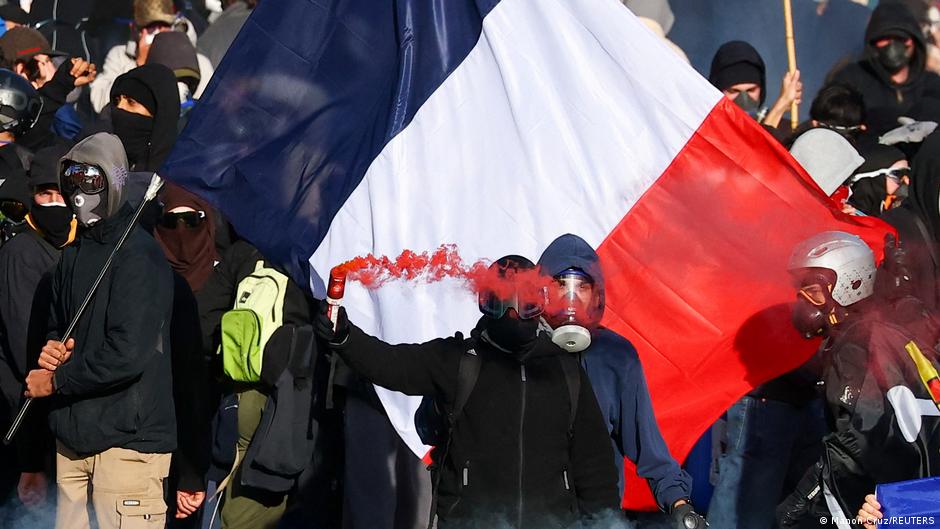
Clashes broke out in cities including Paris, Marseille, Bordeaux, Toulouse and Tours, with police using tear gas. The ministry blamed groups including radical far-left activists for confrontations along or near protest routes.
Authorities counted 410,000 participants at 289 demonstrations and gatherings, down from 550,000 a week earlier. Other estimates put Saturday's turnout as high as 800,000.
The reported arrests and violence were substantially lower than on October 17, when authorities recorded 2,628 detentions and 1,144 injured security personnel.
The ministry said several investigations had been opened and described the subsequent night as calm.
With Saturday's protest over, French Interior Minister Laurent Nunez reported nearly 1,000 arrests.
The number is expected to rise as security officials tally up the day's events, Nunez added.
"Multiple lootings have been averted," he said.
While some clashes between protesters and police were reported in many French cities, the scope of the unrest was much smaller compared to the protests last Saturday, which saw buildings defaced and burned, and some 1,500 shops looted across the country.
Nunez previously put the number of people arrested last weekend at 2,700.
Some 410,000 people marched across France on Saturday, according to the country's interior ministry, as the country braced for a possible repeat of violence seen last weekend.
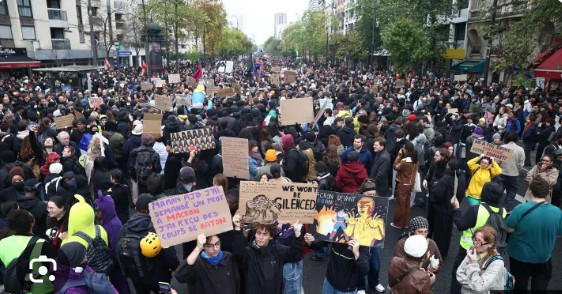
In Paris alone, at least 110,000 people turned out to denounce rising living costs and growing inequality.
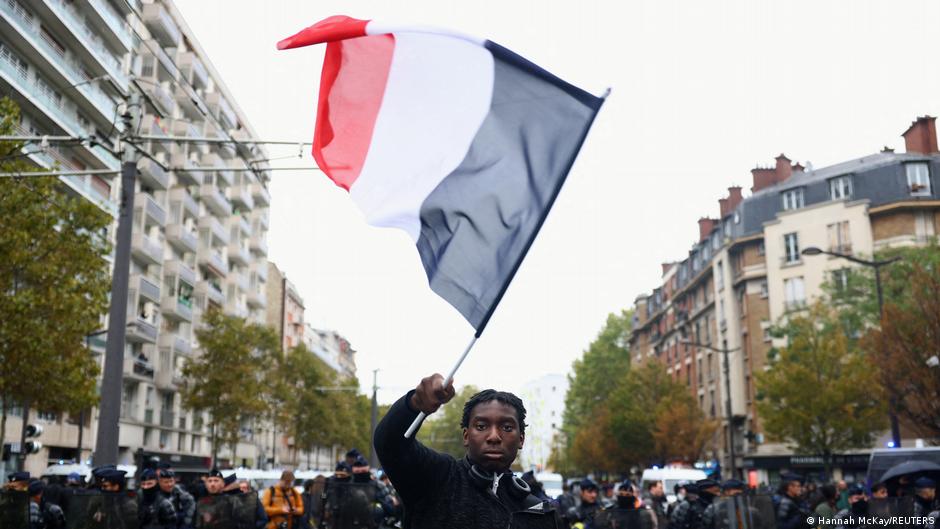
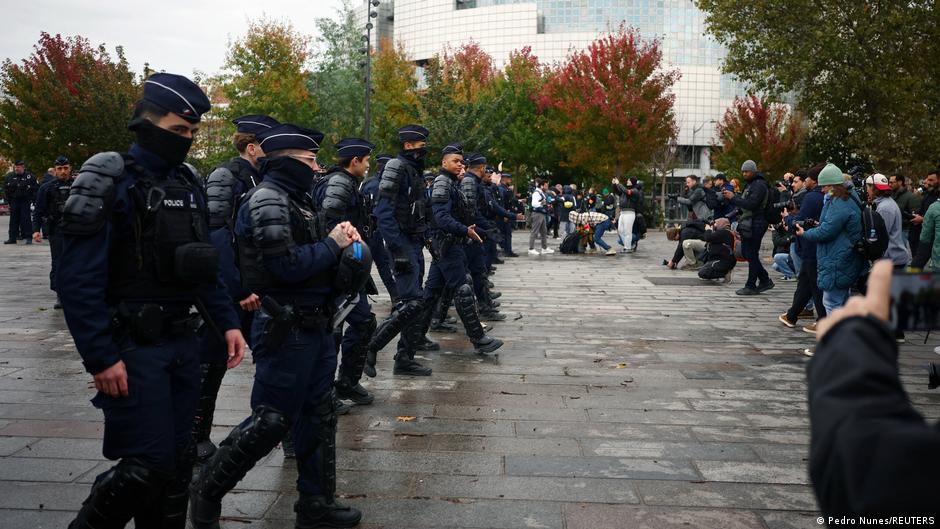
Police were out in force in major French cities. While rallies in Paris and Marseille were mostly peaceful, clashes between protesters and police were reported in towards the evening.
Riot police in Paris fired tear gas and water cannons at some 500 hooded youths before they eventually dispersed. In Marseille, youths blocked roads by setting trash cans on fire. They threw rocks and bottles at security forces.
Clashes were also reported in the cities of Lyon, Bordeaux, Grenoble, Clermont-Ferrand, Lille, Rennes, Nantes and Toulouse.
France is known for its protest culture, where demonstration is considered a bedrock value.
Altercations between the police and demonstrators are by and large part of the French protest ritual.
What we are seeing could even be considered a relatively calm end-of-demonstration situation, Lisa Louis, who is in Paris, said.
Meanwhile, security guards were deployed in Milan on Saturday amid demonstrations against the rising cost of living.
Italian Prime Minister Giorgia Meloni ordered 500 soldiers to be dispatched to the city, in addition to about 5,000 police and other law enforcement personnel there.
But the protests in the large Italian city were less unruly than last weekend, when looters ransacked businesses near the central Duomo area. Around 3,000 people rallied in Milan, with another smaller demonstration taking place in Rome.
As the day went on (and largely toward the end of demonstrations in many cities), clashes occurred between protesters and the authorities during the demonstrations across France.
The French interior ministry said it estimates 410,000 people to have taken part in protest throughout France today.
Demonstrations were set to take place in Paris and Marseille but protesters took to the streets in other cities for rallies like Lyon and Nantes.
There were reports about clashes between protesters and police in several cities, including Paris.
There were protests in the city of Lyon, in the east-central part of France, where police used tear gas to disperse protesters wearing masks.
There are also reports about clashes in Marseille, where police fired tear gas to disperse crowds.
About 550,000 people attended demonstrations throughout the country last weekend.
The mood over the past few days in France felt almost a bit apocalyptic. Business owners told me they were worried more looting might lie ahead, after gangs of individuals had ransacked and destroyed at least 3,000 shops across the country last weekend.
"Some of us are planning to buy weapons to defend ourselves, in case the pillagers come back. One day, there's going to be a tragedy — for sure," Jonathan Siad, owner of a tobacco shop in Paris, said to me.
Other store owners were too afraid to talk to us in front of the camera – they worried criminals might see the interview and target their shop.
Residents told me they would try to avoid the area where the demonstration was taking place. Only to add that they hoped the situation wouldn't escalate like last week, when even places far away from the actual marches became hotspots of clashes between the police and protesters.
Interior Minister Laurent Nunez had admitted on Monday a "loss of control" last Saturday. The authorities thus increased the number of police deployed across France by 10,000 to 70,000 this Saturday.
First clashes between protesters and the police started to occur in the late afternoon in several cities across France such as Marseille, Lyon and Paris.
But for now, the much feared mass looting and ransacking doesn't seem to be happening. The situation is nowhere near the total chaos Paris and other cities like Marseille experienced last Saturday.
"Last weekend, our neighborhood resembled a war zone with gangs roaming the area. Today, it's completely empty apart from police with their vans," Yassaman Metghalchi, co-owner of a jewelry shop in the city center of Paris that got looted last Saturday, told me.
"All of our neighbors feel reassured – although the night is still young and we need to wait and see what will happen," she added.
Paris police say 110,000 protesters were on the streets in the city on Saturday. The anti-government "Yellow Vest" movementteamed up with aggrieved school students for this round of demonstrations.
The CGT trade union, meanwhile, said 800,000 participated in protests across France, with 250,000 people taking part in Paris.
Saturday's protesters were limited by Parisian authorities to the city's southeastern edge, away from the center.
Authorities prepared to help the protesters march safely from the Place d'Italie in the 13th arrondissement on the left bank of the Seine River to Porte de Vincennes which lies further away on the right bank.
A post on X by Paris Police Prefecture showed the Porte d'Italie from the sky ahead of the march.
French news agency AFP reported clashes in Paris after the demonstrations.
The French police used tear gas in response to protests in the southeastern city of Lyon. Use of tear gas was also reported in the cities of Lille, Toulouse and Nantes.
In Orleans, south of Paris, protesters also came out to the streets against a two-day congress held in the city of Marine Le Pen's far-right National Rally party.
According to polls, Le Pen is the frontrunner in France's presidential elections next year.
France's Interior Minister, Laurent Nunez said that police had arrested 135 people and seized a variety of weapons as they deployed for nationwide demonstrations.
Nunez said police have been given orders to prevent renewed street violence.
He said weapons confiscated included metal balls, lead pellets, fireworks, slingshots, steel balls, improvised weapons, a katana and airsoft weapons.
He went on to say that, so far, "there has been no major incident."
Earlier this morning, Nunez posted on social media that he had visited personnel belonging to the Paris intervention unit who make up some of the contingent mobilized in Paris.
"Our forces are mobilized, our setup is in place. We are ready," Nunez said.
France's Yellow Vest movement, one of the key groups behind recent protests against the high cost of living, on Saturday called for new demonstrations on October 31.
Organizers from the largely rural-based group said in Paris that they wanted fresh rallies and a sit-in outside parliament, as well as outside city halls nationwide, to be held in protest at what it called the "authoritarian drift" of President Emmanuel Macron.
Members of the group have also refused to comply with a police order to shift the route of a union-organized route to the edge of the capital, although the unions themselves have agreed to do so. Next Saturday, "we will protest for the freedom to protest, and for all our freedoms," a coordinator from the group told journalists at Paris's Bastille square, which was where the march was due to set off originally.
After being central to protests from 2018 to 2020 against rising fuel prices, the Yellow Vest movement went into abeyance but has recently come to the fore once again amid the current wave of demonstrations sweeping France.
- france
- protest
- force
- hundred
- government
- people
- police
- security