The best electric toothbrushes in the UK for every budget
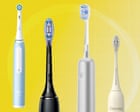
We put 32 electric toothbrushes to the test, from oscillating Oral-B models to sustainable brands like Suri, to find the best for cleaning power and value for money • How to make your toothbrush last longer If you grew up using a conventional toothbrush – essentially a stick with bristles on the end – you may be surprised to learn just how long the electric toothbrush has been around. Over the past two years, I’ve put 32 electric toothbrushes from the likes of Dyson, Oral-B, Philips, Suri, Ordo, Silk’n and Foreo through their paces to separate the best from the rest.
We put 32 electric toothbrushes to the test, from oscillating Oral-B models to sustainable brands like Suri, to find the best for cleaning power and value for money
If you grew up using a conventional toothbrush – essentially a stick with bristles on the end – you may be surprised to learn just how long the electric toothbrush has been around. The first was designed in the late 1930s, but that model was a long way from the sleek, feature-packed and Bluetooth-enabled beasts you can buy today.
There are now dozens of ultra-advanced versions on the market, but which ones are worth your cash? To help answer that question, my teeth have become figurative guinea pigs. Over the past two years, I’ve put 32 electric toothbrushes from the likes of Dyson, Oral-B, Philips, Suri, Ordo, Silk’n and Foreo through their paces to separate the best from the rest. Here are my conclusions.
As well as having the physical qualities required to test electric toothbrushes (my own teeth and a reliable toothpaste budget), I’ve been testing electronics – phones, drones and almost everything in between – for more than a decade.
Also – and I’ll put this delicately to prevent you from closing the page in justified disgust – as someone who has to wear a retainer every night after Invisalign treatment, the toothbrushes weren’t short of nasties to clean during testing. They’ve seen things, man.
I doubt many people include the four minutes spent brushing their teeth as a highlight of even the most tedious day, so spare a thought for the months when it has become my life’s obsessive focus. Fortunately, and purely by chance, my first test coincided with a dentist’s visit in which I appeared to have undergone a Damascene conversion to good oral hygiene, so it did have its upside.
Anyway, the process was actually pretty simple: brush, brush and brush again, taking note of mouthfeel, grip, cleanliness, the features that appealed and those little things that made me irrationally grumpy. I used plaque-disclosing tablets, which turn your teeth a charming shade of pink and blue to reveal areas where plaque resides. Even the cheapest brushes did a good job of removing the blue, though, even if they didn’t feel as clean, so this test proved unhelpful.
Ultimately, while each of the 32 brushes I tested was leagues ahead of manual toothbrushes, I ordered them based on performance, features, feel, stamina and – perhaps most importantly, given how close the final results were – value for money.
A quick note on that: toothbrush recommended retail prices (RRPs) are often what you’d call “aspirational”. They’re frequently on offer, and even £500 models regularly go on sale for less than half price. It’s worth clicking through and checking what today’s price is on the off-chance.
Generally speaking, yes. Without them, “it’s harder to get the same result”, says Caitlin Miller, head of hygiene and therapy at Bupa Dental Care UK. “To get the same level of cleaning found with an electric toothbrush, you’d have to spend a lot longer than two minutes brushing with a manual.”
The reasons are threefold, she explains: manual dexterity; people being more likely to use their expensive electric device properly; and sheer power.
“You don’t have to really do anything with it, and it does a better job,” Miller says. “That’s not to say that they suit everybody. There are people who can do a perfectly good job with a manual toothbrush, but for most of my patients, I will see improvements when people go on to an electric toothbrush.”
“You want to hold your toothbrush at a 45-degree angle – half on the gum, half on the tooth. You should just be holding it horizontally, sweeping across the tooth and gum margins,” says Miller, adding that you should move slowly, allocating a couple of seconds for each tooth.
“You don’t move it up and down, you don’t need to move it round and round. That’s the beauty of the electric toothbrush: you can be pretty lazy with it, and it still does a good job.”
But a common mistake is to press too hard, which is why some of the brushes in our guide come with pressure sensors – something actively recommended by Miller. “If you’ve got too much pressure, you’re essentially dampening the vibrations and bristles.”
This varies hugely between toothbrushes, and depends on how often you brush and the settings you use. The only certainty is that you need to charge them more often than a manual toothbrush – which is to say “at all”.
According to Miller, plenty of patients fall back on inferior manual brushing because of this. “The number of people who say, ‘Oh, I do have an electric toothbrush, but I always forget to charge it, and then it takes three days, so I just use my manual toothbrush,’” she laments. “Keeping it charged is quite important.”
The good news is that batteries now tend to be lithium-ion, meaning they charge quickly, and they last a decent amount of time, too.
The ones I tested had manufacturer-quoted battery lives of between 10 and 365 days, which is an enormous gulf. Plenty of factors play into this, including power, connectivity and the size of the battery itself, but it’s also worth bearing in mind how this is measured. Generally, a manufacturer counts a day as four minutes of brushing over two sessions, but it might be more or less, so read the small print.
You may instinctively be drawn to brushes with longer battery ratings, but convenience is also a factor. A proprietary charger might be more of a faff than a USB-C one, or a charging dock that sits neatly on the sink, especially if months go between charges and you forget where your cable lives.
You may also want to charge more often than required. Anecdotally, I can easily feel the difference in strength between a toothbrush approaching the end of its battery and the same model fresh off the charger.
As for replacing the heads, Miller suggests you do this every three months – or earlier if it looks splayed or frayed – because its cleaning performance will suffer. “You can see it under a microscope: it gets really worn on top.”
Beyond an electric toothbrush, Miller stresses the importance of cleaning between the teeth, and she has a clear order of preference: interdental brushes, then floss and finally water flossers.
“If I’ve got patients who won’t use anything often, if I can get them on a water flosser, then that’s better than nothing,” she says.
There are two main types of toothbrushes on the market: oscillating and sonic. “They work differently, but they’re both doing a similar sort of thing,” says Miller.
In short, an oscillating toothbrush moves the bristles back and forth in a circular motion, while sonic brushes use vibrations to move the bristles in two directions to loosen plaque. The latter is measured in brush movements per minute (BPM), and my selection was rated between 11,000 and 66,000 BPM. Miller says some of her clients find the sonic brushes a bit “ticklish” at first, but this is something you can get used to.
As metrics go, BPM is a bit like the number of megapixels in a camera: a useful pointer about performance, but higher doesn’t automatically mean better. There are a number of other factors at play in cleaning performance, including the design of bristles and the user’s own brushing method.
As for whether you should favour oscillating or sonic, a systematic review and meta-analysis of 32 studies published in the International Journal of Dental Hygiene found a “small but clinically relevant advantage” for oscillating brushes. But it added that it’s “unlikely that dental care professionals in routine examination would be able to detect [the] small differences” between the two. But you don’t necessarily have to choose between the two. Our current champion, the Laifen Wave Pro, includes both oscillating and sonic action to effectively remove plaque.
If it’s still working, you might consider passing it on to a friend or family member who’s still using a manual toothbrush.
Don’t include used heads, obviously. Old models can also enjoy a second life scrubbing between tiles or cleaning grubby cat chins (a nightmare retirement for the heads, but maybe no worse than rubbing against sticky teeth and gums).
Still, while you can take steps to make your toothbrush last longer, eventually it will need replacing. It’s important not to put broken electric toothbrushes in regular household waste, as batteries are an environmental hazard. Instead, look for an e-waste bin if your council has one, or consider recycling points in shops such as Boots and Currys. You can find a list of local options on the Recycle Your Electricals website.
A few options exist, such as the Dyson CameraJet and the Soocas Neos II that I tested in August 2026. But while you’ll save space and the tediousness of having to charge two devices rather than one, there are drawbacks.
First, cordless water flossers are bigger than toothbrushes, as they have a reservoir for the water. As I wrote in my guide to the best water flossers, they often look a bit like pregnant electric toothbrushes, making them less comfortable to hold for extended periods and slightly more bulky for trips.
On top of that, because 2-in-1 devices try to replicate the shape of toothbrushes a little more, water capacity suffers compared with dedicated flossers. The Dyson CameraJet above has a capacity of just 12.5ml – one-sixteenth that of the smallest flosser in my guide.
Another issue with some 2-in-1 models is accuracy. Rather than having tapered tips for careful direction, the water comes out of a hole nestled between the bristles of the toothbrush head. This takes some getting used to, and even then feels less accurate than aiming a thin nozzle that can be placed up against the gaps between your teeth.
The Dyson CameraJet mitigates these problems by using a camera and AI to automatically fire liquid when it sees a gap, and by refilling the mouthwash/water reservoir from the charging dock. But it brings in other difficulties, such as having to use low-foam toothpaste to avoid blocking the camera, and – more importantly – comes with an eye-watering price tag. This could comfortably pay for several top-notch electric toothbrushes and water flossers.
In short, you pay a price for convenience and, as is often the case with 2-in-1 devices they may do neither task as well as dedicated versions.
For more: How I tested 20 electric toothbrushes (and became a toothbrushing pro) How to make your toothbrush last longer – and keep it out of landfill Suri Core 1.0 electric toothbrush review: this new budget model is still sustainable – and the one I’d buy Dyson CameraJet toothbrush review
Alan Martin is a writer who has been putting products – including phones, gaming devices and wearables – through their paces for more than a decade. Although he wouldn’t call teeth brushing a hobby, it’s something he’s been doing for decades with a degree of aptitude that has largely satisfied dentists
- toothbrush
- budget
- model
- suri
- test
- brand
- power
- value