Don’t disappoint Nigeria’s founding fathers, Jonathan warns political leaders
Eze quoted Jonathan as making the call while delivering his address at a colloquium organised in honour of the 162nd birth anniversary of a nationalist, Pa Herbert Macaulay, at Nigerian Institute of International Affairs (NIIA), Lagos on Saturday. Jonathan challenged Nigeria to learn from countries such as South Korea, India and Singapore, which had made remarkable advancement in industrialisation, technology, education, healthcare and human development.
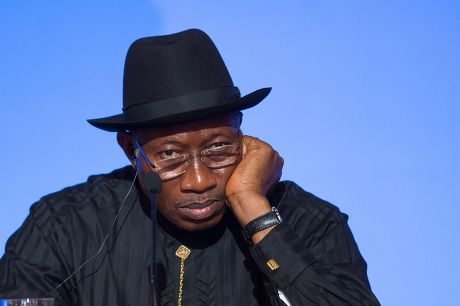
Former President Goodluck Jonathan has called on Nigeria’s political leaders to rebuild the country, warning against disappointing the founding fathers. This is contained in a statement issued by the former president’s Media Adviser, Mr Ikechukwu Eze, in Abuja on Saturday. Eze quoted Jonathan as making the call while delivering his address at a colloquium organised in honour of the 162nd birth anniversary of a nationalist, Pa Herbert Macaulay, at Nigerian Institute of International Affairs (NIIA), Lagos on Saturday.
Jonathan, who was the chairman of the occasion, challenged Nigeria’s political leaders and citizens to reflect on whether the country had lived up to the dreams and aspirations of its founding nationalists. He asked whether Herbert Macaulay, Nnamdi Azikiwe, Obafemi Awolowo, Ahmadu Bello and other heroes of the independence struggle would be proud of today’s Nigeria or regret the outcome of their sacrifices.
Speaking on the theme “Nationalism and Nation Building”, the former president said the vision of Nigeria’s founding nationalists went beyond the transfer of political power from colonial authorities to Nigerians. “They envisaged a sovereign, united and prosperous country where citizens would enjoy equal rights, economic opportunities, quality education, accessible healthcare and the benefits of accountable governance,” he said.
Jonathan appealed that Nigeria must not allow its founding nationalists to regret the struggle they waged for independence. According to him, the greatest tribute to the nation’s heroes is not merely to celebrate their birthdays or preserve their monuments but to build a country that reflects the ideals for which they sacrificed. “We must not make Herbert Macaulay, Nnamdi Azikiwe, Obafemi Awolowo, Ahmadu Bello and the other founding nationalists regret, even in their graves, the struggle they waged for our independence,” he said.
Jonathan urged the present generation to ensure that today’s national challenges were not allowed to become the inheritance of their children and grandchildren. He expressed concern that 66 years after independence, Nigeria had yet to substantially realise many of these aspirations. According to him, while Nigeria has recorded progress in several areas, patriotism demands the courage to confront its shortcomings, including leadership failures, institutional weaknesses, corruption, policy inconsistency, inadequate infrastructure, insecurity and over-dependence on raw material exports.
Jonathan challenged Nigeria to learn from countries such as South Korea, India and Singapore, which had made remarkable advancement in industrialisation, technology, education, healthcare and human development. He noted that Nigeria’s enormous human and natural resources should have translated into comparable levels of development, questioning the obstacles that had continued to constrain the country’s potential.
Distinguishing between independence and nation-building, Jonathan said that while winning independence was a historic achievement, building a prosperous, united and developed country remained an unfinished national responsibility. Looking ahead to Nigeria’s centenary of independence in 2060, he urged the present generation to begin asking what kind of country it intended to bequeath to future generations.
He said the next 34 years must be used to establish measurable national development targets, strengthen institutions and build a productive economy capable of creating opportunities for young Nigerians. The former president also called for renewed commitment to Pan-Africanism, stressing that political independence must be complemented by economic emancipation, technological advancement, educational development and stronger continental integration.
He particularly urged young Nigerians to see themselves as inheritors of the nationalist struggle, noting that the responsibility of advancing the ideals of freedom now rested on their shoulders through innovation, enterprise, civic participation and responsible citizenship. Outlining four critical areas requiring urgent attention, Jonathan called for comprehensive democratic reforms to strengthen popular participation, the rule of law, judicial independence, human rights and accountability.
He also advocated reforms in political recruitment, insisting that competence, capacity and merit must take precedence over ethnic, religious and regional considerations in the selection of political leaders. On education, he called for a functional system that would prioritise technological advancement, innovation and knowledge production, adding that Nigerian universities must aspire to compete among the world’s leading institutions rather than remaining largely centres of knowledge consumption.
He further emphasised the need to build strong, credible and independent institutions, stressing that sustainable national development would depend on strong institutions rather than the influence of individual
- nigeria
- jonathan
- country
- independence
- president
- nationalist
- struggle
- development