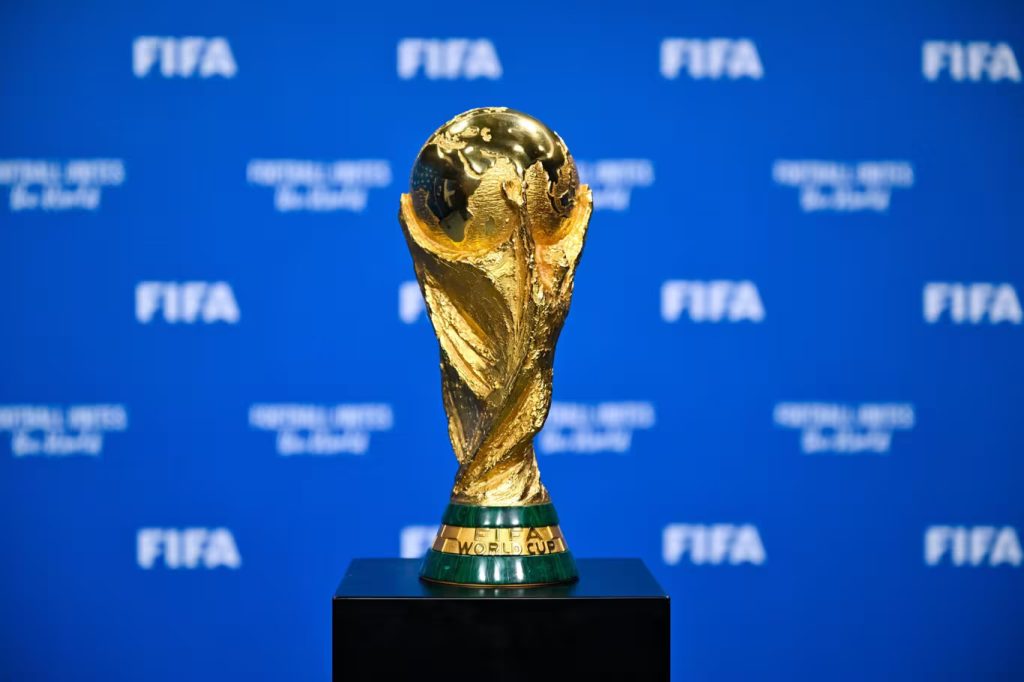
Next generation of Falcons, by Patrick Omorodion
Like Puerto Rico and North Korea, Mexico fell 1-2 in the round of 16, Venezuela proved tough but fell 0-1 in the quarter finals while Brazil, whose best in the competition’s history had been a fourth place finishing at the last edition in 2025, crumbled 1-3 at the Flamingos’ feet in the semi finals. Already he had made history by becoming the first Nigerian and African coach to take a team to the final of the FIFA U-17 Women’s World Cup.
The 2026 FIFA U17 Women’s World Cup may have come and gone but the memories of it would linger for a very long time. The competition which is the lowest among the age grade competitions put together by football’s world governing body, FIFA as nursery for the senior teams participating in the Women’s World Cup started in 2008. Since then, it has held 10 times, only missing out in 2020 due to the Covid-19 pandemic that year.
After it returned in 2022, FIFA decided that from the 2024 edition that it would no longer be held biennially but annually. Nigeria’s Flamingos have participated in nine of the 10 times the competition has held, missing out only in the 2018 edition hosted by Uruguay. Only two countries, New Zealand and Japan have participated in all the past 10 editions.
Nigeria, Canada, North Korea and Mexico follow with nine appearances each. Before this year, the Flamingos’ best record in the competition was a bronze medal finishing at the 2022 edition in India when they lost in the semi finals to Colombia, 5-6 on penalties after the match ended 0-0. To win the bronze that year, the Flamingos, then tutored by Bankole Olowookere, defeated Germany 3-2 in a penalty shootout after a 3-3 draw in regulation time.
When Coach Akeem Busari was appointed in April this year to replace Olowookere, not many knew him even as the head coach of Ibadan-based Pacesetter Queens football club. He silently assembled his team of 21 players from the women’s teams around the country. The team included Kemi Adegbuyi, Awawu Bashiru, Harmony Chidi who is the team’s captain, Oluebube Umejiaku and the first choice goalkeeper, Jane Ijirigho.
The Kwara-born coach was in the saddle for only seven months and five days but yet he was able to build his team into a formidable one. He may have had it in mind to at least equal the bronze medal effort of his predecessor. It must have been a shock to the team when they lost their first group game to Poland 2-1. For young players, that could have dampened their morale for the remaining two group games against Puerto Rico and defending champions, North Korea.
But they put aside that loss and went on to beat Puerto Rico 2-0. Their next match was against a North Korean side who were not only gunning for their fifth title but aiming for a record of being the first to win it three times in a row. Their demolition of North Korea 3-1 was a signal that Busari knew what he was doing and his girls were executing his match plans accurately.
Like Puerto Rico and North Korea, Mexico fell 1-2 in the round of 16, Venezuela proved tough but fell 0-1 in the quarter finals while Brazil, whose best in the competition’s history had been a fourth place finishing at the last edition in 2025, crumbled 1-3 at the Flamingos’ feet in the semi finals. Then came the final against another Asian giant, Japan, and Coach Busari had a lot running through his mind, but the trophy was the greatest dream no doubt.
Already he had made history by becoming the first Nigerian and African coach to take a team to the final of the FIFA U-17 Women’s World Cup. He must have told himself and probably drummed it into his players’ ears that the icing on the cake would be winning the title at the end. Like telling them, we are seeing the ‘Promised Land’ but we have to accomplish the journey by entering into it and taking possession.
And they may have told themselves, “if we could subdue the defending champions, we could also take out Japan even though they have a better record than us as one time winners”. They had also finished in the runner-up position twice earlier in 2010 and 2016. Apart from the strength of the players which they exhibited from the group stage up to the semi finals, Coach Busari felt that the final stage would be more on psychology and focus and thus passed the message to his girls who had history beckoning at them.
“It is just for us to concentrate, let’s put the icing on the cake. Let’s be focused and let’s finish the job because the job is not yet done,” he urged the girls. This pep talk fired the players’ resolve to press the throttle harder and the result was that the team played with cohesion and two of them, Awawu Bashiru who plays for Confluence Queens of Lokoja and Oluebube Umejiaku of Heartland Queens of Owerri, rose to the occasion and shot the Flamingos into the history books.
Today the Flamingos have written their names in the sands of time like their male counterparts, the Golden Eaglets, led by Nduka Ugbade, did in 1985 in China. They have all the attributes of becoming world-class players in the nearest future given their exploits at Morocco 2026. Therefore, they must be encouraged and supported to transit into the next category, which is the U-20 team, the Falconets.
And then the ultimate for them is the senior team, the Super Falcons who are fast losing their grip as Africa’s decorated side. When the celebration of the World Cup victory ends, the Nigeria Football Federation, NFF, should decide whether
- team
- time
- final
- coach
- competition
- edition
- fifa
- world