We gave Tinubu the highest votes in 2023, we are reaping the benefits
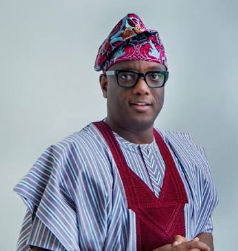
…Vows constituency will give president 250, 000 votes in next polls …Call Igbos the Lionel Messi of Nigeria By Funmi Ajumobi As Nigeria navigates economic challenges, growing security concerns and the political calculations ahead of the 2027 general elections, questions surrounding governance, accountability and national development have continued to dominate public discourse. He advocates greater understanding and cooperation between the Yoruba and Igbo communities, insisting that Lagos has always been a welcoming and diverse society.
…Vows constituency will give president 250, 000 votes in next polls …Call Igbos the Lionel Messi of Nigeria By Funmi Ajumobi As Nigeria navigates economic challenges, growing security concerns and the political calculations ahead of the 2027 general elections, questions surrounding governance, accountability and national development have continued to dominate public discourse.
At the centre of these conversations is the proposed $21 billion borrowing plan by the President Bola Tinubu administration, which has attracted criticism from opposition parties and other stakeholders. However, Hon. Benson, Chairman of the House Committee on Defence and representative of Ikorodu Federal Constituency, believes that borrowing should not be judged in isolation but by its purpose, transparency and impact on national development.
He also addresses allegations that the National Assembly has become a rubber stamp for the executive, defending his political approach with an account of the projects. The lawmaker speaks on the security challenges confronting the country, the need for stronger local government autonomy and state policing, as well as the importance of international partnerships in tackling insecurity.
He advocates greater understanding and cooperation between the Yoruba and Igbo communities, insisting that Lagos has always been a welcoming and diverse society. He also urges the South-East community to embrace political partnership and constructive engagement ahead of 2027. Excerpts: The proposed $21 billion borrowing plan has generated considerable opposition.
Where do you stand on the issue? I think the job of the opposition is to criticise and critique government policies. In an election year, it is also their responsibility to paint the administration in a bad light. However, the responsibility rests on the President to justify his decisions and demonstrate to Nigerians that what the opposition is saying is merely political talk.
When you are in government, you have an overview, a 360-degree view of what needs to be done and the direction the country should be moving. I always use the National Theatre as an example. It was built in the 1970s. The Third Mainland Bridge was also constructed many years ago. If previous administrations had failed to invest in infrastructure, we would not be enjoying those facilities today.
We have taken many of these things for granted without appreciating the challenges and sacrifices of the decision-makers who made them possible. Today, everybody is criticising the Lagos-Calabar Coastal Highway and other major infrastructure projects. But in the fullness of time, perhaps in five, 10 or 15 years, we will appreciate their importance.
The cost of constructing those projects in the future may be significantly higher. We may not even be able to afford them then. So, we have to start building today to provide for tomorrow. I always remember a saying attributed to former American President John F. Kennedy that America is rich not simply because it has money, but because its infrastructure makes its people rich.
How do you want to make Nigerians prosperous if you do not have the necessary infrastructure? Do you have all the money required to build these infrastructure projects sitting in the bank? You don’t. What is important is that you borrow at reasonable rates and clearly identify the projects for which the money will be used. You must also ensure that the borrowing is done transparently.
I think the President has taken steps in that direction by presenting his borrowing proposals for legislative consideration. The opposition will naturally concentrate on the negative aspects, but borrowing itself is not a bad thing. Countries borrow. Governments borrow to finance development. Sometimes, you borrow today to build infrastructure that future generations will enjoy without having to bear the entire cost of constructing it themselves.
That is why I use the National Theatre and Third Mainland Bridge as examples. Imagine if those projects had not been built decades ago and we were only attempting to construct them today. I don’t see anything fundamentally wrong with borrowing, provided the money is properly utilised. Some people believe that the timing of the borrowing request, especially with the 2027 general elections approaching, raises political questions.
Is this the right time for the President to embark on such borrowing? I think it is simply part of the responsibilities of the government. Infrastructure development cannot stop because an election is approaching. The country must continue to plan for the future. What matters is the purpose of the borrowing, the cost of the funds and the projects they are intended to finance.
We should not allow political considerations to prevent us from making decisions that will benefit the country in the long term. The job of the media is to make the government accountable. Critics believe the National Assembly will approve the loan regardless o
- infrastructure
- president
- borrowing
- opposition
- project
- tinubu
- government
- challenge