Chinese musical heritage takes centre stage in Nairobi concert
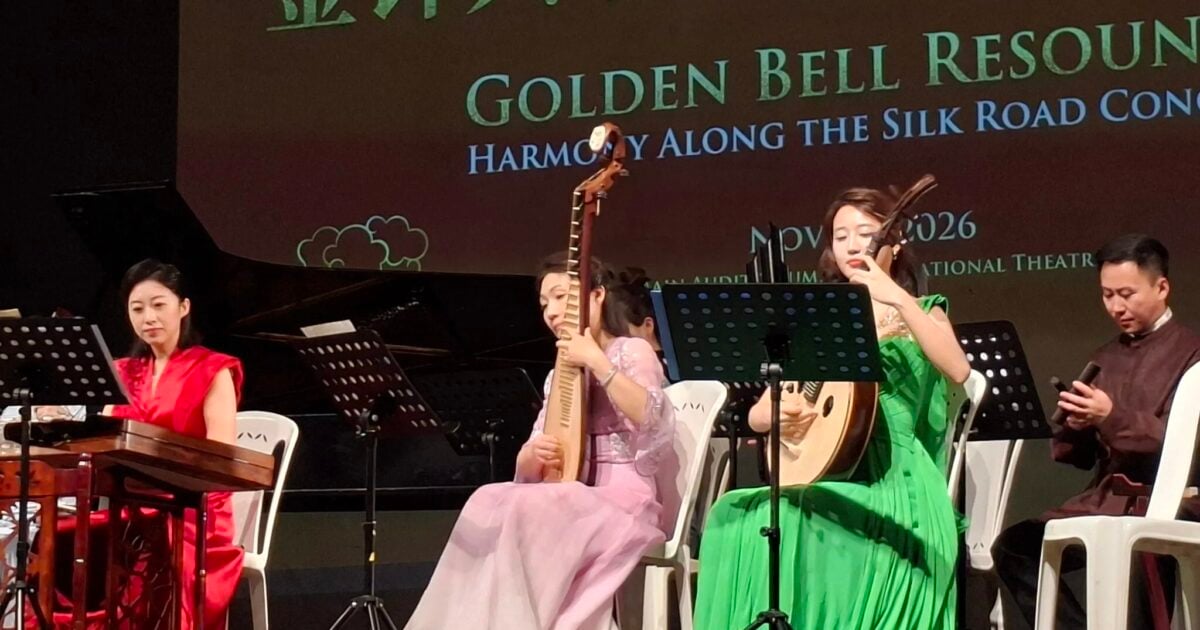
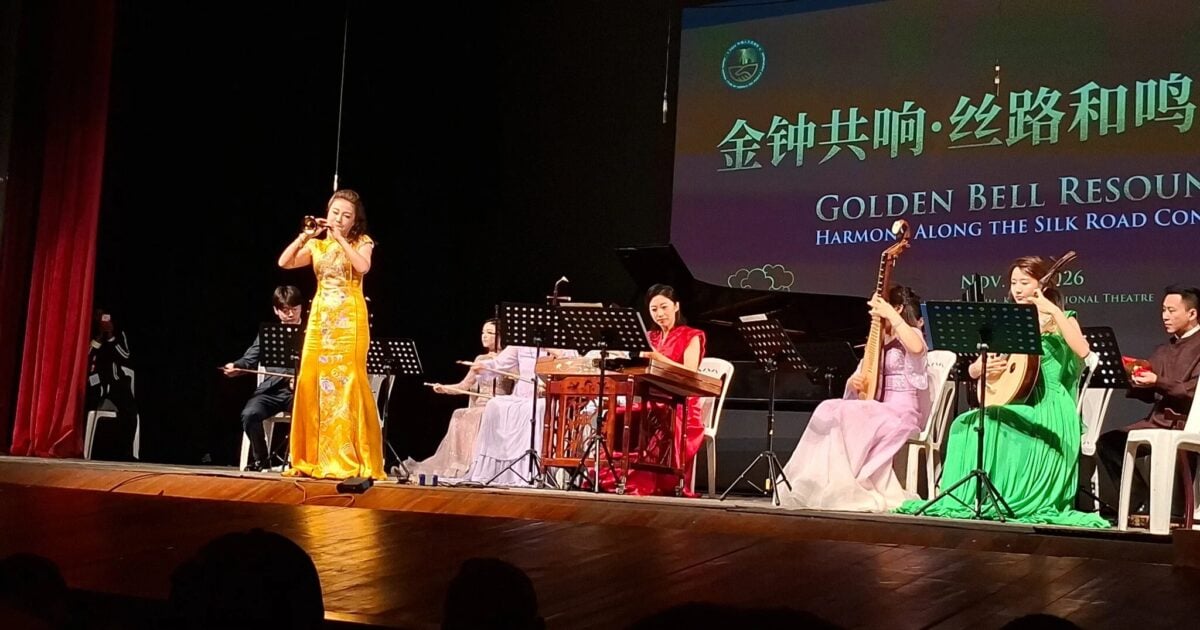
NAIROBI, Kenya, Nov 15– The sound of a Chinese instrument with more than 3,000 years of history filled the Kenya National Theatre on Saturday, as at least 300 people gathered for a concert that brought ancient musical traditions and African melodies together. The concert also featured Memories of Yunnan, a composition by Liu Xing performed on the zhongruan by Xue Miao, accompanied by pianist Yuan Ding.
NAIROBI, Kenya, Nov 15– The sound of a Chinese instrument with more than 3,000 years of history filled the Kenya National Theatre on Saturday, as at least 300 people gathered for a concert that brought ancient musical traditions and African melodies together.
Among the instruments showcased was the guqin, a seven-stringed Chinese zither whose history stretches back more than three millennia and whose music was traditionally associated with scholars, intellectuals and China’s classical artistic heritage.
Its appearance in Nairobi offered audiences an opportunity to encounter a musical tradition that has been preserved across generations, with performers using melodies inspired by nature, history and human emotion to introduce China’s cultural heritage to an African audience.
The 70-minute concert, presented by the China Performing Arts Agency (CPAA), featured the Beijing Golden Bell Star Chinese Chamber Orchestra and the African Women’s Orchestra in a programme combining traditional Chinese compositions with music familiar to East African audiences.
One of the defining performances was Flowing Water, an ancient guqin composition performed by Zhao Xiaoxia. The piece draws from the traditional story of two friends, Boya and Zhong Ziqi, whose bond was built around their shared appreciation of music.
According to the story, Zhong could understand the images and emotions Boya expressed through his instrument, whether depicting towering mountains or flowing rivers. Their connection became a lasting symbol of musical understanding and friendship in Chinese culture.
The version performed in Nairobi was reconstructed by Guan Pinghu from the Tianwen Ge Qinpu, a historical collection of guqin music.
Another performance that carried a deeply personal history was The Moon Reflected in Erquan Spring, played on the erhu by Wang Ying.
The composition, also known as Erquan Yingyue, was created by Hua Yanjun, popularly known as A Bing, a blind Chinese street musician whose life and music were marked by hardship.
The work is widely associated with melancholy and reflection, with its expressive melody conveying emotions that transcend language.
The erhu, a two-stringed bowed instrument, has a history in China stretching back several centuries. Its distinctive sound, produced by drawing a bow between its two strings, has made it one of the recognisable instruments in traditional Chinese music.
The concert also featured Memories of Yunnan, a composition by Liu Xing performed on the zhongruan by Xue Miao, accompanied by pianist Yuan Ding.
The zhongruan, a round-bodied, four-stringed plucked instrument, traces its development to the ruan family of instruments dating back to China’s Han dynasty.
Its warm, resonant sound has made it an important part of modern Chinese traditional orchestras.
The programme further explored the diversity of Chinese musical expression through Birds Paying Homage to the Phoenix, a traditional Shandong folk tune performed on the suona by Zhang Qianyuan.
The suona is a double-reed wind instrument known for its powerful, penetrating sound.
Although it originated from instruments that travelled into China from the Middle East, it became deeply integrated into Chinese musical traditions, particularly in celebrations, processions and folk performances.
Its energetic sound provided a contrast to the more reflective guqin and erhu pieces, demonstrating the range of emotions and musical styles within China’s traditional repertoire.
Other performances included New Horse Racing, an erhu ensemble composition arranged by Chen Yaoxing and Chen Jun, and Ode to Chu, an erhu duet composed by Li Bochan.
However, the concert was not confined to Chinese musical traditions.
In a notable moment of cultural exchange, the African Women’s Orchestra performed Malaika, the celebrated Swahili love song associated with East African musical heritage.
The song, whose title means angel, has a history closely associated with the region’s popular music and has travelled across borders through performances and recordings.
While its authorship remains disputed, Tanzanian musician Adam Salim is widely credited with its composition, while Kenyan singer Fadhili William helped popularise it through his recording.
Its inclusion in the programme brought a familiar East African melody into a concert otherwise dominated by Chinese traditional instruments, creating a musical connection between the two cultural traditions.
The audience also heard The River Flows Clear, a Yunnan folk song performed by soprano Wu Bixia, and an excerpt from Gaetano Donizetti’s opera Don Pasquale, performed by soprano Zhang Yi.
The event began with outdoor performances and cultural experience activities in the theatre’s courtyard before moving indoors for the main concert.
Co-hosted by the Beijing Federation of Literary and Art Circles and the Beijing Musicians Association, the performance was organised specifically for the 2026 China-Africa cultural exchange programme.
By bringing together traditional Chinese compositions, African music and Western opera, the concert demonstrated how music can preserve cultural histories while creating opportunities for different societies to appreciate one another.
For the Kenyan audience, the performances offered more than an introduction to unfamiliar instruments. They provided a glimpse into the stories, traditions and experiences that have shaped Chinese music over centuries, while the inclusion of Malaika underscored the shared cultural ground between Africa and China.
The concert formed part of broader cultural exchange efforts aimed at strengthening people-to-people connections through artistic collaboration, demonstrating how cultural diplomacy can extend beyond official engagements to the universal language of music.
Bruhan Makong is a Senior News Reporter for Capital FM in Nairobi, covering diplomacy, foreign policy, national security, climate, and human rights across East Africa and the wider region.
- concert
- instrument
- heritage
- nairobi
- china
- music
- sound
- history