Nigeria’s unity must rise above ethnic, regional divisions – Sultan
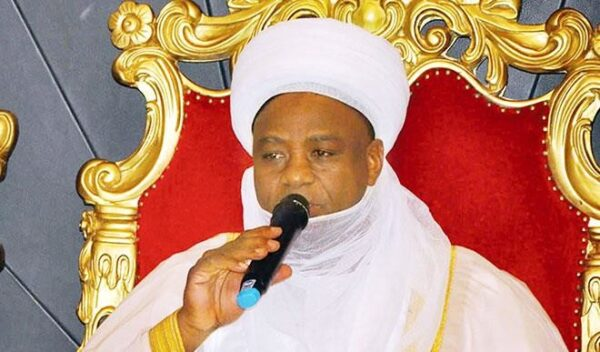
By Adeola Badru The Sultan of Sokoto, Alhaji Muhammad Sa’ad Abubakar III, has challenged Nigerian Muslims to rise above ethnic, regional and social divisions and take greater responsibility for safeguarding national unity, promoting religious tolerance and confronting the security challenges threatening the country. The Sultan made the call on Sunday in Ibadan, Oyo State, while addressing participants at the 11th General Assembly of the Muslim Ummah of South-West Nigeria (MUSWEN), held at the M.O. Abdul Hall, University of Ibadan Central Mosque Auditorium.
By Adeola Badru The Sultan of Sokoto, Alhaji Muhammad Sa’ad Abubakar III, has challenged Nigerian Muslims to rise above ethnic, regional and social divisions and take greater responsibility for safeguarding national unity, promoting religious tolerance and confronting the security challenges threatening the country. The revered monarch warned that ethnicity, regional affiliations and differences in social backgrounds must never be allowed to undermine the unity of the Muslim Ummah or the collective responsibility of Nigerians to build a peaceful, stable and prosperous nation.
He stressed that Muslims, irrespective of their ethnic origins or geographical locations, shared a common religious identity and must demonstrate, through their conduct and relationships, the unifying principles of Islam. The Sultan made the call on Sunday in Ibadan, Oyo State, while addressing participants at the 11th General Assembly of the Muslim Ummah of South-West Nigeria (MUSWEN), held at the M.O.
Abdul Hall, University of Ibadan Central Mosque Auditorium. The assembly, which attracted Islamic leaders, traditional rulers, government representatives and other dignitaries, was held under the theme, “Insecurity in Nigeria: A Technology-Driven and Collective Approach for National Development.” Abubakar, who is also the President-General of the Nigerian Supreme Council for Islamic Affairs (NSCIA), maintained that the survival and progress of the Muslim community depended largely on its ability to preserve its common identity and resist divisive tendencies capable of weakening its collective strength.
According to him, the Almighty Allah created humanity as one family, making it imperative for Muslims to place their religious obligations and shared humanity above ethnic sentiments and other considerations. “We are one big family. Ethnicity should never be a determining factor in identifying who is a Muslim and who is not. Almighty Allah created us as one human family and commanded us to worship Him alone and glorify His name,” the Sultan said.
He insisted that Islam must remain the guiding principle of Muslims’ lives, urging them not to allow political, ethnic or regional interests to displace the fundamental teachings of their faith. “It must be Islam first, Islam first, Islam first, and Islam last,” he declared. The Sultan further noted the equality of all human beings before Allah, explaining that neither ethnic background, social standing nor material possessions determined an individual’s worth in the sight of God.
He said righteousness, piety and the fear of Allah remained the true standards by which human beings should be judged. “Before Allah, we are all equal. The best among us is the one who possesses the greatest degree of piety and righteousness,” he said. The monarch consequently urged Muslim leaders, religious institutions and organisations across the country to remain committed to the service of Islam and humanity, warning against the danger of allowing ethnic and regional loyalties to erode the unity and collective aspirations of the Ummah.
He also called for a stronger commitment to peaceful coexistence and religious tolerance, stressing the importance of translating Islamic teachings into practical contributions towards the stability and development of Nigeria. In his remarks, the Chairman of the MUSWEN Board of Trustees, Dr Olawale Babalakin, SAN, called for greater institutional cooperation and a stronger sense of collective responsibility among Muslim organisations in the South-West.
Babalakin argued that the ability of the Muslim community to make meaningful contributions to national development depended on its capacity to overcome internal divisions, strengthen its institutions and pursue clearly defined common objectives. He identified education, technological advancement and sustainable funding as critical pillars for the organisation’s growth, urging Muslim stakeholders to invest in initiatives that would strengthen the community’s intellectual, economic and institutional capacity.
The legal luminary also cautioned against extremism, calling on Muslims to embrace moderation, peaceful engagement and constructive participation in national affairs. He maintained that a more robust institutional structure would enable MUSWEN to achieve its objectives, respond effectively to the needs of its members and contribute more meaningfully to the wider society.
The outgone MUSWEN President, Alhaji Rasaki Oladejo, used the occasion to present an account of his six-year stewardship, highlighting achievements in property development, financial management, educational interventions and conflict resolution. Oladejo said his administration had prioritised the strengthening of the organisation’s financial foundation and the establishment of sustainable structures to support its long-term activities.
He explained that the administration pursued investments and programmes designed to improve the organisation’s capacity to deliver o
- sultan
- nigeria
- unity
- islam
- allah
- muslims
- muslim
- division