Serbia votes as strongman Vučić faces grassroots challenge to 12-year rule – Europe live
Serbia’s former president and now prime ministerial candidate (again) Aleksandar Vučić rose to prominence in the 1990s as a radical nationalist, who supported the policies of Serbian expansion and ethnic cleansing led by Slobodan Milošević, who died of a heart attack in detention in The Hague during his trial on charges of genocide and crimes against humanity committed in Croatia, Bosnia and Kosovo. His Serbian Progressive Party, or SNS, has been in government since 2012.
Aleksandar Vučić’s SNS anchors the “United Serbia” list. The party relies on control of the public purse, favourable media coverage and strong nationalist backing, but its campaign has been overshadowed by accusations of systemic voter manipulation.
The Student List eschews party hierarchies or a single figurehead, preferring locally respected academics and professionals, and operates through university networks. Its quickfire, humorous campaign has mobilised large numbers of disengaged voters.
That means Serbia’s traditional opposition parties have been largely marginalised, with their collective support falling from 30% to 10-15%. Some parties have switched allegiance to the Student List. Others, such as European Serbia, may not clear the 3% electoral threshold.
Meanwhile, Serbia’s rightwing, nationalist bloc is riven with disagreements and has been further weakened by the unexpected withdrawal of the We the Power of the People party over allegations of Russian influence. Some of the nationalist vote may switch to the SNS.
Serbia’s former president and now prime ministerial candidate (again) Aleksandar Vučić rose to prominence in the 1990s as a radical nationalist, who supported the policies of Serbian expansion and ethnic cleansing led by Slobodan Milošević, who died of a heart attack in detention in The Hague during his trial on charges of genocide and crimes against humanity committed in Croatia, Bosnia and Kosovo.
He served as Milošević’s information minister throughout the Kosovo conflict. His Serbian Progressive Party, or SNS, has been in government since 2012.
He first spent three years as the prime minister from 2014, before switching to the role of the president in 2017. Unable to run for the third term, he resigned from the post in September, and now wants to lead the government again.
As president, Vučić has not emulated his predecessor’s militarism, but he has maintained his nationalist playbook in domestic politics, dismissing the opposition as stooges of unspecified foreign powers.
He maintains close ties with Putin’s Russia and Xi’s China, which regularly gets him criticism from the EU and complicates Serbia’s path to the bloc.
Serbia has regressed in international rankings for press freedom and corruption in recent years, and its process of joining the EU is effectively stalled. More on that shortly.
Vučić is also fairly close with Donald Trump and his associates. He hosted Donald Trump Jr and Jared Kushner in Belgrade, and, as we revealed, personally intervened to advance an allegedly illegal – and definitely very controversial – scheme to hand over a protected site in Belgrade for a Trump tower.
Dobro veče, or good evening, and welcome to our live coverage of Serbian election night.
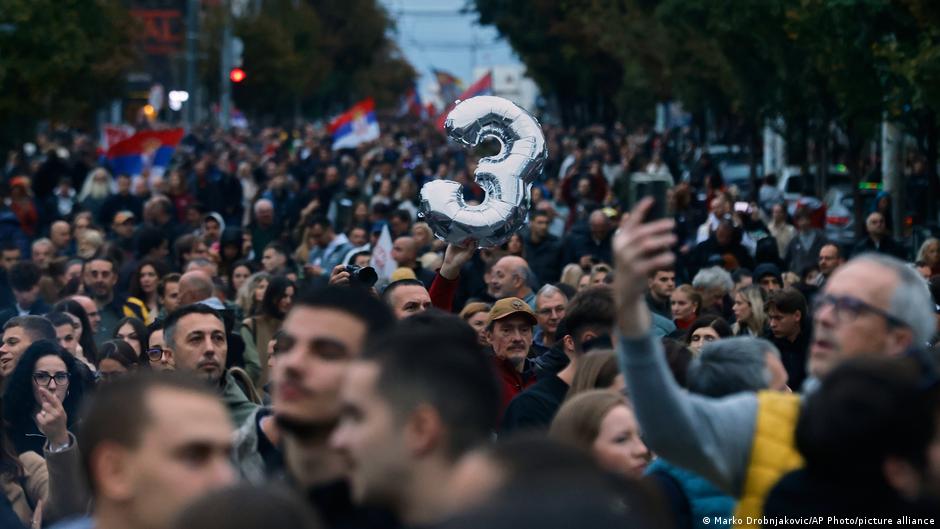
The grassroots protest movement, the Student List, is taking on the country’s increasingly authoritarian leader, Aleksandar Vučić, in what is shaping up to be the sternest test of his 12-year grip on power.
The vote is a culmination of two years of student-led protests triggered by the collapse of the Novi Sad railway station canopy in November 2024, which killed 16 people and uncovered massive government and institutional corruption.
The bottom-up leaderless movement, with 250 candidates democratically elected from people with limited political experience but distinguished professional careers, seeks to end Vučić’s rule and rewire the state, with focus on fighting alleged corruption, clientelism and power abuses of the past.
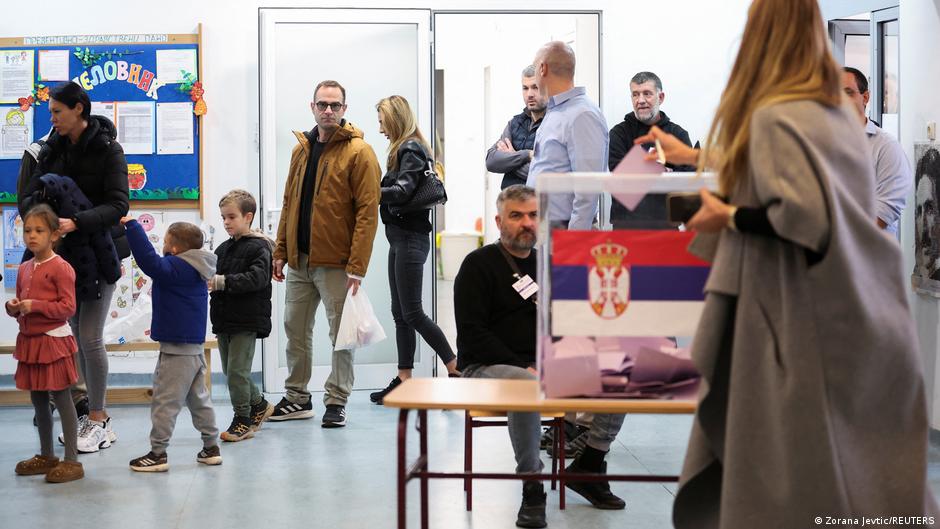
Polls opened at 7am (6am UK time) and close at 8pm (7pm UK time). Until then, we’ll bring you all the key background, explain why it matters for Europe, Ukraine, and you, and give you a flavour of the chatter in the queues outside polling stations from Belgrade to London.
I will also keep one eye on the first round of the presidential election in Bulgaria, so expect an odd update on this or two on this.
It’s Sunday, 25 October 2026, it’s Jakub Krupa here, and this is Europe Live.
- serbia
- strongman
- vučić
- challenge
- rule
- europe
- government
- milošević