business

Manufacturing growth doubles to 3.2% amid easing cost pressures
Manufacturing growth doubles to 3.2% amid easing cost pressures

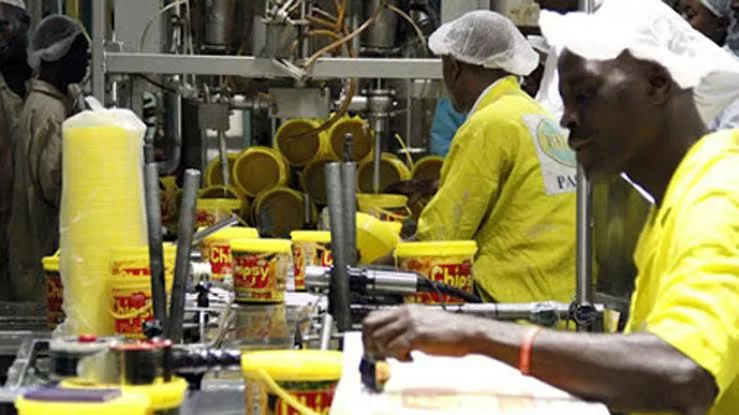
By Yinka Kolawole Nigeria’s manufacturing sector recorded a 3.2 per cent year-on-year (YoY) growth in the second quarter of 2026, up from 1.6 per cent in the corresponding period of 2025, reflecting improved industrial activity amid gradual easing of operating pressures. The performance, according to data from the National Bureau of Statistics (NBS), indicates a gradual recovery in the sector, supported by stronger activities across food and beverages, chemicals, pharmaceuticals, cement and refining subsectors.

By Yinka Kolawole Nigeria’s manufacturing sector recorded a 3.2 per cent year-on-year (YoY) growth in the second quarter of 2026, up from 1.6 per cent in the corresponding period of 2025, reflecting improved industrial activity amid gradual easing of operating pressures. The performance, according to data from the National Bureau of Statistics (NBS), indicates a gradual recovery in the sector, supported by stronger activities across food and beverages, chemicals, pharmaceuticals, cement and refining subsectors.

The improvement was also driven by relative stability in the foreign exchange market, which enhanced manufacturers’ access to imported raw materials and other production inputs, allowing businesses to improve procurement and inventory planning. Similarly, easing inflationary pressures helped reduce uncertainty around input costs, providing some relief to manufacturers and supporting production and business planning.

The growth underscores manufacturing’s continued importance to Nigeria’s economic diversification efforts, particularly its role in expanding non-oil production, creating jobs and strengthening domestic value chains. However, despite the improved performance, manufacturers continue to contend with structural challenges, including high energy costs, inadequate infrastructure, logistics bottlenecks and elevated financing costs.

These constraints have continued to undermine competitiveness, limit investment capacity and slow production expansion across several industrial segments. The moderation in inflation is expected to provide further relief to businesses and households, potentially supporting consumer demand and enabling manufacturers to plan production more effectively.

Nevertheless, persistent geopolitical tensions in the Middle East remain a source of concern for the sector, given their potential implications for global energy prices and supply chains. Any escalation could trigger higher crude oil and gas prices, increase transportation and production costs, and reverse some of the gains from easing domestic inflationary pressures.

For Nigerian manufacturers, sustaining the growth momentum will therefore depend not only on macroeconomic stability but also on addressing persistent structural constraints, particularly energy supply, infrastructure deficits and access to affordable financing.

  • cost
  • growth
  • manufacturing
  • production
  • manufacturer
  • pressure
  • sector
  • business

Summaries and tags are generated automatically. Stay informed with VidiaNews.

Related news

40m MSMEs hold key to Nigeria’s economic future, Uzodimma, business leaders say
business

40m MSMEs hold key to Nigeria’s economic future, Uzodimma, business leaders say

…Imo gov unveils blueprint for grassroots economic growth By Nnamdi Ojiego Nigeria’s nearly 40 million micro, small and medium enterprises (MSMEs), which account for close to half of the country’s Gross Domestic Product (GDP) and nearly nine out of every 10 jobs, hold the key to its economic future, Governor Hope Uzodimma of Imo State and business leaders have said. Delivering the keynote lecture entitled, “The Future Is Local: Stimulating Grassroots Economies for Inclusive Growth”, Uzodimma argued that Nigeria’s next phase of economic growth must come from its communities, particularly the…

Read →
Atiku tackles FG as bakers lose 40% membership
politics

Atiku tackles FG as bakers lose 40% membership

By Luminous Jannamike, Abuja Former Vice President Atiku Abubakar has blamed President Bola Tinubu’s economic policies for the loss of nearly 40 per cent of the membership of the Premium Breadmakers Association of Nigeria in two years, warning that soaring energy costs and high interest rates are driving local businesses out of operation. Atiku, who was in Bauchi on Saturday to promote his affordable life campaign and sympathise with Nigerians grappling with the effects of government policies, spoke in a statement signed by his Director of Strategic Communication, ADC Presidential Campaign…

Read →
Obuasi Trade Show 2026 to bring businesses together for four-day exhibition in December
business

Obuasi Trade Show 2026 to bring businesses together for four-day exhibition in December

The 2026 Obuasi Trade Show is scheduled to take place from December 21 to 24 at the Obuasi Black Park, bringing together businesses, entrepreneurs, manufacturers and traders from across the Ashanti Region. Board Chairman of the Obuasi Trade Show Consortium, Aboagye Ohene Adu, said the organisers intended to develop the event into a major regional commercial exhibition, attracting businesses from across the Ashanti Region and beyond.

Read →
Without manufacturing $1tr economy is an illusion
business

Without manufacturing $1tr economy is an illusion

By Dele Sobowale Japan in fact offers a relevant historical example of what can happen to an economy which falls behind in the global manufacturing race. The Gowon administration sent delegations to the United States in 1974 to appeal to young and well-educated Nigerians to return home and fill vacant positions opening up in manufacturing in several industrial layouts in Lagos, Ibadan, Kaduna, Kano, Portharcourt and Aba.

Read →
Without manufacturing $1trn economy is an illusion
business

Without manufacturing $1trn economy is an illusion

By Dele Sobowale Japan in fact offers a relevant historical example of what can happen to an economy which falls behind in the global manufacturing race. The Gowon administration sent delegations to the United States in 1974 to appeal to young and well-educated Nigerians to return home and fill vacant positions opening up in manufacturing in several industrial layouts in Lagos, Ibadan, Kaduna, Kano, Portharcourt and Aba.

Read →