After the death of a literary giant in Africa, why could I find no copies of his book?
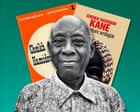
In this week’s newsletter: what the death of Cheikh Hamidou Kane reveals about the cultural gap, plus Iran’s rising use of executions to curb dissent After reading about the death of the Senegalese writer Cheikh Hamidou Kane this week, I went on a mission to find his most famous book. His 1961 book L’Aventure Ambiguë (Ambiguous Adventure) has been studied in numerous universities and schools across the continent and is said to be one of the best books by an African writer to capture the post-colonial struggle for identity in newly independent countries.
In this week’s newsletter: what the death of Cheikh Hamidou Kane reveals about the cultural gap, plus Iran’s rising use of executions to curb dissent
After reading about the death of the Senegalese writer Cheikh Hamidou Kane this week, I went on a mission to find his most famous book.
Described as a master of the pan-African novel and a literary giant, the 98-year-old received obituaries internationally, and in both French- and English-language African media. Le Monde called him “iconic”. His 1961 book L’Aventure Ambiguë (Ambiguous Adventure) has been studied in numerous universities and schools across the continent and is said to be one of the best books by an African writer to capture the post-colonial struggle for identity in newly independent countries.
I could find one copy online for £75 but beyond that it was absent. Not even a copy in French, his language of writing, nor in any of the other 40 languages into which it has been translated.
It was not listed in my library nor in the real-life large bookshop I went into. So sorry, I can’t recommend it here in our “what we’re reading section”. And maybe, if you are reading this in the UK or the US, you won’t have read it either. It did make me think about the impact of the terrible homogeneity of a lot of our culture in Britain – how our narratives contain and define us, and the lack of diversity restricts us. The US has exported so much – books, films and TV – straight across the Atlantic and we’ve sent a fair bit their way but this alliance has left us a bit cheated.
With the exception of a few breakthrough authors, most of whom live in the west, there seems to be so little mainstream acceptance of culture and ideas from the world’s most important continent, in terms of its youth demographic, to the northern hemisphere. Even on a plane to east Africa a few weeks ago, the in-flight entertainment had nothing on offer that had been made by the continent’s film-makers. If the work of the global majority is mostly sealed off, then it is to the detriment of everyone.
But it does strengthen my belief in why what we do here in Global development is important in its own small way. Reporting the stories of people from far-flung places and cultures through their own words is so essential when two hemispheres are so sadly sealed off from each other. Tracy McVeigh, editor, Global development
Iran | Human rights groups have raised the alarm after reports a 23-year-old Iranian woman has been sentenced to death for blasphemy over a social-media post. The Tehran regime’s increasing use of executions to suppress dissent has seen at least 600 people executed this year.
Global health | Humans could become extinct by the year 2100 due to malicious use of AI or nuclear conflict, according to a Lancet assessment. It lists 17 major threats to human health over the next 75 years, but says a “realistic route to act” exists on each.
Drug trafficking | A four-month investigation by the Guardian has revealed that the surge in cocaine trafficking to Europe is directly linked to Latin American criminal networks in Europe. Cocaine seizures in Europe are up more than fivefold in 10 years as a host of cartels take root.
Ethiopia | After renewed fighting in northern Ethiopia, reports are emerging that a new alliance of armed rebel groups in Tigray has been forcibly recruiting men and boys as young as 15.
Nearly a decade after the ethnic cleansing of Rohingya people from Myanmar by government forces, satellite images show the insurgent Arakan Army is now emulating the regime’s killings and land grabs across Rakhine state.
People report being driven from their homes and land they depend on for food and livelihoods and forced into detention camps, where they were then made to construct new buildings and roads over the ruins of their villages. “They forced us to work continuously. If anyone collapsed from exhaustion, they were left in the sun,” says one.
How Europe’s most wanted cocaine trafficker turned Sierra Leone into the world’s first true narco state
‘Cancer is tripling and will keep increasing’: first African to lead global action against disease ready for battle
Row erupts over Cairo mural depicting Tutankhamun and Nefertiti with dark skin
‘A return to prison is always looming’: Iran’s Nobel laureate recounts torture in jail and hopes for the future
Tourism expansion v turtle nests: the dispute dividing communities in one Tobago resort
‘They take our water, our soil’: protesters fight ‘foreignisation’ as Javier Milei encourages land sales in Argentina
From black soldier flies to mealworms: farming insects for food, fodder and fertiliser in Uganda
Nigeria’s national theatre will host Design Week Lagos 2026 from 18-25 October, bringing together architects, designers and artists under the theme of Making a New Africa. Highlights include an exhibition dedicated to the prolific artist, designer and architect Demas Nwoko, who turns 90 this year.
- book
- death
- giant
- africa
- cheikh
- hamidou
- kane
- writer