Kingi urges lawmakers to prioritise food security in national budgets
NAIROBI, Kenya, Nov 16 – Senate Speaker Amason Kingi has called on African parliaments to increase budgetary allocations to food security, strengthen legislation and tighten oversight of government programmes, warning that millions of people across the continent remain unable to afford nutritious diets. Citing the 2026 United Nations report on food security and nutrition, Kingi said an estimated 645 million people experienced hunger globally in 2025, including approximately 309 million Africans, representing one in five people on the continent.
NAIROBI, Kenya, Nov 16 – Senate Speaker Amason Kingi has called on African parliaments to increase budgetary allocations to food security, strengthen legislation and tighten oversight of government programmes, warning that millions of people across the continent remain unable to afford nutritious diets.
Kingi said legislators must move beyond political declarations and translate commitments on the right to food into practical policies, public investments and services that reach vulnerable communities.
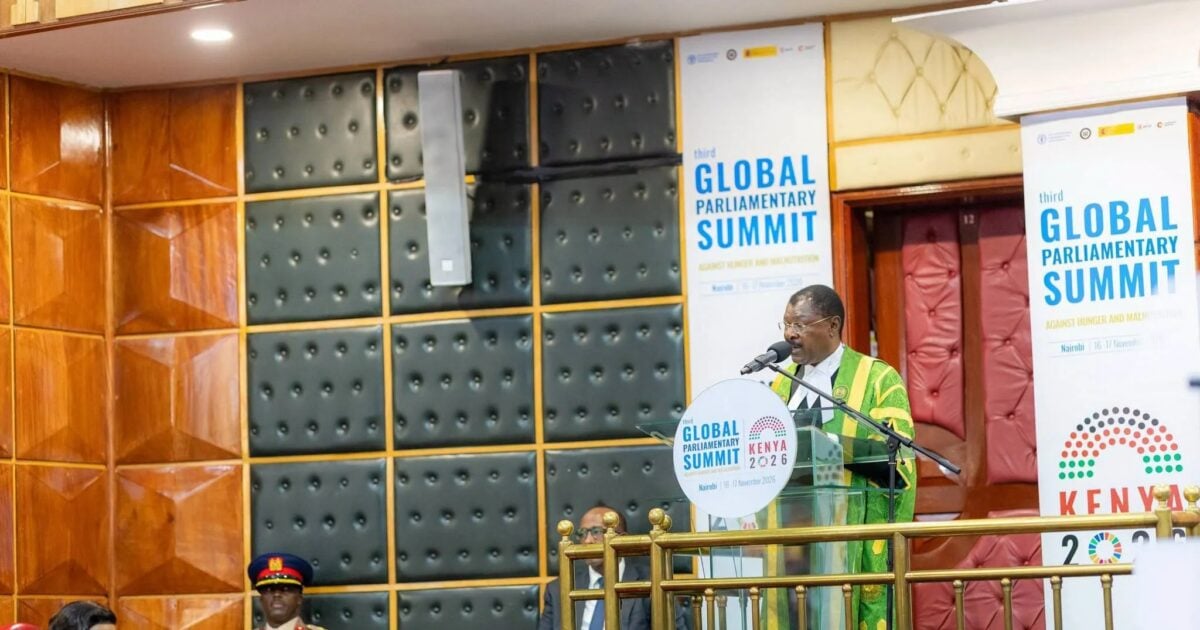
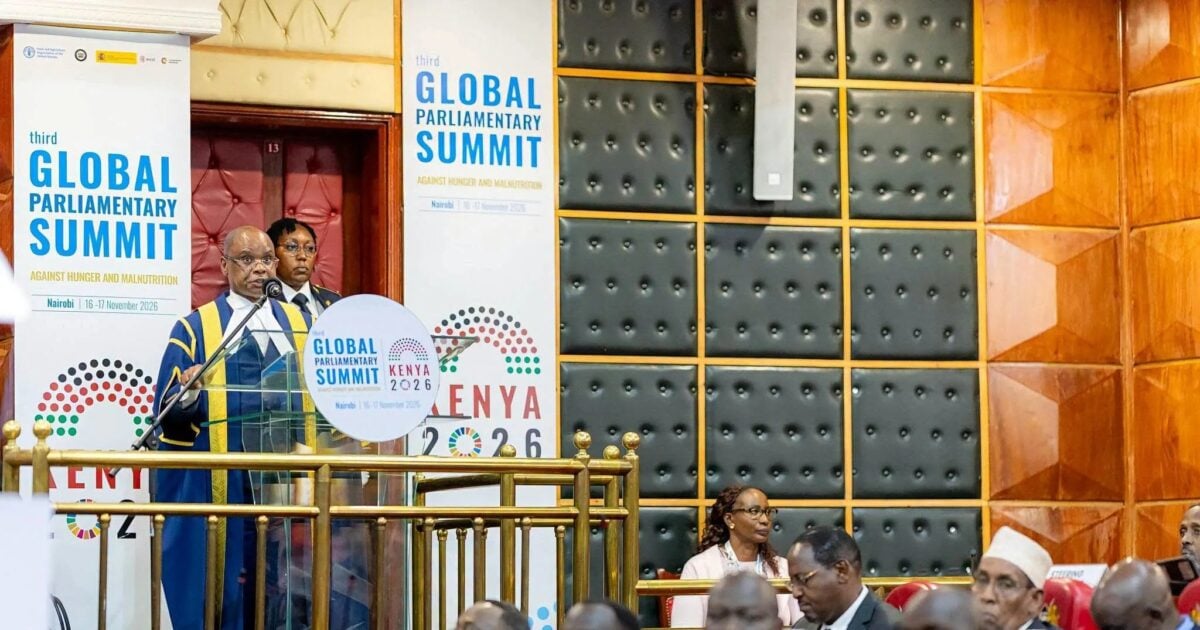
Speaking during the Third Global Parliamentary Summit Against Hunger and Malnutrition in Nairobi, the Senate Speaker said parliaments had a central role in tackling hunger through legislation, representation, budget scrutiny and accountability.
“Parliaments give effect to these rights through legislation, representation, budget scrutiny and oversight,” he said.
He called for equitable distribution of public resources, particularly investments in water infrastructure, agriculture and essential services in marginalised communities, arguing that regional inequalities continued to undermine access to food.
“Ensuring fair revenue sharing and investment in basic services, including water and farm commodities in marginalised communities, is essential to making the right to food a reality throughout the continent,” Kingi said.
The Speaker also called for greater public participation in decisions affecting food security, saying involving citizens in policymaking strengthened the quality, transparency and legitimacy of government interventions.
“Additionally, public participation, a central pillar of democracy, strengthens the quality and legitimacy of these decisions,” he said.
Citing the 2026 United Nations report on food security and nutrition, Kingi said an estimated 645 million people experienced hunger globally in 2025, including approximately 309 million Africans, representing one in five people on the continent.
He noted that two-thirds of Africa’s population could not afford a healthy diet, describing the figures as evidence of the scale of the continent’s food security crisis.
“Global hunger fell for the third consecutive year, but in Africa, about 309 million people, one in five, still faced hunger. Two in three people on our continent could not afford a healthy diet. These findings underscore the urgency of our deliberations,” he said.
Kingi warned that conflicts, economic instability and climate-related shocks continued to disrupt food production and access, disproportionately affecting vulnerable populations.
He urged governments to adopt coordinated interventions that address these interconnected challenges and the structural inequalities that leave some communities more exposed to food insecurity.
“Our responses must address these interconnected pressures and the inequalities that leave some communities particularly exposed,” he said.
The Senate Speaker said the Nairobi summit provided an opportunity for legislators to assess progress made under previous international parliamentary commitments and identify gaps in implementation.
He said the three thematic areas guiding the meeting offered a framework for strengthening parliamentary action, particularly in addressing inequality, improving rural livelihoods and ensuring access to safe, affordable and nutritious food.
“The three themes of this Summit provide a common framework for that work. Realising the right to food through inclusive development and social justice requires addressing inequality and strengthening rural livelihoods. Promoting healthy diets requires attention to affordability, food safety and nutrition throughout life,” he said.
Kingi urged delegates to align their legislative and budgetary priorities with the African Union’s Kampala Declaration and its agricultural development strategy for 2026 to 2035.
He said the commitments provided a framework for measuring progress through laws enacted, resources allocated and concrete measures taken to uphold the right to food.
“The Pact provides a basis for assessing our progress. It asks us to consider the laws and policies advanced, the resources allocated and the action taken to uphold the right to food,” he said.
He further challenged parliamentarians to use the Nairobi summit to develop practical interventions that would translate continental commitments into action, including strengthening public participation, promoting gender equality and enhancing cooperation between institutions and across national borders.
Kingi identified three priority areas for parliamentary action: advancing the right to food through inclusive development and social justice, promoting healthy diets and building resilient and sustainable agri-food systems.
He said addressing inequality and strengthening rural livelihoods were essential to guaranteeing food security, while improving access to affordable, safe and nutritious food required sustained interventions throughout people’s lives.
- food
- kingi
- security
- people
- continent
- community
- hunger
- inequality