Ebola: NCDC urges hospitals to act before laboratory confirmation

The NCDC Director-General, Jide Idris, gave the directive during a media briefing in Abuja on Sunday, stressing that healthcare workers must promptly identify and report suspected cases without waiting for laboratory confirmation.
The Director-General of the NCDC, Jide Idris
The Nigeria Centre for Disease Control and Prevention (NCDC) has urged public and private healthcare facilities nationwide to strengthen infection prevention measures and isolate suspected Ebola cases before laboratory results are available.
The NCDC Director-General, Jide Idris, issued the directive during a media briefing in Abuja on Sunday, stressing that healthcare workers must promptly identify and report suspected cases without waiting for laboratory confirmation.
The call comes five days after Nigeria confirmed its first Ebola case in more than a decade, involving a 42-year-old Ugandan-born woman living in Abuja who recently travelled to Uganda.
Officials confirmed her infection on 20 October, prompting the federal government to activate a coordinated public health response.
Speaking further on the response, Mr Idris called on leaders of all public and private healthcare facilities in Nigeria to review and strengthen infection prevention and control measures.
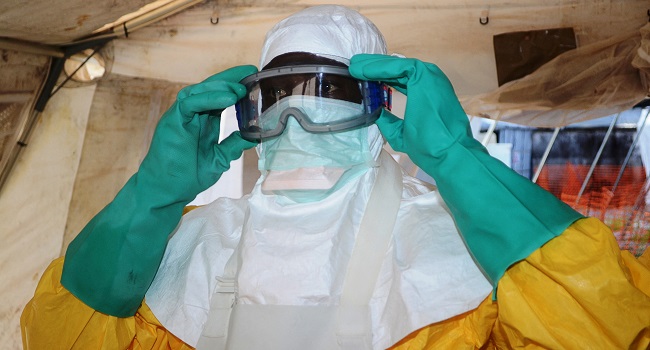
He said hospitals must consistently implement screening and triage procedures, ensure appropriate personal protective equipment is available, and train healthcare workers to use it correctly.
“Any suspected case must be promptly separated from other patients and reported to the relevant public health authorities,” he said.
“Healthcare workers should not wait for laboratory confirmation before taking appropriate precautions.”
Mr Idris also emphasised the importance of standard precautions, including regular hand hygiene, environmental cleaning, injection safety, safe handling of sharps and proper waste management.
Mr Idris said the NCDC was working with FCT health authorities to strengthen screening, triage, isolation readiness and healthcare worker protection.
The agency was also assessing priority facilities and deploying trained infection prevention and control professionals to provide practical guidance and mentorship.
The directive comes as health authorities continue investigating the circumstances surrounding the confirmed infection and work to prevent further transmission.
PREMIUM TIMES previously reported that the woman developed symptoms on 6 October, three days after returning to Nigeria, and initially sought treatment at a private hospital, believing she had malaria.
She later visited another private hospital, where she was admitted on 11 October after her condition failed to improve. Her infection was subsequently confirmed through laboratory testing.
Explaining how the case was detected, Mr Idris said healthcare workers attending to the patient recognised clinical features that raised concern. Their vigilance contributed to an alert being captured through the NCDC’s event-based surveillance system.
He said the development demonstrated the importance of surveillance systems and the role of healthcare workers in identifying unusual health events that require investigation.
According to him, the national response involves the Federal Ministry of Health and Social Welfare, the NCDC, FCT health authorities, other relevant government agencies and technical partners.
He said the response is being coordinated through a structured Incident Management System and the Emergency Operations Centre, under the national leadership of the Coordinating Minister of Health and Social Welfare and the Presidential Task Force on Ebola virus disease.
Mr Idris commended healthcare workers whose clinical judgement and vigilance helped identify the case, saying their role was critical in triggering the public health response.
He said the government was drawing on experienced clinicians and case managers, including professionals who participated in Nigeria’s previous Ebola response, to support clinical management and infection prevention efforts.
The NCDC is also maintaining heightened surveillance and strengthening laboratory capacity to ensure that suspected cases can be promptly investigated and tested.
Mr Idris said the response would prioritise the safety, health and welfare of healthcare workers, adding that the government would continue to review its plans as new information became available.
He said the immediate priorities remained protecting healthcare workers, providing appropriate clinical care and preventing transmission into the wider community.
- ncdc
- laboratory
- confirmation
- ebola
- hospital
- director
- general
- jide