Ghana’s GH¢28.8 Billion Bond Buyback: A step towards restoring financial confidence

Government’s planned buyback of GH¢28.8 billion in domestic bonds is an important development in Ghana’s continuing effort to restore confidence in its public finances. During the presentation of the 2027 Budget, Finance Minister Dr Cassiel Ato Forson announced that Government had accumulated approximately GH¢29 billion in the Cedi Sinking Fund as of November 11, 2026.
Government’s planned buyback of GH¢28.8 billion in domestic bonds is an important development in Ghana’s continuing effort to restore confidence in its public finances. Although the figures may appear technical, the underlying issue is quite simple. Government is preparing to settle a substantial debt obligation before it becomes due in February 2027. It is a move that deserves attention, not merely because of the amount involved, but because of what it says about the management of public money.
To understand the significance of this decision, it is necessary to understand what a government bond is. A bond is essentially a loan. Government borrows money from investors, including banks, pension funds and individuals, with a promise to repay the amount at an agreed date. In return, investors receive interest for allowing Government to use their money.
This is a normal feature of modern economies. Governments borrow to finance development, support public services and meet other national obligations. The difficulty arises when borrowing becomes expensive, repayment obligations accumulate and the country struggles to meet its commitments.
That was the position Ghana found itself in towards the end of 2022.
The Domestic Debt Exchange Programme (DDEP) was introduced as part of efforts to address the country’s debt crisis. Government asked holders of certain domestic bonds to exchange their existing investments for new securities with different repayment periods and lower interest rates. In practical terms, investors agreed to receive their money over a longer period and under revised financial conditions.
The exercise helped Government reduce immediate pressure on its finances. However, it also placed considerable responsibility on Government to honour the new repayment arrangements. The bonds did not disappear. Their repayment dates simply changed.
Some of those obligations are now approaching maturity.
Government is therefore preparing to buy back approximately GH¢28.8 billion in DDEP bonds originally scheduled to mature in February 2027. The proposed transaction is intended to settle the bonds ahead of their original repayment date. It is part of a broader debt management exercise designed to address upcoming obligations in an orderly manner.
The important question is where the money will come from.
During the presentation of the 2027 Budget, Finance Minister Dr Cassiel Ato Forson announced that Government had accumulated approximately GH¢29 billion in the Cedi Sinking Fund as of November 11, 2026. A sinking fund is simply money set aside over time to meet a future financial obligation.
The idea is familiar to most households. Rather than waiting until a major bill arrives, one puts money aside in advance. When the payment date comes, the resources are already available. Governments can apply the same principle to public debt.
The Finance Minister also indicated that the February 2027 obligations comprised approximately GH¢29 billion in principal and GH¢11.1 billion in interest. Together, these amount to GH¢40.1 billion.
It is important to understand the distinction. The principal is the original amount borrowed, while interest is the additional cost Government pays for using investors’ money. The proposed GH¢28.8 billion buyback concerns the bonds targeted under the current transaction, while the GH¢40.1 billion represents the wider principal and interest obligation associated with the February maturity.
For ordinary Ghanaians, these figures may seem distant from everyday concerns. They are not.
Government’s ability to manage its debts affects the wider economy. When public debt becomes difficult to service, the consequences can extend to interest rates, business financing, public investment and the cost of living. It can also reduce the resources available for essential services such as education, healthcare and infrastructure.
There is also an important institutional dimension. Banks, pension funds and insurance companies hold government securities as part of their investments. When Government fails to meet its obligations, the effects can extend beyond the immediate bondholders. Financial institutions may face pressure, and the savings and investments of ordinary citizens can be affected.
This is why the proposed buyback matters.
It offers Government an opportunity to demonstrate that debt restructuring must be followed by responsible repayment. The DDEP was an exercise in managing a financial crisis. The next stage must be about rebuilding confidence in the institutions and financial arrangements that support the economy.
However, we should not mistake an early repayment exercise for the complete resolution of Ghana’s debt challenges. Buying back one set of bonds does not mean that the country’s entire debt burden has been settled. Government has already indicated that approximately GH¢58 billion in DDEP bonds will mature in 2027, with a further GH¢53 billion expected in 2028.
The challenge, therefore, extends beyond February 2027. Ghana must develop a consistent approach to managing these obligations without returning to the conditions that made the debt exchange necessary in the first place.
This requires discipline in public expenditure, stronger domestic revenue mobilisation and greater care in the way Government contracts new loans. It also requires a clearer relationship between public borrowing and productive economic activity. Borrowing should support investments capable of improving national productivity, expanding employment and strengthening the country’s capacity to generate revenue.
There is little value in repeatedly borrowing to meet expenditure without building the economic capacity to repay those loans. A sustainable economy must be able to finance its ambitions while meeting its obligations.
The Government’s proposed bond buyback is therefore a welcome opportunity to demonstrate financial responsibility. Its ultimate value, however, will depend on the consistency with which the Government manages the wider debt portfolio and protects the public purse.
For investors, the most important assurance is that agreements will be respected. For businesses, it is that economic stability will be sustained. For ordinary citizens, it is that the management of public finances will eventually translate into better opportunities, more reliable public services and a stronger economy.
Ghana has already paid a considerable price for the mistakes of its recent debt crisis. The lesson should not be forgotten. Financial confidence is not restored by announcements alone, but by the steady fulfilment of obligations and the responsible management of national resources.
The proposed GH¢28.8 billion buyback is a step in that direction. The greater task is to ensure that Ghana never again has to ask its citizens and investors to bear the cost of an avoidable debt crisis.
A country’s creditworthiness is ultimately built on the confidence that it will honour its word.
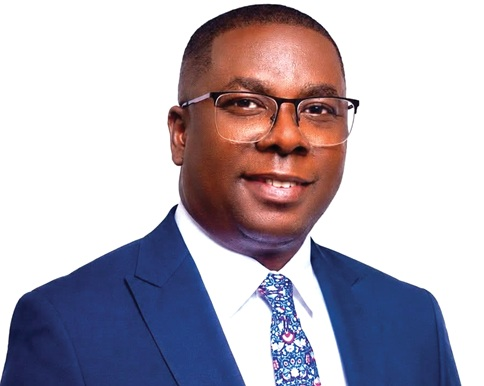
The writer is V. L. K. Djokoto, Director, Institute of Presidential Research.
- bond
- government
- obligation
- money
- debt
- ghana
- buyback
- interest