Showunmi urges Ribadu to sanction politicians threatening security
By James Ogunnaike, Abeokuta The Convener of The Alternative Movement, Otunba Segun Showunmi, has urged the National Security Adviser, Mallam Nuhu Ribadu, to establish clear standards for political conduct and ensure that politicians whose actions threaten Nigeria’s peace and security are held accountable, irrespective of their status or political affiliation. The letter was also copied to President Bola Tinubu; the Minister of Defence, General Christopher Gwabin Musa (rtd.); the President’s Special Adviser on Homeland Security, Major General Adeyinka A. Famadewa (rtd.); the Inspector-General…
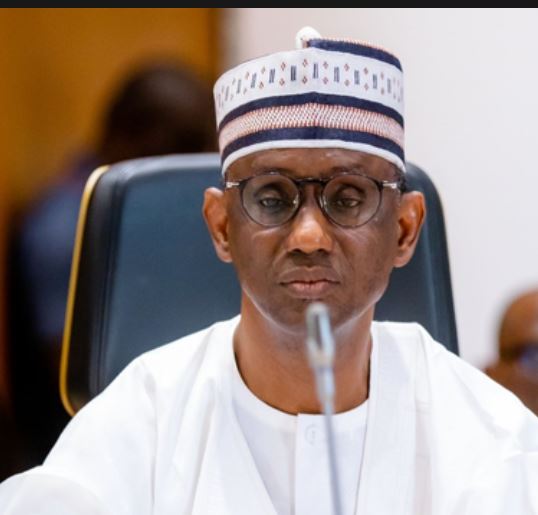
By James Ogunnaike, Abeokuta The Convener of The Alternative Movement, Otunba Segun Showunmi, has urged the National Security Adviser, Mallam Nuhu Ribadu, to establish clear standards for political conduct and ensure that politicians whose actions threaten Nigeria’s peace and security are held accountable, irrespective of their status or political affiliation.
Showunmi made the call in an open letter to Ribadu, expressing concern over what he described as the growing toxicity of political engagement, reckless public communication and the increasing use of inflammatory rhetoric by politicians, their supporters and other influential individuals. In the letter, titled, “An Open Letter to the National Security Adviser: On the Urgent Need to Establish Firm Boundaries for Political Conduct and Hold Those Who Threaten National Security Accountable,” he warned that Nigeria’s already precarious security situation could worsen if political actors continued to exploit sensitive national issues for partisan advantage.
The letter was also copied to President Bola Tinubu; the Minister of Defence, General Christopher Gwabin Musa (rtd.); the President’s Special Adviser on Homeland Security, Major General Adeyinka A. Famadewa (rtd.); the Inspector-General of Police, Mr Olatunji Rilwan Disu; the Director-General of the Department of State Services, Mr Oluwatosin Ajayi; and the Minister of State for Defence, Alhaji Bello Muhammad Matawalle.
Showunmi argued that political competition, personal ambition and partisan disagreements should not become additional threats to national stability. He noted that Nigeria was already grappling with multiple security challenges requiring vigilance, effective intelligence gathering, institutional coordination and responsible leadership. He urged political actors to recognise the far-reaching consequences of their words and actions.
“There is a difference between robust political engagement and conduct that deliberately or recklessly threatens public peace. There is a difference between criticising government and deliberately inciting citizens against one another,” he stated. He cautioned against the abuse of freedom of expression to promote hostility, circulate inflammatory narratives and undermine national cohesion.
According to him, the apparent normalisation of provocative statements, ethnic and religious insinuations, threats and inflammatory public performances had become a worrying development requiring urgent institutional attention. “Some individuals seem to believe that because they are politicians, party loyalists, public commentators or influential supporters of powerful political interests, they can say virtually anything, mobilise others irresponsibly and walk away without consequences.
That assumption must be firmly challenged,” he said. Showunmi maintained that national security must not be sacrificed for political ambition, stressing that democratic participation did not confer the right to incite violence, threaten citizens, encourage lawlessness or create conditions capable of triggering communal tensions. He urged the Office of the National Security Adviser to collaborate with relevant security and law-enforcement agencies to develop and publicly communicate clear standards governing political communication and conduct, particularly as political activities and competition intensify across the country.
Among the measures he proposed was the establishment of clearly defined boundaries for political communication, with politicians, political parties, spokespersons, campaign organisations and supporters expected to exercise responsibility in their public engagements. He insisted that political platforms must not be used to promote violence, ethnic hostility, religious antagonism, intimidation or threats to public peace.
The Alternative Movement convener also called for the impartial application of the law, insisting that public office holders, former office holders, party leaders, political financiers, campaign spokespersons, social media influencers and ordinary supporters should be treated equally whenever credible evidence of criminal conduct emerges. “There must be no sacred cows, no political exemptions and no selective enforcement,” he declared.
He advocated a coordinated rapid-response mechanism to address political misinformation and incitement. Such a mechanism, he said, should provide for the documentation of incidents, verification of information, correction of false narratives and responsible public communication. He cautioned public institutions against amplifying unverified allegations, while urging that deliberately fabricated information intended to provoke violence should be investigated in accordance with the law.
Showunmi further called on political parties and their leadership structures to take responsibility for maintaining discipline among their members, spokespersons and supporters. He argued that political parties should not enjoy the benefits of democ
- security
- showunmi
- ribadu
- politician
- national
- adviser
- letter
- general