Iran's growing exodus of young talent
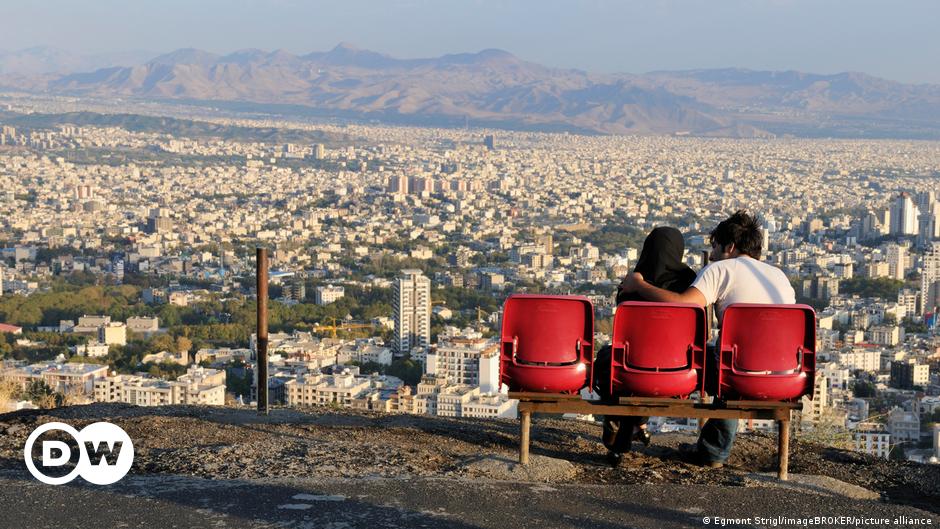
Conflict and uncertainty are driving more and more educated young Iranians to consider leaving the country.
"I had actually decided to leave Iran back in 2023," a physician in her mid-30s, who wished to remain anonymous, told DW.
Her decision followed the 2022 death in police custody of 22-year-old Iranian-Kurdish woman Jina Mahsa Amini, who had been arrested by Iran's so-called morality police for allegedly violating the country's strict dress code.
Amini's death sparked widespread protests and inspired the "Woman, Life, Freedom" movement, which challenged authorities' enforcement of Iran's hijab mandate.
The physician said that the US-Israel war with Iran ultimately accelerated her plans to leave her homeland. She has been living with her family in a rented apartment in Turkey since early summer. From there, they hope to continue on to Germany.
"It took two years for my professional qualifications to be recognized in Germany. After that, I applied for an appointment at the German Embassy in Tehran," the physician said.
"Then the 12-day war broke out in the summer of 2025. The embassy closed and suddenly we were all left in limbo, not knowing what would happen next."
She became concerned after the US and Israel launched fresh airstrikes on Iran on February 28, 2026 — not just about the escalating conflict, but also about the prospect of internal unrest and political instability.
"Like many others we encountered during the emigration process, we decided to first move to a neighboring country," she said. "The plan was to stay in a third country for six months and then apply for a visa through the German embassy there. That's why my family and I came to Turkey."
Turkey is one of the few countries that allows Iranian citizens to enter without a visa for up to 90 days.
Since the latest conflict began, thousands of Iranians have crossed the border into Turkey. Many are trying to secure their stay through residence permits rather than seeking asylum.
According to official Turkish statistics, nearly 100,000 Iranian citizens were residing there in 2025. Among them are many academics and skilled professionals hoping to settle permanently in Europe or North America, seeing little future for themselves in Iran's war-hit economy.
A US naval blockade of Iranian ports in the Gulf over the past few months has disrupted oil exports, trade and government revenues. The turmoil has compounded the impact of decades of sanctions and economic mismanagement.
The situation has put most businesses under pressure by restricting access to foreign currency and raw materials, among other problems, threatening revenues and jobs.
The worsening conditions have left many people struggling to afford food, housing, health care and education.
The physician said the situation at the German embassy in Tehran, however, has improved in recent months. Some of her unmarried friends, who also initially moved to Turkey and spent substantial sums maintaining their stay there, have already returned to Iran to submit new visa applications from home.
She and her husband, however, have decided to stick to their original plan and wait out the six-month residency period in Turkey despite the difficulties.
"I can't and don't want to go to Germany without my family. I don't know how long it would take for them to receive family reunification visas," she explained. "And I don't know what might happen in the meantime. A new war could break out at any moment."
The departure of highly qualified professionals and students has become one of the most pressing challenges facing Iranian society. Today, there are few families in which someone has not already emigrated or is not at least considering doing so.
A 2025 study by the University of Guilan in Iran examined the relationship between opportunities for social participation and students' willingness to emigrate.
The researchers found a statistically significant correlation: Students who felt they had fewer opportunities to shape their future in Iran were more likely to consider emigrating.
Economic concerns are only part of the picture. Limited political participation, social restrictions and a sense of powerlessness are also driving many young Iranians to leave.
Mahsa, who is in her mid-20s, told DW that she has already secured admission to a German university.
Ali, meanwhile, dreams of a life outside Iran. The 23-year-old holds a bachelor's degree in engineering and is currently preparing for the entrance exam for a master's program at a public university. His long-term goal is to obtain a stronger qualification and then leave Iran — ideally with a scholarship.
"That's my dream of a better future," he said.
- exodus
- talent
- iran
- conflict
- uncertainty
- iranians
- country


