business

Ghana’s credit rating has been ‘junk’ since independence – Gideon Boako

Ghana’s credit rating has been ‘junk’ since independence – Gideon Boako

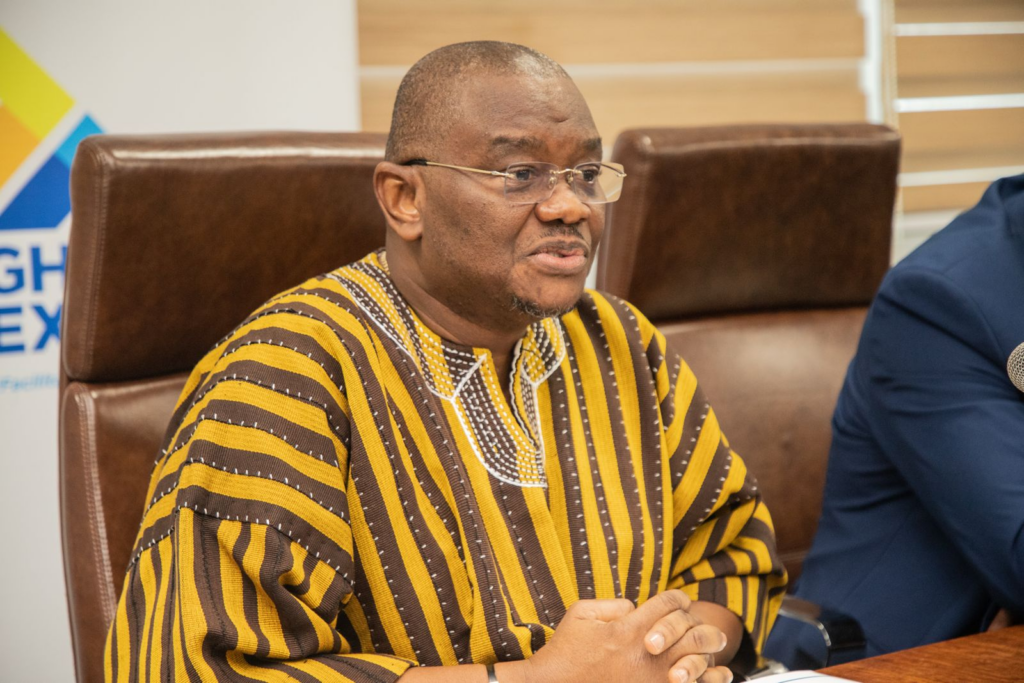
Tano North MP, Dr Gideon Boako, has argued that Ghana has never attained investment-grade sovereign credit status since independence, insisting that the country has consistently remained within the speculative or “junk” category under successive governments. Dr Boako further argued that the recent improvements in Ghana’s ratings, from default to CCC and subsequently B, represent progress within the speculative-grade category rather than a transition into investment grade.

Tano North MP, Dr Gideon Boako, has argued that Ghana has never attained investment-grade sovereign credit status since independence, insisting that the country has consistently remained within the speculative or “junk” category under successive governments.

In a fresh social media post on Monday, November 16, the former economic adviser to the Vice President said recent improvements in Ghana’s credit ratings should not be interpreted as the country graduating into investment-grade status.

His latest comments follow an earlier write-up in which he described Ghana’s current credit ratings as “junk”, sparking pushback from a section of Ghanaians, including members of the governing National Democratic Congress (NDC), who have challenged his characterisation of the country’s economic recovery.

Seeking to clarify his position, Dr Boako maintained that sovereign credit ratings fall into only two broad categories: investment grade and speculative or junk grade.

“Ignorance is not good. Ghana’s credit rating has always been in the speculative (junk) status from independence, and so are we now. A sovereign credit rating is either Investment Grade or Speculative (Junk) and we have never reached the former,” he stated.

He explained that investment-grade ratings begin at BBB- under S&P and Fitch, or Baa3 under Moody’s, while ratings below those thresholds fall within the speculative category.

According to him, Ghana has never crossed that threshold under any government, from independence to date.

“Ghana has never crossed from speculative to investment grade — not under any government, from independence to today,” he added.

Dr Boako further argued that the recent improvements in Ghana’s ratings, from default to CCC and subsequently B, represent progress within the speculative-grade category rather than a transition into investment grade.

“The recent upgrades — from Default to CCC to B — are progress inside junk, not a graduation out of it,” he said.

His latest intervention comes amid an ongoing debate over the significance of Ghana’s credit rating upgrades and whether they sufficiently reflect the country’s economic recovery and improved financial outlook.

  • rating
  • ghana
  • credit
  • junk
  • independence
  • grade
  • boako
  • investment

Summaries and tags are generated automatically. Stay informed with VidiaNews.

Related news

‘Where have you been all this while?’ – Bawah Mogtari challenges Boako over credit ratings
business

‘Where have you been all this while?’ – Bawah Mogtari challenges Boako over credit ratings

Senior Presidential Advisor and Aide to President John Dramani Mahama, Joyce Bawah Mogtari, has hit back at Tano North MP Dr Gideon Boako following his assertion that Ghana’s sovereign credit ratings remain in the “junk” category despite recent upgrades. Ms Bawah Mogtari questioned the credibility of Dr Boako’s criticism, arguing that the former NPP administration, which governed Ghana for eight years, had presided over a period of economic difficulties and should not be allowed to downplay the progress being made under the current government.

Read →
Ato Forson met a ladder in 2025, NPP met a hole in 2017 – Gideon Boako
business

Ato Forson met a ladder in 2025, NPP met a hole in 2017 – Gideon Boako

Tano North MP, Dr Gideon Boako, has accused Finance Minister Dr Cassiel Ato Forson of taking credit for economic gains largely built on measures implemented by the previous New Patriotic Party (NPP) administration. He argues that while the NPP inherited a struggling economy in 2017 and had to undertake difficult reforms to stabilise it, Dr Ato Forson assumed office in January 2025 with an ongoing IMF programme, substantial debt restructuring already completed and credit rating improvements underway.

Read →
Gideon Boako accuses Mahama of recycling $10bn promises from STX to New Economy Programme
business

Gideon Boako accuses Mahama of recycling $10bn promises from STX to New Economy Programme

Tano North MP Dr Gideon Boako has accused President John Dramani Mahama of repeatedly announcing ambitious US$10 billion projects without delivering on previous commitments. He made the accusation in a write-up issued on Sunday, November 15, in which he cited the STX housing deal, Hope City, the NDC’s Big Push infrastructure programme and the recently announced New Economy Programme as examples of what he described as a pattern of recycling the same financial commitment under different project names.

Read →
Fidelity Bank Atta Gyan calls for greater investment in Ghana’s productive sectors to drive industrial growth
business

Fidelity Bank Atta Gyan calls for greater investment in Ghana’s productive sectors to drive industrial growth

Fidelity Bank Ghana has called for greater mobilisation of domestic capital, investment in technology, and targeted policy interventions to accelerate industrialisation and turn Ghana’s economic recovery into sustainable growth. Atta Yeboah Gyan, Deputy Managing Director, Operations and Support Functions, Fidelity Bank Ghana, made the call at the 2026 Ghana Economic Forum, where the Bank served as Lead Sponsor.

Read →
GEXIM-backed cashew factory to create 1,500 jobs, boost Ghana’s value-added exports
business

GEXIM-backed cashew factory to create 1,500 jobs, boost Ghana’s value-added exports

Support from the Ghana Export-Import Bank (GEXIM) for the Nadkansco Cashew Processing Factory in Techiman is expected to strengthen Ghana’s agro-processing capacity, expand exports of value-added products and create up to 1,500 jobs. Ahead of the commissioning, GEXIM Chief Executive, Sylvester Adinam Mensah, said the Bank’s intervention reflected an understanding of the financing needs and operational cycles of agro-processing businesses.

Read →