Mbagathi extends diabetes services to five days amid rising cases of undiagnosed disease
NAIROBI, Kenya, Nov 16 – Mbagathi County Referral Hospital has expanded its diabetes clinic from two to five days a week in a move aimed at improving access to diagnosis, treatment and long-term care as Nairobi intensifies efforts to tackle the growing burden of the disease. The Centre for Driving Change in Diabetes was established through a partnership between Mbagathi Hospital, Nairobi City County and Novo under the iCARE programme.
NAIROBI, Kenya, Nov 16 – Mbagathi County Referral Hospital has expanded its diabetes clinic from two to five days a week in a move aimed at improving access to diagnosis, treatment and long-term care as Nairobi intensifies efforts to tackle the growing burden of the disease.
The clinic, which previously operated twice a week, will now run from Monday to Friday, allowing more patients to access specialised services without waiting for the limited clinic days.
The expansion comes amid concerns over the number of Kenyans living with undiagnosed diabetes, with Novo Middle Africa General Manager Jakob Mollerup estimating that more than 800,000 people in the country have the condition, over half of whom are unaware of their status.
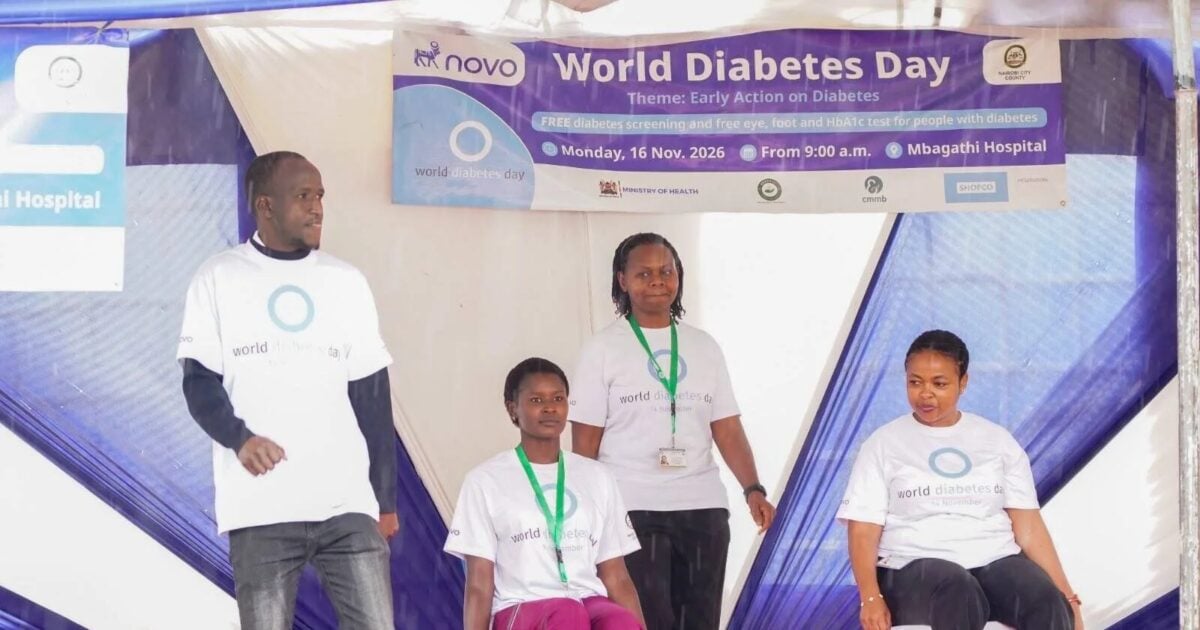
The announcement was made during a World Diabetes Day event held at the hospital under the theme Early Action on Diabetes, where up to 400 community members were expected to benefit from free screening and other health services.
Residents received diabetes and hypertension screening, HbA1c tests, eye and foot examinations, as well as HIV and tuberculosis screening.
The outreach also incorporated nutrition education, physical activity sessions led by a physiotherapist and discussions on diabetes prevention, diagnosis and management.
Mbagathi’s diabetes clinic, operated through its Centre for Driving Change in Diabetes, serves an estimated 250 to 300 patients every month. It also accepts walk-in patients and provides insulin support to eligible people living with Type 1 diabetes who are below 25 years.
Hospital Medical Superintendent Dr Erica Koima said the expanded operating schedule would improve access to care and help prevent complications associated with delayed diagnosis and treatment.
“Behind every patient attended to is a life being supported, a family being given hope and a complication potentially being prevented,” she said while speaking on behalf of the hospital’s Chief Executive, Dr Alexander Irungu.
The Centre for Driving Change in Diabetes was established through a partnership between Mbagathi Hospital, Nairobi City County and Novo under the iCARE programme.
Mollerup said early diagnosis and access to quality treatment were critical in addressing the country’s diabetes burden, particularly among people who might be living with the condition without knowing it.
“Early action speaks directly to the need for early diagnosis, early treatment and good-quality care,” he said.
“It is important that people are reached earlier, that they understand their condition and that they can access the support they need to manage it.”
Novo said its iCARE programme had established more than 92 Centres for Driving Change in Diabetes across Kenya, trained over 3,500 healthcare professionals and supported more than 6,100 people living with diabetes to access affordable insulin.
Nairobi County Director of Medical Services Dr Moses Owino said tackling diabetes required sustained public health interventions beyond annual awareness campaigns.
“We must encourage regular screening, promote healthier lifestyles and ensure patients receive continuous, patient-centred care,” he said.
People living with diabetes who attended the event also urged Kenyans to seek early testing and remain consistent with treatment, saying timely diagnosis and proper management could help them lead productive lives.
Eric Omondi, who has lived with Type 1 diabetes for 23 years, said the condition should not be viewed as a barrier to achieving personal and professional goals.
“With the right information, treatment and support, people living with diabetes can lead fulfilling and productive lives,” he said.
Fred Momanyi, who has lived with Type 2 diabetes for 13 years, encouraged people to establish their health status, noting that the condition could go undetected in people who do not experience obvious symptoms.
Health professionals at the event urged residents to adopt healthier lifestyles, remain physically active, manage their weight and seek medical attention when they experience possible symptoms such as excessive thirst, frequent urination, unexplained weight loss, persistent tiredness and blurred vision.
Bruhan Makong is a Senior News Reporter for Capital FM in Nairobi, covering diplomacy, foreign policy, national security, climate, and human rights across East Africa and the wider region.
- diabetes
- diabete
- people
- mbagathi
- diagnosis
- treatment
- patient
- hospital