67th NCH: Nasarawa seeks actionable resolutions to improve healthcare delivery

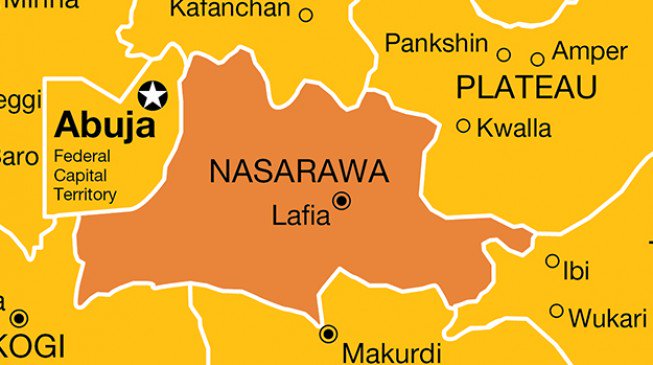
The Governor of the State, Abdullahi Sule, made the call on Monday while declaring open the Technical Session of the 67th National Council on Health (NCH) in Lafia, the state capital. Earlier, the Nasarawa state Commissioner for Health, Dr. Gwamna Gaza, described the meeting as a historic opportunity for the state to host health sector leaders from across the country for the first time.
By Chidinma Chukwu, Abuja The Nasarawa State Government has called on health sector leaders across the country to translate commitments and policy decisions into measurable outcomes that will improve healthcare delivery, particularly at the grassroots. The Governor of the State, Abdullahi Sule, made the call on Monday while declaring open the Technical Session of the 67th National Council on Health (NCH) in Lafia, the state capital.
This was contained in a statement signed by the Assistant Director of Information and Public Relations, Ministry of Health and Social Welfare, Ado Bako. Represented by the Deputy Governor, Dr. Emmanuel Akabe, Sule said the Council provided an important platform for stakeholders to develop practical solutions to the challenges confronting Nigeria’s health sector.
He expressed confidence that deliberations under the theme, “From Commitments to Results: Delivering Quality and Equitable Healthcare for All Nigerians,” would produce actionable recommendations to strengthen the country’s healthcare system. The Governor described Nasarawa’s selection as host of the national meeting as a privilege and an opportunity to showcase the state’s peaceful environment, hospitality and economic potential.
He also reaffirmed the state government’s commitment to supporting national health sector reforms and ensuring a successful meeting. He urged delegates to take advantage of the state’s hospitality during their stay. Earlier, the Nasarawa state Commissioner for Health, Dr. Gwamna Gaza, described the meeting as a historic opportunity for the state to host health sector leaders from across the country for the first time.
He stressed that decisions reached at the Council would have far-reaching implications for the country’s health sector, urging participants to remain conscious of the fact that they were also beneficiaries of the policies and reforms being formulated for Nigerians. He also called for active participation and constructive contributions, assuring delegates that the state government and relevant institutions were available to address any challenges they might encounter during the meeting.
Presenting the procedures for the Technical Session, the Permanent Secretary of the Federal Ministry of Health and Social Welfare and Chairman of the Technical Committee, Daju Kachollom, said the two-day meeting, scheduled for November 16 and 17, would provide the technical foundation for the main Council meeting on November 19 and 20. She explained that the main Council meeting would be chaired by the Coordinating Minister of Health and Social Welfare, Prof.
Muhammad Ali Pate. According to her, the Technical Committee would review proceedings and the implementation status of resolutions reached at the 66th Regular National Council on Health, consider memoranda submitted by the Federal Government, state governments and other ministries, and develop recommendations for consideration by the Council. Kachollom, said the memoranda submitted for consideration were organised around the four pillars of the Health Sector Strategic Blueprint.
The pillars, she listed, were effective governance; efficient, equitable and quality health systems; unlocking value chains; and health security. She said the submissions would address critical areas, including the implementation of the National Health Act, multisectoral health interventions, clinical research and development, as well as strengthening Nigeria’s capacity to detect, prevent and respond to public health threats.
These threats, she noted, included cholera, Lassa fever, cerebrospinal meningitis and measles. To ensure focused deliberations, the Permanent Secretary said summaries of the memoranda had been prepared as working documents, while authors would be given five minutes each to present their submissions, highlight key issues and outline recommendations.
“The Secretariat will subsequently consolidate the Technical Committee’s recommendations for consideration by the Council,” she said. She also disclosed that the Ministry had adopted an electronic documentation system for the Council, with relevant meeting documents preloaded onto tablets provided to participants.
- health
- state
- nasarawa
- healthcare
- council
- meeting
- sector
- government