‘I’m not ready to go to jail’: co-founder of Egypt’s last independent media outlet faces prison
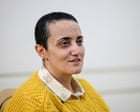
Mada Masr, the news site co-founded by Lina Attalah just before the 2013 military coup, is fighting for its life after being shut down, but its journalists have not given up hope Facing a year in prison for running Egypt’s leading independent news outlet Mada Masr, Lina Attalah is trying to focus on the everyday: waking at dawn to hear the birds sing before Cairo’s streets come alive and visiting Mada Masr’s shuttered offices with her reporters to water the plants and feed their four cats. Attalah is the reluctant face of Egypt’s embattled independent press at a moment of crisis.
Mada Masr, the news site co-founded by Lina Attalah just before the 2013 military coup, is fighting for its life after being shut down, but its journalists have not given up hope
Facing a year in prison for running Egypt’s leading independent news outlet Mada Masr, Lina Attalah is trying to focus on the everyday: waking at dawn to hear the birds sing before Cairo’s streets come alive and visiting Mada Masr’s shuttered offices with her reporters to water the plants and feed their four cats.
Attalah is the reluctant face of Egypt’s embattled independent press at a moment of crisis. In the last six weeks, Egyptian authorities have waged a renewed crackdown on the few remaining independent media outlets left in the country, beginning with the arrest of the entire newsroom of the factchecking website Matsadaash.
The six journalists from Matsadaash have since disappeared from public view after being accused of spreading “false news”, with Amnesty International reporting they had been subjected to “torture and other ill-treatment to force them to record self-incriminating statements on video”.
This week Attalah herself returns to court, on charges of “publishing false news” and running an unlicensed website – charges that carry a fine equivalent to about £28,000 and a year in prison. Her freedom, the future of Mada Masr – where she is editor in chief – and what remains of Egypt’s independent media, hangs in the balance.
“I’m hopeful but I’m scared,” she says. “Obviously I’m not ready to go to jail, but I don’t know that anyone can be ready to go to jail.”
Egypt is one of the hardest places in the world to be a journalist, ranking 169th out of 180 countries in Reporters Sans Frontières global press freedom scale. The risk of prison looms large: 25 journalists are behind bars now, according to the New York-based Committee to Project Journalists.
Attalah is fearful she could be next. Her outlet, Mada Masr, was born in June 2013, days before Egypt lurched towards a military coup, in which the president, Abdel Fatah al-Sisi, seized power. Since then the space for independent journalism has all but collapsed, with Mada Masr often the lone voice remaining.
It has long faced attacks and being blocked along with 20 others in 2017, all accused of “supporting terrorism”, and “spreading lies”. A year later, the authorities introduced a new law requiring them to register for a licence, but their application was left in limbo. This was when a regular pattern of police raids and interrogations began, says Attalah.
Despite this they have continued to break news, including on Egyptian intelligence services profiting from Israeli gas sales, and showcase reporting from Sudan and Gaza.
“We’ve managed to operate through one crisis after the next, to keep going and do the day-to-day reporting you would expect from a professional newsroom – except that the circumstances have become harder,” says Attalah. “As long as we’re not shut down, so long as we’re not in prison, then there’s really no reason to stop.”
In late October, a court ordered Mada Masr to be closed and its equipment seized, along with a fine equivalent to nearly £42,400. Attalah feared she was going to be imprisoned after she was handcuffed and bundled into a cell below the court. “I thought, they don’t do this with anyone who’s supposed to just pay a fine,” she says.
Mada Masr’s supporters banded together to pay the initial fine and free Attalah from the court cells, but later learned of new charges against her, including of allegedly spreading “false news”.
Thameen Al-Kheetan, a spokesperson for the United Nations human rights agency (OHCHR), has warned of “widening assaults on press freedom by Egyptian authorities”, while international observers have accused the US – which recently disbursed $320m (£243m) in military aid to Egypt – and others of complacency.
Timothy Kaldas, of the Washington-based Tahrir Institute for Middle East Policy, says: “It is no exaggeration to say that the court order to shutter Mada Masr, and ongoing efforts to jail Attalah, represent an effort by Egypt’s leaders to fully eliminate what remains of independent journalism in the country.”
Attalah hopes it is not the end for Mada Masr and that the outlet and journalists can remain free from government control. Their 45 staff in Egypt, along with more working from exile in Greece and Lebanon, still gather together online for a morning editorial meeting. Readers continue to fill their inbox with demands for new investigations. And while their normal publishing schedule is suspended, she insists their offices in central Cairo are not permanently closed.
Representatives of the same government trying to shut them down were quoted in their coverage just weeks ago. “We’ve heard comments from people in government who say things like they are always impressed with the level of accuracy in our reporting. I think that’s created a sense of trust with different sources, who speak to us despite the limitations,” says Attalah.
While some of Mada Masr’s reporters now work from overseas, Attalah said she has never considered working from exile despite the mounting threats. Young journalists keep asking to train with them, fuelling their motivation to keep what remains of Egypt’s free press in operation.
“I want to stay. Maybe we will fight. But I want to stay and work,” says Attalah. “For us to be able to do journalism from, about and in this country, we need to be rooted here. I also feel like part of that is to be visible to everyone who’s running this country. We have nothing to hide.
“We’re privileged not to be forced out of home and also to do a job that we are deeply passionate about,” she says. “For me, in the end it’s intuitive: I’m doing a job I love. Why would I not want that?”
- egypt
- outlet
- prison
- mada
- masr
- attalah
- jail
- medium