Ghana wins two ITU seats in Doha: what the victories mean for the country’s digital future

Ghana left the ITU Plenipotentiary Conference in Doha, Qatar, with two elected seats. An unbroken seat since 2002 Ghana has held a seat on the ITU Council without a break since 2002.
Ghana left the ITU Plenipotentiary Conference in Doha, Qatar, with two elected seats. It was re-elected to the ITU Council for the 2027 to 2030 term, alongside 12 other African countries.
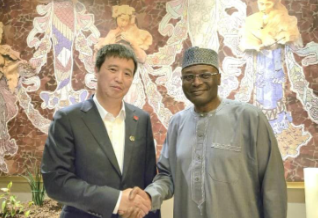
Rev. Ing. Edmund Yirenkyi Fianko, Director-General of the National Communications Authority (NCA), was re-elected to the Radio Regulations Board (RRB). He polled 173 of a possible 177 votes, taking one of three African seats on the Board.
The Minister for Communication, Digital Technology and Innovations, Samuel Nartey George, announced both results on Monday, 16 November 2026. According to the Minister, Fianko's tally was the highest among all RRB candidates across all five ITU regions.
The two positions are often reported together, but they do very different work. Readers need the distinction to understand why both matter.
The ITU is the United Nations agency for information and communication technologies. Its Council runs the Union between its four-yearly Plenipotentiary Conferences. It oversees programmes, budget and finances, prepares strategic and financial plans, and considers broad telecommunication policy.
Africa is ITU Region D and holds 13 Council seats. A seat at that table gives Ghana a direct voice in how the Union spends its money and sets its priorities for developing countries.
Every mobile call, radio broadcast, and satellite link depends on radio frequencies, a shared and limited global resource. The RRB is a 12-member body that approves the rules for applying the international Radio Regulations and hears disputes brought before it.
Members sit as independent experts, not as national delegates. Their technical credibility is therefore the whole case for their election.
Fianko was first elected to the Board in 2022 with 126 votes. Four years later, his support has risen by 47 votes to near-unanimity among the 177 Member States that voted.
That increase is a verdict on his first term. Member States who watched him work on the Board chose to return him with a stronger mandate. He is only the second Ghanaian to serve on the RRB, after the late Major (Rtd) John Ray K. Tandoh, elected in 1998.
For Africa, the result places a Ghanaian engineer at the centre of decisions on spectrum and satellite orbits. Those decisions shape the continent's connectivity costs and reach for years.
Ghana has held a seat on the ITU Council without a break since 2002. The Doha result extends that record into a seventh consecutive term and to almost three decades of continuous representation by 2030.
Successive governments, the NCA, and Ghana's diplomatic service built that continuity. It is also a record that can be lost: Council elections in Region D are contested, and no one is guaranteed a seat.
This is where the Minister's leadership comes in. The Doha votes ended a campaign that started a year earlier.
Sam George has been clear that this was a team result. In his announcement, he thanked the agencies that worked on the elections, Ghana's Ambassador to Qatar, H.E. Abdulwahab Ali Wadey, the Foreign Ministry teams in Accra and Geneva, and his own Ministry staff.
"I trust the competence of the team I work with to deliver." Sam George, Minister for Communication, Digital Technology and Innovations
That accurately describes how ITU seats are won. A Minister can lead, open doors and close the deal in the room. The votes still rest on years of technical work by the NCA and on the relationships Ghana's missions maintain between conferences.
Ghana did not campaign on its history alone. Sam George delivered Ghana's policy statement to the Plenipotentiary Conference, and its argument was built for an audience of regulators and engineers.
"A signal is not a connection, and a tower is not a transformation. Coverage must become usage. Usage must become impact." Sam George, Ghana's policy statement to PP-26
He asked for an ITU that measures success in results, not resolutions. He also called for equitable access to spectrum and satellite orbits for every nation, the very issues the Radio Regulations Board rules on.
That alignment mattered. Ghana asked delegates to back a Board candidate while making the case, at the same podium, for fairer access to the resources the Board manages.
The Minister also set out a domestic record and commitments that delegates could measure.
He told the conference that Ghana is targeting more than 70 per cent 5G population coverage by March 2027, timed for the country's 70th independence anniversary. He also pointed to work to complete 2,016 rural telephony sites and upgrade older 2G and 3G masts to 4G and 5G-ready networks.
"Talent is everywhere, but opportunity is not." Sam George, addressing PP-26 in Doha
He closed Ghana's statement with a line that sums up its position in global digital governance: "No nation is truly connected until every nation is connected." Part 2 of this series examines how far that agenda has progressed at home.
Sam George summed up the next step in one sentence: "Now the focus moves to the task over the 2027-2030 cycle." Doha's real test is what Ghana does with the four-year mandate.
Three questions will define that test. Will Ghana use its Council seat to push for affordable connectivity and financing for developing countries? Will it use Fianko's standing to protect African spectrum interests, including for satellite services? And will it bring the lessons of these forums home, into cheaper and more reliable service for Ghanaian users?
Ghana has earned the seats. The next four years will show whether it can turn international standing into influence that Ghanaians can feel.
- itu
- ghana
- doha
- seat
- council
- country
- vote
- radio