Senate paraquat inquiry under fire over vote to skip public hearings
A vote to forgo public hearings in a controversial Parkinson’s linked chemical inquiry has raised the ire of advocates and neurologists who claim industry has been prioritised over the public.
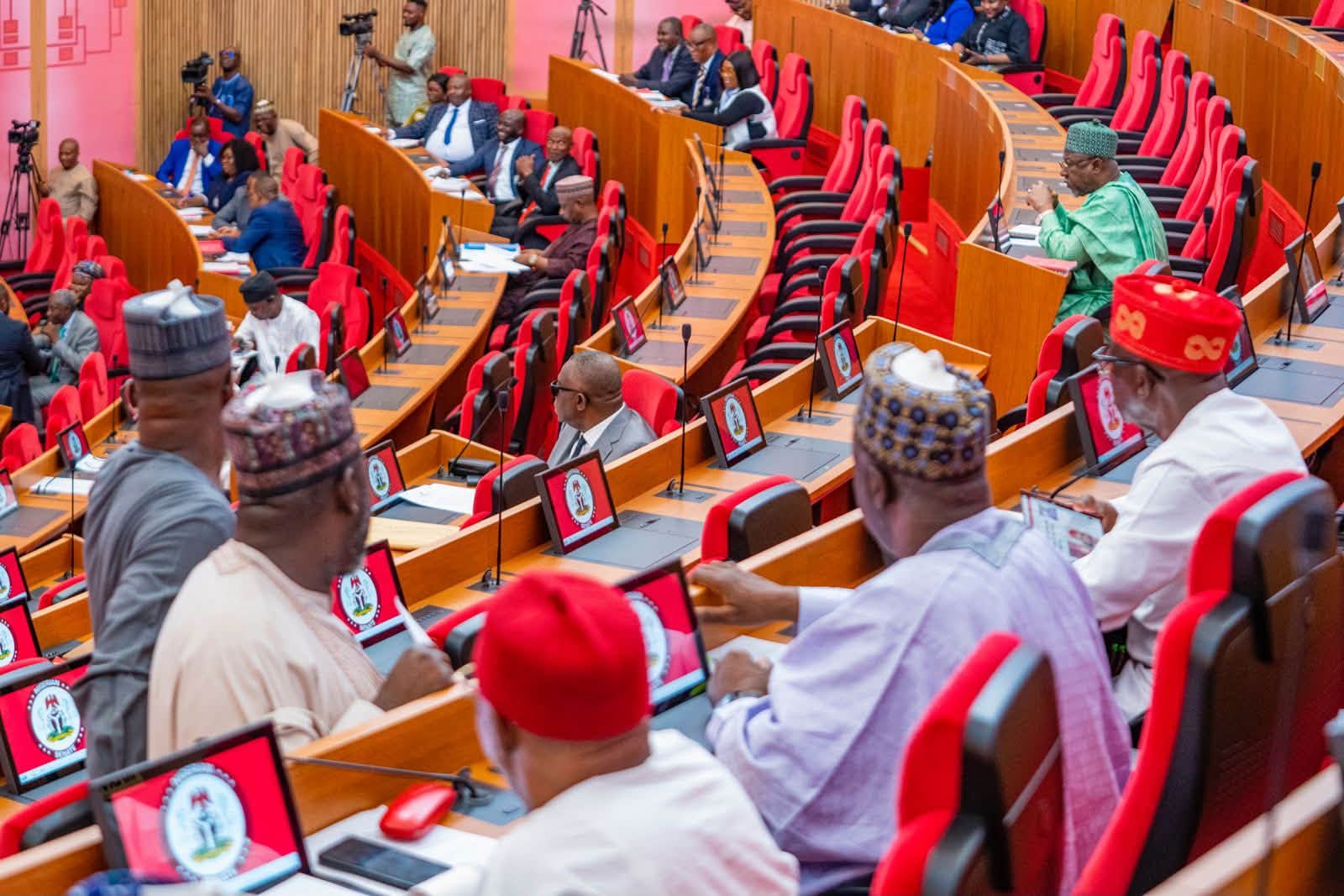
For the first time in a decade, a Senate committee charged with investigating the use of the weedkiller paraquat will not hold public hearings.
Senators, neurologists and Parkinson's disease advocates say they have been gagged from publicly scrutinising the regulator.
The Senate committee will complete an interim report next year.
Neurologists and Parkinson's disease advocates say they have been gagged from publicly criticising the pesticides regulator as a Senate inquiry closes its doors to public hearings.
The Senate committee tasked with reviewing the controversial chemical paraquat, which has been linked to Parkinson's, will not hold public hearings for the first time in a decade.
The inquiry has been set up to examine the use of paraquat in Australia, given concerns of its links to Parkinson's disease.
Farmers use paraquat to control weeds in a range of crops, from broadacre grains to orchards and vineyards.
The Senate Standing Committee on Rural and Regional Affairs and Transport has chosen to complete an "on paper" review of submissions to the "continued use and regulation of paraquat" inquiry.
The terms of reference include an investigation of the regulator charged with giving the chemical the green light, the Australian Pesticides and Veterinary Medicines Authority (APVMA).
The committee was set to hear from some of the country's leading Parkinson's Disease experts, who have heavily criticised the regulator's review of the chemical in their submissions to the inquiry.
David Blacker, a neurologist from WA and Parkinson's sufferer, is among them.
"For the public to have confidence in any decision, it has to have transparency," he said.
Professor Blacker said his cohort of dozens of neurologists from around the country were hoping to publicly raise issues with the regulator's final review of paraquat, which was released in June after a decades-long process.
"There are internal flaws of logic, there are contradictions, there are straight-out transcription errors of numbers in studies that lead to fairly substantial conclusions in the wrong way."
Professor Blacker said the APVMA had misinterpreted the AGVET code when making its decision on the continued use of paraquat in Australia.
"If we develop a new drug or treatment, before we give it to the general population, we have to definitively prove that it is safe," he said.
"Whereas the scenario that has evolved in Australia is completely the opposite of that, where the potentially hazardous chemicals are used and we've had to demonstrate harm before action will occur, which is completely the wrong way around."
Independent ACT senator David Pocock sits on the Senate committee tasked with the inquiry and agrees the regulator needs serious scrutiny.
"There's some really fundamental questions about how our national pesticide regulator conducts scientific reviews, with many experts questioning whether its methods are actually transparent and replicable," he said.
"If other scientists can't independently scrutinise or replicate how the regulator assessed the evidence, then I think there is a serious problem and the Senate should be looking at that."
Mr Pocock said the major parties colluded to shut down hearings, and was worried it would impact the outcome of the committee report.
Mr Pocock put a motion to the Senate to call for public hearings, but it was defeated in what he calls a "very unusual" vote.
"So this is very unusual for the Senate, and it's the major parties voting against public hearings."
Mr Pocock pointed to public pressure on the committee from industry groups after the inquiry was announced in September as a reason for the backflip.
"I can't speak for them. I'd love them to actually give us an answer on that because a number of senators on that committee in the past have really pushed for public hearings and have talked about the value of them and that isn't the case with this particular inquiry," he said.
In a statement to the ABC, deputy chair of the committee, Nationals senator Ross Cadell, denied industry pressure came to bear on the vote.
"That's a personal view and industry has nothing to do with it," he said.
CEO of Parkinson's Australia, Olivia Nassaris, said she was "disgusted" by the move to forgo public hearings.
"I was shocked and I felt deeply disgusted that there wasn't a public hearing because I had told people living with Parkinson's that they were going to be able to represent their truth to the Senate committee, and now they don't get that opportunity, and I don't think that's what our democracy is built on," she said.
Ms Nassaris said she believed the committee and the chemicals regulator had bowed to pressure from industry groups.
"I definitely think that they're not wanting to hear from people living with Parkinson's, and the saddest thing about being gagged is that you are gagging people who are living with a degenerative, incurable condition."
In a statement, the APVMA said it "does not accept that its decision was shaped by farming industry pressure or that it failed to correctly apply the statutory criteria in the AGVET Code".
"The final decision did not allow paraquat use to continue unchanged. It introduced significant restrictions, including reduced application rates, strengthened worker protections and the removal of uses that did not meet the statutory criteria," the statement said.
The APVMA has made changes to usage requirements, and said if used according to guidelines — which are now stricter than ever — it does not believe paraquat is unsafe.
The company that first made paraquat, Syngenta, said there was no proof the chemical caused Parkinson's Disease and maintained the product was safe for farmers to use.
In September, when the inquiry was announced, WA Farmers grain council president Mark Fowler launched a broadside at the Liberals and Nationals.
"The Liberals and the Nationals are supposed to be connected to their rural roots," he said.
"This does not reflect that at all. Politicising one of our cornerstone chemicals for the system we depend on in Australia is not in grain growers' or farmers' interests."
Ms Nassaris said her organisation, the peak body for Parkinson's advocacy, is taking the APVMA to the Administrative Review Tribunal over its decision to allow the continued use of paraquat.
The tribunal has powers to set aside or vary the regulator's decision.
"Parkinson's Australia is running a parallel appeal with the Administrative Review Tribunal, and we're very lucky to be represented with pro bono solicitors and barristers"
"Parkinson's Australia will argue that APVMA did not properly consider the significant body of scientific evidence showing an increased risk of Parkinson's disease among people exposed to paraquat and so we're not stopping here; we're going to keep going," she said.
Dozens of neurologists wrote to the APVMA during their chemical review process in 2024.
Dr Blacker said he was disappointed when the regulator did not contact them for health advice and was hoping the public inquiry would be a chance to rectify that.
"Putting us in the corner and not listening to us runs a risk of us not making any further progress on this condition," he said.
"Although it's a terrible situation, the fact that we're honing in now on potential causes gives us an opportunity to actually start reducing risk exposures and potentially start turning around this rapid increase in people with Parkinson's disease." Dr Blacker said.
The ABC contacted the 26 senators who voted no to holding public hearings.
Apart from Nationals senator Ross Cadell, the Assistant Minister for Agriculture, Fisheries and Forestry, Senator Anthony Chisholm responded on behalf of the ALP senator and Liberal senator Matt O'Sullivan also replied, but the rest did not respond.
Assistant Minister for Agriculture, Fisheries and Forestry, Senator Anthony Chisholm said in a statement on behalf of ALP senators:
“The Government supports a robust regulatory framework for agricultural and veterinary chemicals in Australia that puts science at the centre of decisions about our health and safety.
“The APVMA is an independent statutory authority that makes regulatory decisions based on scientific evidence and in accordance with the law.”
Liberal Senator Matt O'Sullivan said in a statement he: "respects the committee's decision and considers the APVMA is best placed to assess the scientific evidence and determine the appropriate regulatory response".
The inquiry has received submissions from industry groups and peak bodies representing Parkinson's doctors and sufferers. Submissions are open until November 18.
The committee will report on the first sitting day of 2027.
- inquiry
- vote
- senate
- paraquat
- fire
- hearing
- public
- parkinson