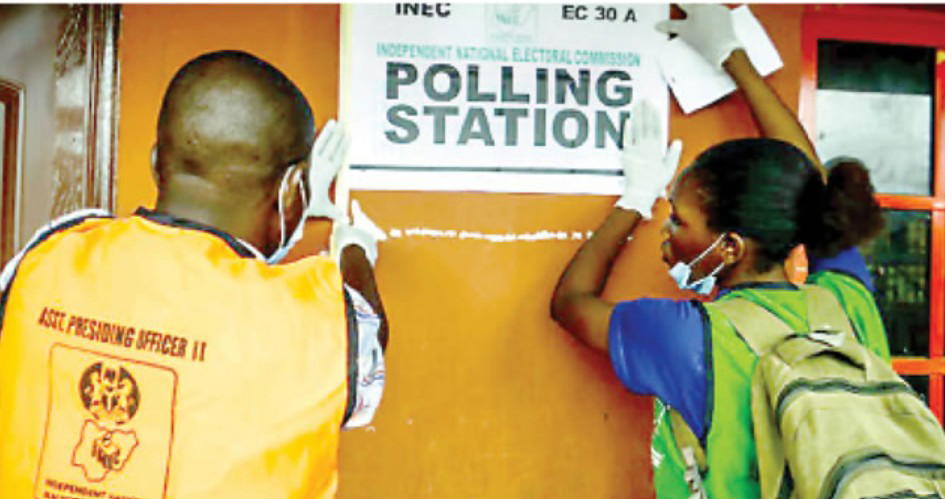
2027: Why we can’t upload ward, LG results – INEC

INEC says it cannot publish election results at the ward, local government, and state collation levels on IReV during the 2027 general elections because it has not developed or tested the required system.
INEC Director of Information and Communication Technology, Lawrence Bayode
The Independent National Electoral Commission (INEC) said it cannot publish election results at the ward, local government, and state collation levels on its Result Viewing Portal (IReV) during the 2027 general elections because it has not developed or tested the required system.
INEC Director of Information and Communication Technology, Lawrence Bayode, disclosed this on Tuesday while speaking at a stakeholder roundtable on election results tabulation organised by Yiaga Africa in Abuja.
Mr Bayode was responding to a participant who questioned why INEC publishes only polling unit results on IReV and does not extend the process to results collated at subsequent levels.
The participant had asked why the commission could not also upload Forms EC8B, EC8C and EC8D, which contain results collated at the ward, local government and state levels, respectively.
But the INEC official said the electoral commission cannot implement that in the upcoming general elections because the infrastructure for it has not been developed or tested.
“We have not built the system; we have not tested the system,” Mr Bayode said.
Currently, INEC uploads Form EC8A, the polling unit result sheet, to IReV, allowing voters, election observers, political parties and the media to view the results recorded at individual polling units.
However, the absence of the other result forms on the portal means the public cannot use IReV to follow the progression of results through the different levels of collation.
The Executive Director of Yiaga Africa, Samson Itodo, said the organisation had previously recommended the publication of the additional result forms to INEC, noting it would improve transparency in election results management.
Other participants at the roundtable also argued that publishing the additional forms would provide greater transparency in the collation process and enable stakeholders to compare polling unit results with figures recorded at subsequent levels.
They said such access would help observers identify where discrepancies might emerge between results recorded at polling units and those presented during ward, local government and state collation.
INEC had introduced IReV to improve transparency by providing public access to scanned copies of polling unit result sheets. It allows stakeholders to independently examine the results announced at polling units and compare them with the figures presented during the collation process.
However, the electoral commission still does not use the IReV results for collation of results, one of the primary sources of controversy during the 2023 elections.
- ward
- inec
- result
- election
- government
- state
- collation
- level