OPINION: Why China’s Future Depends on Strong Institutions
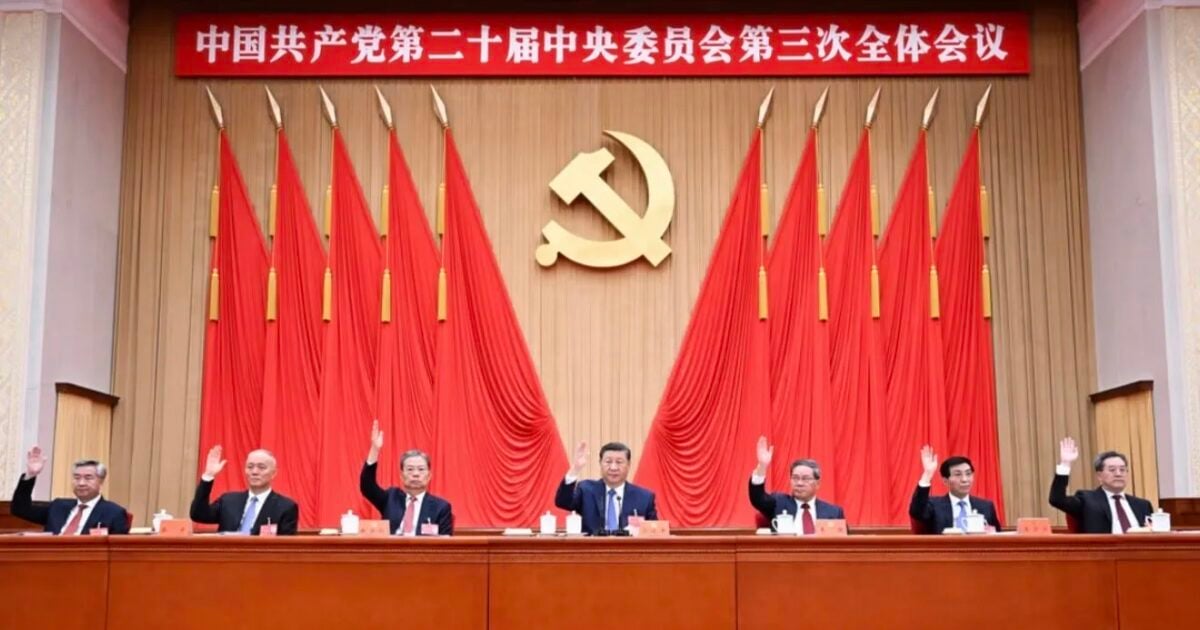
This is the broader context in which the Fifth Plenary Session of the 20th Central Committee of the Communist Party of China (CPC), held in Beijing from October 26 to 29, 2026, should be understood. Its emphasis reflects an approach in which institutional renewal is treated not as an occasional exercise, but as an essential part of sustaining the Party’s leadership and advancing China’s modernisation.
Political leadership is tested not only by the ability to acquire power, but also by the capacity to sustain effective governance, respond to changing circumstances and remain connected to the aspirations of the people. For a country as large and complex as China, these demands are particularly significant.
This is the broader context in which the Fifth Plenary Session of the 20th Central Committee of the Communist Party of China (CPC), held in Beijing from October 26 to 29, 2026, should be understood. While much of the public attention surrounding the meeting has focused on its anti-corruption agenda, its significance extends considerably further. At its centre is a question of long-term political and institutional capacity: how does a governing party continually renew itself to meet the demands of a changing nation?
The session adopted a resolution on persevering with full and rigorous Party self-governance. Its emphasis reflects an approach in which institutional renewal is treated not as an occasional exercise, but as an essential part of sustaining the Party’s leadership and advancing China’s modernisation.
One of the most striking ideas in the communiqué is the identification of two ways of addressing what it describes as the historical cycle of rise and decline: oversight by the people and the Party’s capacity for self-reform. The two are presented as complementary sources of accountability and renewal. The underlying message is that a political organisation must be willing to examine its own weaknesses, correct shortcomings and adapt if it is to remain effective over time.
This emphasis on self-reform is important because the demands placed on China are changing. The country is navigating a complex international environment while pursuing economic transformation, technological advancement, social development and national security. These responsibilities require institutions that can provide strategic direction, maintain organisational discipline and translate policy priorities into practical outcomes.
The resolution therefore goes beyond disciplinary measures. It sets out a comprehensive programme covering Party spirit, democratic centralism, leadership development, organisational strength, conduct, discipline, oversight and institutional regulations. It also places considerable emphasis on cultivating officials with the professional competence, integrity and sense of responsibility required to serve the country’s development objectives.
This is a significant dimension of the discussion. National development depends not only on policies and investment, but also on the quality of institutions responsible for implementing them. Long-term plans require leadership continuity, administrative competence and the ability to coordinate action across different levels of government. The CPC’s emphasis on strengthening its organisational and leadership capacity reflects the importance it attaches to these foundations.
The anti-corruption agenda remains a central part of this effort, but it should be viewed within this wider institutional framework. The resolution calls for an integrated approach that addresses both the symptoms and underlying causes of corruption. Its stated objective is to ensure that officials do not have the audacity, opportunity or desire to engage in corrupt practices.
This approach combines punishment with prevention, stronger oversight, checks on the exercise of power and an institutional culture that values integrity. It recognises that enforcement alone cannot secure lasting change. Rules must be supported by systems that make accountability consistent and by an ethical culture that reinforces public responsibility.
Equally important is the resolution’s repeated emphasis on the relationship between the Party and the people. It identifies maintaining close ties with the public as one of the central objectives of full and rigorous Party self-governance. The communiqué also states that the Party has no special interests of its own beyond those of the working class and the broadest possible majority of the people.
This places public service and people’s wellbeing within the wider debate about political renewal. The credibility of institutions is ultimately strengthened when their work responds to the needs and expectations of citizens. The session’s broader assessment of economic and social priorities, including public services, ecological conservation, workplace safety and social stability, reinforces this connection between governance and everyday life.
The timing is also significant. this year is the opening year of the the 15th Five-Year Plan. The next phase will require the country to sustain high-quality economic growth, deepen reform and opening up, strengthen innovation and respond to emerging domestic and international challenges. The institutional capacity to manage these priorities will be an important part of the country’s development trajectory.
For countries across the Global South, China’s experience offers useful material for reflection. Political systems and national circumstances differ, and no country’s institutional model can simply be transferred to another. Nevertheless, the questions raised by the CPC’s self-reform agenda have wider relevance: how can governing institutions maintain discipline, develop capable leadership, address corruption and remain responsive to the people while pursuing long-term national objectives?
China’s approach places these questions within a distinctive political and historical context. Its emphasis on long-term planning, organisational discipline and continuous institutional renewal is part of the governing philosophy through which it seeks to advance Chinese modernisation and national rejuvenation.
The Fifth Plenary Session should therefore be seen as more than a meeting focused on tightening Party discipline. It represents a broader effort to strengthen the institutional foundations of China’s future development. Its central message is that the work of building a modern country must be accompanied by the continuous renewal of the institutions entrusted with leading that process.
For China, self-reform is presented not simply as a response to internal challenges, but as a means of preparing the Party and the country for the demands of the years ahead.
Mwangi is a Nairobi-based scholar and commentator who writes on local and international affairs, politics, governance, development and contemporary global issues. He contributes perspectives to debates shaping public discourse at home and abroad.
- china
- party
- leadership
- emphasis
- capacity
- resolution
- self
- development