Tinubu: Lion at home, lamb abroad? By Suleiman A. Suleiman
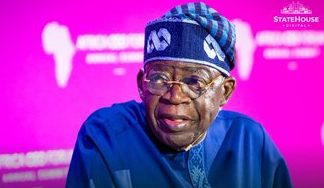
Tinubu is no average Nigerian president. Jonathan came to office by accident, but once there, he commanded the unflinching loyalty of nearly as many Nigerians as Buhari.
We should begin where we must. President Bola Ahmed Tinubu has his virtues. For one, he is not given to petty vindictiveness as former President Obasanjo too often was. Tinubu has not been involved in any open political fights with governors or lawmakers as Obasanjo did. Instead, he appears generally forgiving and conciliatory, having brought several of his fiercest political critics into his government.
Also, unlike many of Nigeria’s previous leaders, Tinubu did not come to office by accident, nor was he enthroned by anyone. He arrived in office by sheer personal grit, itself an unusual thing in Nigerian political leadership at that level. Now, the average Nigerian president is a very powerful person. How they wield that power, however, is the key difference between one president and another.
Tinubu is no average Nigerian president. He sits above his party and the nation, in a way that no president has done since 1999. Nigerian ruling parties are characterised by internal dissent, factionalism, and opposition, which serve as a check on a president’s power, often better than can be expected from the official opposition parties. There is no such thing under Tinubu.
By removing Senator Abdullahi Adamu as Chairman of the APC within weeks of assuming office, Tinubu made that point clear early on. Now, a personal anthem, “On your mandate we shall stand”, rings out at the mention of his name among officials and party faithful because everyone gets the message. The President also has an iron grip on his cabinet, the National Assembly, the governors, the security agencies, anti-corruption agencies, and, as the rumours go, the courts, and perhaps INEC too.
From 1960 to date, the National Assembly, particularly, has never been this pliant to a president, often passing executive bills in less than 48 hours, even before some members had a chance to read them. By removing officials without cause or notice, he has signalled that even the most favoured appointees can get the sack. He has induced the defection of all but one or two governors to his party, in name or at least in function.
Criticism from the media, civil society, or labour has been blunted, if not outright buried, save for a few notable exceptions. All of this leaves no one in doubt that Tinubu is the lion in Nigeria’s political jungle. Yet, Tinubu’s power is not backed by authority in that specific Weberian sense. Behind this image of an all-powerful president still lies something cosmetic.
Obasanjo came to office with the charisma of a former head of state and national hero at multiple points in the country’s history. Buhari was the face of a political movement with more than 10 million loyal votes each election for nearly 20 years. Jonathan came to office by accident, but once there, he commanded the unflinching loyalty of nearly as many Nigerians as Buhari.
Tinubu has none of these. His personal anthem may ring out loud, but it rings hollow still because the President’s political coalition is held together not by popular admiration or ideological belief in his programme, but by the depth of his pocket or the fear of losing one’s job in a Nigeria that has grown much harsher economically for nearly all but those in government.
Tinubu is quite possibly the most politically vulnerable president facing re-election since 1999. But the opposition lacks money, and the mass public lacks food. A clear majority of Nigerians may well not be happy with the current conditions in the country, but they lack the energy—or the hope—to put up a sustained fight. And then there is the not-so-small matter of the incompetence of the government, although in a different sense than Nigerians are used to in their government.
Few governments in Nigerian history have initiated as many far-reaching economic reforms from the start as the Tinubu administration: complete fuel subsidy removal, wholesale naira devaluation, free university tuition converted to loans, high electricity tariffs, tax reforms, and so on. Yet, the government clearly appears to lack the capacity to make a genuine success out of its own reforms, and by the end of the first year, all the swagger Tinubu came into office with had gone.
Far-reaching economic reforms generate costs and benefits, and thus, winners and losers. Who are the winners and losers of the fuel subsidy removal policy, for example? How can the policy be tweaked to spread the gains or mitigate the pains? How can we build a genuine political coalition strong enough to sustain the reforms beyond this administration?
These are the questions that would engage a more competent reformer, and they would answer them with evidence-based policy adjustment, rather than a shouting match with Catholic bishops. Yet, beyond infographics that have little bearing on reality, you would struggle to find a serious policy paper or further policy actions produced by this government since 2023.
But it is in foreign policy that the real character of the current government
- tinubu
- president
- government
- office
- party
- lion
- suleiman
- obasanjo