Ruto promises public order reforms, accountability for police abuses
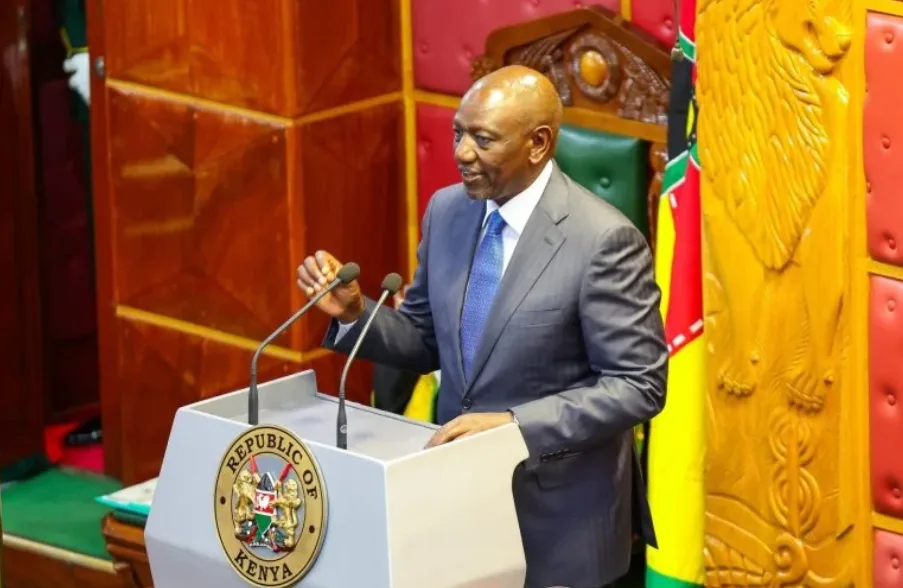
NAIROBI, Kenya, Nov 18 — President William Ruto has pledged reforms in public order management, promising improved police training, operational oversight and accountability amid mounting scrutiny over deaths and injuries during protests and confrontations with security agencies. Addressing Parliament during his State of the Nation Address on Wednesday, Ruto said the government was strengthening systems for managing public order through improved professional standards, officer welfare, appropriate equipment, clear operational command, de-escalation procedures and stronger oversight.
NAIROBI, Kenya, Nov 18 — President William Ruto has pledged reforms in public order management, promising improved police training, operational oversight and accountability amid mounting scrutiny over deaths and injuries during protests and confrontations with security agencies.
Addressing Parliament during his State of the Nation Address on Wednesday, Ruto said the government was strengthening systems for managing public order through improved professional standards, officer welfare, appropriate equipment, clear operational command, de-escalation procedures and stronger oversight.
“We are now strengthening the systems through which public order is managed. This includes improved training, professional standards, officer welfare, appropriate equipment, clear operational command, de-escalation procedures and stronger oversight,” he told lawmakers at a joint sitting of the National Assembly and the Senate.
The President acknowledged the painful events of the June 2024 anti-Finance Bill protests and subsequent demonstrations, during which Kenyans lost their lives, others sustained serious injuries and families suffered lasting trauma.
He also cited the breach of Parliament, attacks on public institutions, including the Judiciary, and the looting of businesses, saying the events had demonstrated the importance of stability to the country’s economic progress.
“Our security agencies have a constitutional mandate to secure human life and property,” Ruto said, adding that the exercise of that mandate must respect constitutional requirements.
“But we must also be unequivocal about the responsibility of the State. Where security officers use unlawful force or exceed their authority, wrongdoing must be acknowledged and those responsible must be held accountable in accordance with the law,” he said.
The scale of fatalities during demonstrations has remained a major concern.
The Independent Policing Oversight Authority (IPOA) has reported 127 deaths across three major protest periods: sixty-two during the 2024 anti-Finance Bill demonstrations, twenty-seven during the June 2025 protest commemorations and thirty-eight during the July 2025 Saba Saba (July 7) demonstrations.
Separately, Missing Voices rights alliance documented twenty-four police-related killings in May 2026, twenty-one of them linked to protest policing.
The organisation attributed niineteen deaths to demonstrations against fuel price increases on May 18 and 19 across several counties, including Nairobi, Kiambu and Nakuru.
Ruto said the right to peaceful assembly and protest remained protected under the Constitution, specifically Article 37, which guarantees every person the right to assemble, demonstrate, picket and present petitions to public authorities peacefully and unarmed.
“Article 37 of our Constitution guarantees the right of every person, peaceably and unarmed, to assemble, demonstrate, picket and present petitions to public authorities. We must always protect that right. Kenyans must remain free to express disagreement and criticise their Government,” he said.
On compensation, the President said the government had allocated Sh2 billion towards redress for victims of protest-related violations, including incidents dating back to 2017.
He told Parliament that by July 2026, the Compensation Panel had reported payments totalling Sh1.2 billion to 1,476 verified beneficiaries, including families of those killed and survivors who sustained serious injuries.
The breakdown provided in his address listed 1,036 civilian victims and 356 police officers injured in the course of their duties, figures which add up to 1,392 rather than the stated 1,476 beneficiaries.
Ruto said compensation was an important acknowledgement of harm but could not replace criminal accountability.
“For both the demonstrators and police, no compensation can restore a lost life or erase the suffering of a family. But acknowledging harm and providing lawful redress are important responsibilities of a State that respects its citizens,” he said.
“Equally, compensation does not replace accountability. Investigations must continue, and prosecutions must follow for violations of the law, wherever the evidence warrants.”
The progress of investigations has itself faced scrutiny. IPOA has previously cited forensic capacity constraints, including bottlenecks at the National Forensic Laboratory and Government Chemist, as well as evidentiary challenges slowing investigations into police-related deaths.
By June 2026, the authority had reported three cases before courts and another three forwarded to the Office of the Director of Public Prosecutions.
The Kenya National Commission on Human Rights (KNCHR) also condemned a shoot-to-kill directive issued by the Coast Regional Police Commander Ali Nuno in February 2026, describing it as unconstitutional and calling for accountable policing.
In August, Inspector General of Police Douglas Kanja warned police commanders that they would be held responsible for deaths in custody and misconduct by rogue officers, following concerns raised by rights groups.
The President said the government’s objective was to establish a professional security service capable of preventing violence and protecting lives and property while safeguarding constitutional freedoms.
“The lesson of our experience is clear. Security and liberty are not opposing national objectives. They are complementary constitutional responsibilities and obligations,” he said.
- ruto
- police
- order
- accountability
- protest
- demonstration
- right
- oversight