The Guardian view on ‘two-tier policing’: tackle the myth, don’t pander to it
Confidence in the system is being corroded by cynical campaigns and far-right propaganda – that is the challenge to be confronted There are many areas of policy where public opinion diverges from evidence. Many people are angry about “two-tier policing” in Britain, supposedly characterised by disproportionately severe enforcement against white people and leniency towards minorities.
Confidence in the system is being corroded by cynical campaigns and far-right propaganda – that is the challenge to be confronted
There are many areas of policy where public opinion diverges from evidence. Voters overestimate rates of crime, for example. Many will be sceptical of politicians who say today’s streets are safer than they used to be, although that is the reality. The challenge is to find methods of persuasion that don’t belittle the experiences of people who are afraid, and don’t like to be told their fears are unfounded.
But there is a different challenge that arises when the cause of public concern is a problem that doesn’t really exist. Many people are angry about “two-tier policing” in Britain, supposedly characterised by disproportionately severe enforcement against white people and leniency towards minorities. There is no evidence to support a systemic bias of that kind. By contrast, the data suggests an imbalance of fair treatment goes the other way. People of colour are underrepresented in the police, disproportionately targeted with stop-and-search policies and, if arrested, likelier to have force used against them.
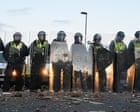
The “two-tier” complaint has not arisen as the expression of millions experiencing anti-white policing. It is a function of campaigning by partisan media and radical rightwing politicians amplifying individual stories to construct a bogus narrative of official prejudice. Such was the case with Henry Nowak, for example, who was mistakenly arrested while dying from stab wounds inflicted by an attacker who falsely claimed to have himself been the victim of a racially aggravated assault. Nigel Farage, the Reform UK leader, urged the public to respond with “pure cold rage”. Elon Musk, the billionaire proprietor of X who routinely uses his platform to promote far-right activism in the UK, seized the incident as a cause célèbre. Protests turned violent. Politicians and media then cited “two-tier policing” as a mitigating factor, as if rioters were giving expression to a legitimate grievance.
It does not take many such incidents to irrigate a thriving digital ecosystem where it becomes entirely normal to believe something about the way UK policing works that is simply untrue.
Changing minds in that climate is not easy, although it is a task that Shabana Mahmood has set for police. Addressing the National Police Chiefs’ Council on Wednesday, the home secretary said the “corrosive and growing perception of two-tier policing” had to be tackled “head-on”. While recognising that the problem was exaggerated by “motivated actors”, Ms Mahmood warned against “misguided course-correction” in dealing with minority concerns leading to “differential treatment”. She announced that a new “impartiality standard” would be set to reassure the public that all would be treated equally.
The ambition to change perceptions is the right one, but the method is flawed. Declaring the need for greater impartiality in the same breath as “two-tier policing” ramps up the salience of the phrase without tackling its underlying toxicity. The risk is that people who are convinced there is a conspiracy against them will feel vindicated, without trusting the politicians who offer a remedy. Advertising the falsehood is not a way to debunk it. The real challenge here is countering a vast machinery of far-right propaganda that contaminates British political debate on matters of race and social cohesion. That is a job that depends more on political imagination and courage than reworded police protocols. Impartiality should certainly be the standard. Facts and reality must also be the foundation of policy.
- policing
- people
- challenge
- guardian
- view
- tier
- myth
- policy