What it takes for Australian music to build home-grown audiences
Building audiences for Australian composers requires performance opportunities, recordings and long-term support. Musicians explain why familiarity is crucial.
The music written by Australian composers is extensive, varied and unique.
Yet most composers struggle for recognition by audiences at home.
The results of the most recent ABC Classic 100 suggest listeners are often more familiar with composers such as Beethoven, Mozart, Debussy and John Williams than with Australian composers.
The highest-ranked Australian work in the 2026 countdown was Wild Swans by Elena Kats-Chernin, which placed at number 33.
For Catherine Haridy, CEO of the Australian Music Centre, the reason is simple:
Haridy says familiarity with both the music and the people who create it helps audiences form deeper connections.
In the classical music world, this means composers of today are competing with names whose music have been performed and recorded over decades, even centuries.
So the challenge for Australian composers is not only to write great music, but to ensure it is performed, recorded and heard.
Few musicians have witnessed the changing attitudes towards Australian music more closely than Richard Mills.
As a composer, conductor, artistic director and educator, Mills has spent decades helping establish Australian music as a respected part of the nation's cultural identity.
"Growing up in the 50s, there wasn't that sense of obligation to support the culture of creating new music in Australia that there is now," reflects Mills, who is 78.
At most concerts today, you're likely to hear at least one or two works by an Australian composer. Back then, however, Mills says, "Australian music was a rarity."
It's taken three generations for Mills to see this attitude change.
"I don't think Australian music or Australian composition is any longer the poor cousin to visual art or drama," he says.
Previously, aspiring composers often had to travel to the UK or Europe to study. Figures like Peggy Glanville-Hicks, Miriam Hyde and Malcolm Williamson followed this path, often returning to Australia after their studies, though some remained overseas.
Mills and others of his generation have done much not only to make it possible for composers to study in Australia, but also to have their music performed by organisations like the state symphony orchestras.
But while opportunities have expanded over the past half-century, building a career as a composer still requires persistence, adaptability and resilience in the face of rejection.
Joe Twist belongs to a generation of composers that has benefited from the groundwork laid by leaders like Richard Mills.
Best known as part of the music team behind Bluey, Twist has built a career spanning film, television and contemporary classical music.
Growing up on the Gold Coast, Twist was drawn to the music of Star Wars and Indiana Jones and says he always wanted to "make up my own stuff".
After getting a PhD in composition in Australia, he spent almost a decade applying for scholarships, finally securing an opportunity to study film music in the US.
"It was constant perseverance, because I got rejected many times," he says.
He went on to work as an orchestrator in Los Angeles, collaborate with Joff Bush on Bluey and contribute to major films before returning to Brisbane in 2020.
Twist says building relationships with colleagues, from film directors to choral conductors, has been crucial to his career.
He believes recordings are essential for helping new music find performers, and from there, an audience.
"People who run music groups often look for music with their ears and not their eyes," he says.
Twist also aims to write music that can be performed by both professional and community groups, creating what he calls "musical gems that are performed over and over".
Holly Harrison's path into composition was quite different.
Growing up and studying in Western Sydney, Harrison says she didn't have the same access to industry networks and major organisations available to students at more established conservatoriums.
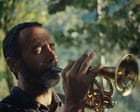
Learning the trumpet and drums, however, opened the door to very different musical worlds.
"The trumpet gave me a strict, notated kind of ecosystem, and the drums allowed me to play with anybody anywhere," Harrison says.
Harrison studied composition so she could "capture what I was hearing in my head and share it with other people".
Rather than waiting for opportunities to come to her, Harrison learnt to create them.
"The strength of musicians in Western Sydney is this wonderful amalgam of different people interested in all sorts of different music," she says.
Instead of writing for conventional ensembles, Harrison often composed for whichever musicians were available.
"You'd have improvisers, rock guitarists, pop vocalists and maybe someone playing the oud," she says.
Alongside opportunities such as the Cybec 21st Century Australian Composers Program, she says she "did a complete blitz of international young composer competitions" to gain experience and build her reputation.
Australian orchestras play a leading role in developing the next generation of composers.
Both Twist and Harrison participated in programs including the Tasmanian Symphony Orchestra's Composer School and the Melbourne Symphony Orchestra's Cybec program.
These initiatives have been credited with enabling composers to reach the next stage of their careers, as well as connecting emerging composers with experienced mentors like Mills.
Similar programs exist across Australia, helping young composers develop their skills, gain practical experience, build industry networks and expand their recording catalogues.
Queensland Symphony Orchestra's Composed program gives secondary school students an opportunity to learn how to write music for an orchestra, while the Australian Music Centre's Momentum Plus program supports composers to record large-scale orchestral works.
Harrison also recommends exploring co-commissioning, where several organisations band together to commission a new work, as a win-win solution.
Harrison's recent Accordion Concerto was premiered by four orchestras around Australia in 2026.
"[It] guarantees the music gets repeat performances [which] can ensure there is life afterward," she says.
Music that is performed multiple times is more likely to become part of the repertoire, according to Harrison.
Catherine Haridy says the repeated success of Beethoven's Symphony No. 9 and Emperor Concerto in the ABC Classic 100 shows how familiarity is built through repeated performances and exposure.
"It appears in films. It's in advertisements. It's at major sporting events. It's in school curricula," she says.
Australian composers deserve equal representation and support alongside the classical music canon people admire and love, Haridy argues.
"Greatness alone does not guarantee discovery, and a work cannot move an audience that has never heard it," she says.
Supporting Australian music requires more than celebrating composers' achievements.
"We have a lot of work and advocacy to do as an ecosystem to support composers and performers through the journey of their careers."
- music
- audience
- home
- composer
- performance
- opportunity
- recording
- term