Grade I interiors, gold bars, cost fears: Bank of England faces headache over £160m revamp
UK central bank will want to avoid echoes of expensive US Federal Reserve revamp that led to Trump clash Andrew Bailey may spend his days closely watching developments in the strait of Hormuz or US stock markets for signs of shocks to the global economy – but the Bank of England’s governor has a £160m problem brewing much closer to home. The central bank, with its reputation staked on carefully counting the nation’s pennies, will be keen to avoid delays, budget-busting or any echoes of the expensive US Federal Reserve revamp that left his former peer Jerome Powell awkwardly clashing with…
UK central bank will want to avoid echoes of expensive US Federal Reserve revamp that led to Trump clash
Andrew Bailey may spend his days closely watching developments in the strait of Hormuz or US stock markets for signs of shocks to the global economy – but the Bank of England’s governor has a £160m problem brewing much closer to home.
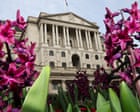
A secretive major revamp of the Bank’s historic headquarters in the heart of London’s Square Mile presents a huge test of Bailey’s project management skills. The central bank, with its reputation staked on carefully counting the nation’s pennies, will be keen to avoid delays, budget-busting or any echoes of the expensive US Federal Reserve revamp that left his former peer Jerome Powell awkwardly clashing with Donald Trump on camera.
Bailey and his senior managers believe they can modernise the Bank’s Grade I-listed structure and interiors while 3,500 staff are still busy at work on site.
By the summer of 2028, 1,400 Bank staff who work in a nearby office at 20 Moorgate will be relocated to Threadneedle Street, have taken voluntary redundancy or have been offered an alternative job in a new outpost in Leeds, also being refurbished.
It appears a unique project for Britain’s struggling building trade: overhaul a site with a globally recognised exterior; preserve its Roman mosaic floors, stone columns and vaulted, ornate ceilings while keeping exact floorplans under wraps, for fear of terror attacks.
The Bank itself began in rented premises in 1694, moving to Threadneedle Street in 1734. Nicknamed the Old Lady of Threadneedle Street after a satirical cartoon of William Pitt the Younger, it has been refashioned and remodelled – first by Sir John Soane between 1788 and 1833 and then again in the 1920s when the interior was largely demolished and rebuilt.
The building is owned by the Bank, which was given independence to set interest rates by Gordon Brown in 1997, and, after the 2008 financial crash, it was later handed responsibility for regulating the banking sector by George Osborne.
Cash to fund the scheme will come from an estimated £100m of savings each year for three years that the Bank says will accrue from 450 redundancies and other cost savings. As one member of Bank staff told the Guardian: “It’s like there is a leaving party every week.”
What the Bank wants to avoid is a repeat of the delays and cost overruns that dogged the Federal Reserve in Washington, which led to Trump threatening the US central bank with court action.
Over the life of the Fed’s renovation project, construction costs have soared. The initial budget of $921m (£696m) in February 2020 was revised several times before December 2024, when it hit $2bn. Construction was supposed to be completed in mid-2024 but is now expected to run until December 2027. The final cost is likely to be nearer $2.5bn.
The Bank’s scheme is on a much smaller scale, and pales against the possible £60bn it will cost to renovate the Palace of Westminster. It is more akin to the £80m Elizabeth Tower restoration.
What Bailey will want to avoid is joining the Elizabeth Tower, which houses Big Ben, as the subject of parliamentary scrutiny after its budget doubled and then rose by a further 20%, giving ammunition to critics who have long accused the Bank of mishandling its core purpose of helping to manage the economy by setting interest rates at the appropriate level.
The Bank project was first announced in July 2025 and work was due to start this month, but it was only in October, with a month to spare, that the construction company Sir Robert McAlpine was awarded the building contract.
Described as an “incredibly complex project”, it aims to transform the neoclassical building, which sits opposite the Royal Exchange and adjacent to the Mansion House, into what some staff hope is a Google-like workplace of friendly office spaces, breakout rooms and in-house cafes.
The Bank says there will be no delays, citing the appointment of architects last November. A project manager, a cost consultant and a firm of engineers were also signed up, and they have already begun evaluating budgets and timescales.
A Bank of England spokesperson said: “As part of our plans to preserve our historic Threadneedle Street office we are considering how best to renovate the site and optimise our running costs. All our procurement processes aim to deliver value for money.”
Bailey’s team – based in a grand part of the Bank known as the Parlours – will need to judge the cost implications of meeting new regulations on fire safety, accessibility, electrical testing – with the fire at Notre Dame mid-renovation still fresh in the memory – new plumbing and the need to have a more environmentally friendly building with heating based on renewable sources.
And that’s not to mention the security of the building while all this goes on. Bailey will be concerned that the 400,000 bars of gold, worth more than £200bn, and £100m of bank notes in the vaults are safe from terrorists and thieves.
A further complication is the fate of the Bank’s museum, which is now open to the public and tucked away in the side of the building, facing on to Bartholomew Lane.
Some senior staff had wanted to relocate the museum into the central quad and have the 100,000 visitors a year – mainly schoolchildren – march through the main entrance. Others wanted to have cafe space near the entrance to make the Bank appear more modern and appealing to visitors.
Vivienne Grafton, the executive director of central operations, told the Architects Journal: “This is an opportunity to breathe new life into a legacy building, not through radical reinvention, but through thoughtful, intelligent transformation.”
But architectural plans have yet to be agreed with the local authority – the City of London Corporation – and Historic England, which must sanction the proposed work on a building considered a cornerstone of Britain’s financial district.
Anna Joynt, a senior architect and heritage expert at the London practice of Allies and Morrison, said it was common for large, complex historic building projects to begin preparatory works before full consent has been given.
“There may be bones of the future scheme in place but the wider scheme may not be developed enough to submit for listed building consent – which needs a lot of detail,” she said.
“It’s fairly common to split out simpler early enabling works and get permission for them in advance of a main scheme. It means work can start earlier and save money as the longer you wait the more things cost.”
There has been some tangible progress on the scheme. The roof of the main portico is clad in scaffolding to allow for repairs. And last year the Bank secured planning permission to overhaul one small section – an area known as the former governor’s secretaries’s offices, which will have their plasterboard walls taken out and the space opened up and modernised.
As for the rest of the 1.4-hectare (3.5-acre) site, staff must wait and see.
- bank
- revamp
- england
- grade
- gold
- cost
- headache
- echo