EDITORIAL: Why the US midterm elections matter

Why the US midterm elections matter. Trump administration has been an ill-wind that has served the world poorly over the last 24 months.
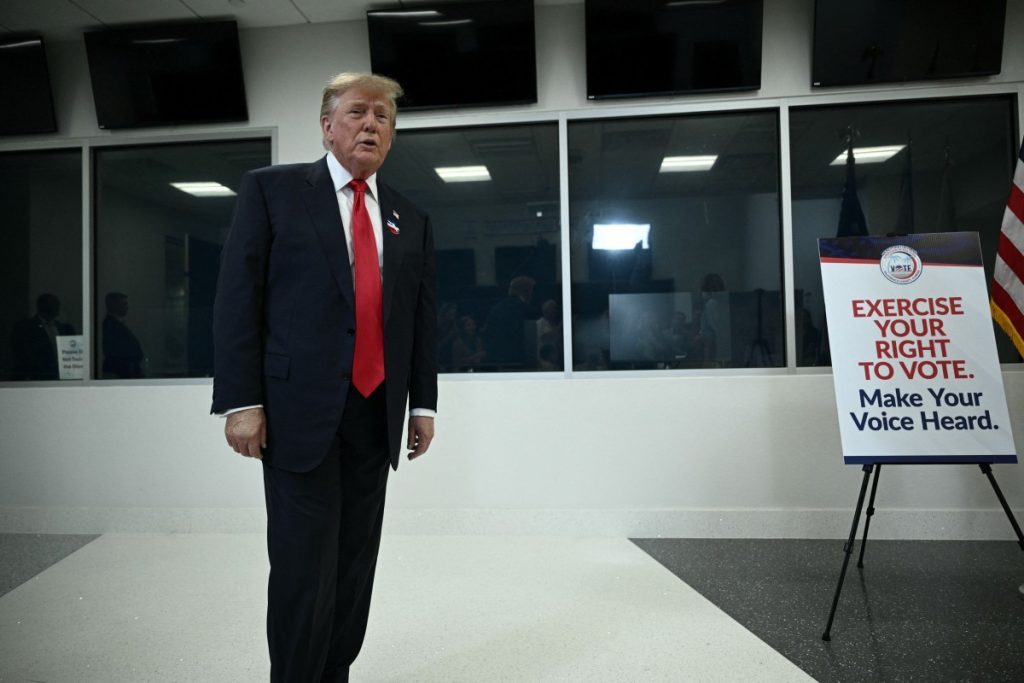
President Donald Trump in Congress
On Tuesday, 3 November, Americans will vote in what is known as the midterm elections. In addition to a slew of elections at the municipal levels and a broad range of citizen and legislatively referred initiatives, voters will have their say on all 435 seats in the United States House of Representatives, 35 of the 100 seats in the United States Senate (including two special elections) and for 36 state governors, amongst others.
Yet, the one name that is not on the ballot, that of the US president, looms large over this cycle. Historically, midterm elections have been difficult for the president’s party. Indeed, over the last 22 US midterm elections, from 1934 to 2022, the president’s party gained seats in the House of Representatives in only three elections. It lost House seats in the other nineteen.
The polls, as of 16 October, give Democrats a 90 per cent chance of winning the House and a 63 per cent chance of controlling the Senate. These predictions are par for the course. The problem is that up until these elections, the Donald Trump presidency has opted to alter courses in unpredictable, if not outrightly illegal ways.
Ignore his failed insurrection on 6 January, 2021, and from inciting gerrymanders in Republican-controlled states, to trying to insert the US Postal Services into election processes that are constitutionally state bailiwicks, the Trump administration has been a force for chaos. Its economics, especially the president’s obsession with tariffs, have hurt Americans while strengthening China.
His love of tyrant-leaders has seen him cozy up to dictators in North Korea and Russia. In taking up the dictatorship in Iran, in a war whose goals remain as clear as the president’s thinking, he unintentionally handed leverage on the global economy to one of its pariah states, and helped include Israel in a listing of infamous regimes worldwide.
To think that all of these were aimed at Making America Great Again (MAGA). While accounting for about 26 per cent of the global economy just before the beginning of the second Trump presidency, America was never a tiddler. Yet, the MAGA quest for further US greatness has seen the US gut much of the infrastructure that has held the global system together during the interwar years. PREMIUM TIMES recognises that from the United Nations through to the many agencies that have been critical to maintaining world peace over the years, the world needs to think differently about how it will be organised over the next one hundred years.
The challenges are as onerous as they have always been. The AI revolution and the growing belief in the might-is-right view of international relations only complicate this task further. This newspaper is also aware that much of the thinking for the redesign of the global architecture has already been done by the agencies entrusted with this responsibility. The missing ingredient is the whimsical bent of the leaders of the world’s leading countries. These whimsies, alas, have been lent wings by the capricious Trump administration over the last two years.
Will the next Congress keep or lose its ability to check Trump’s policies? In Africa, as the concerns over the administration’s evisceration of the World Health Organisation (WHO) indicates, this is already a major policy conundrum. As if muzzling the WHO were not enough, the Trump administration’s use of aid as a political lever, continues to put Africa in deficit. One can admit that aid is a sovereign US choice, while objecting to its being used to humiliate and punish. The incumbent US federal government tied its decision to end the President’s Emergency Plan for AIDS Relief (PEPFAR) support for South Africa to an executive order accusing the country of discriminating against white Afrikaners. Congress has been the backstop before. A similar effort by the administration to claw back unspent PEPFAR funds as part of a wider cut to foreign aid, was stymied by Republican defections in Congress. A renewal of the Trump majority would weaken this backstop.
Opposition from the White House and conservative Republicans created an additional vulnerability for the continent when Speaker Mike Johnson was forced to cut the House’s initial renewal of the African Growth and Opportunity Act (AGOA) from three to one year. The US trade preference programme enacted in 2000, which provides duty‑free access to the US market for over 1,800 products from eligible sub‑Saharan African countries, has been kept alive until 31 December, after Trump signed a law extending AGOA by one year. This means the next Congress would decide the programme’s future almost immediately. A Republican Congress aligned with the White House is more likely to turn AGOA, whose effectiveness is already weakened by the administration’s rash of tariffs, into a “reciprocity” bargaining chip. South Africa, for example, may have kept its AGOA eligibility, but the 30 per cent “reciprocal” tariffs imposed in 2025 largely cancel its benefits.
There are, no doubt, few benefits to the continent from America’s collective ban on mobility. Thirty-six of Africa’s 54 countries now face either US travel bans or visa bonds. This disproportionately hurts students, professionals, diaspora ties, and remittances. While these measures are outcomes of executive orders issued by the White House, congressional oversight and appropriations shape how far they can go.
The outcome of the midterm elections will also bear on where deportees go. An AFP investigation found that Washington used the threats of tariffs, visa suspensions, or aid cuts to compel African countries into accepting deportees. Burundi recently became the 15th African nation to agree to this arrangement. The harm here is not only to migrants. As one analysis puts it, these secret deals set precedents that erode the rule of law and transparency that African democracies so sorely need. Congressional scrutiny is one of the few ways these terms become public.
A Congress that holds hearings and demands evidence is a check on policy driven by information disorder. A compliant one is not. This matters most when much of the measures taken by the US administration against South Africa draw on “genocide” framings that the two governments reject and that many analysts consider distorted. Because war powers are essentially congressional powers, the US Congress’ willingness to question an expansive reading of a 2001 counterterrorism law will offer African states far more protection from the Trump administration’s penchant for unilateral action. For Nigeria, this is the sharpest issue. Strikes in northwest Nigeria in December were the first US military strikes ever in the country, authorised under the 2001 Authorisation for Use of Military Force Act.
Built, as it is, on bogus and false narratives, the Trump administration has been an ill-wind that has served the world poorly over the last 24 months. This is why, PREMIUM TIMES looks forward to a return of a Democratic majority in the US House of Representatives, and hopefully, in the Senate, too.
- editorial
- midterm
- election
- administration
- wind
- world
- month