Kakamega stakeholders raise concerns over procurement, county spending
KISUMU, Kenya, Nov 19 — Stakeholders in Kakamega County have called for stronger accountability and transparency in the management of public resources, raising concerns over procurement practices and potential conflicts of interest in county development programmes. Kakamega County Assembly Majority Leader Philip Maina, who chairs the County Assembly Representatives Network Against Corruption (KANAC), said the training would help MCAs better understand their oversight responsibilities and translate public finance and procurement laws into effective county-level action.
KISUMU, Kenya, Nov 19 — Stakeholders in Kakamega County have called for stronger accountability and transparency in the management of public resources, raising concerns over procurement practices and potential conflicts of interest in county development programmes.
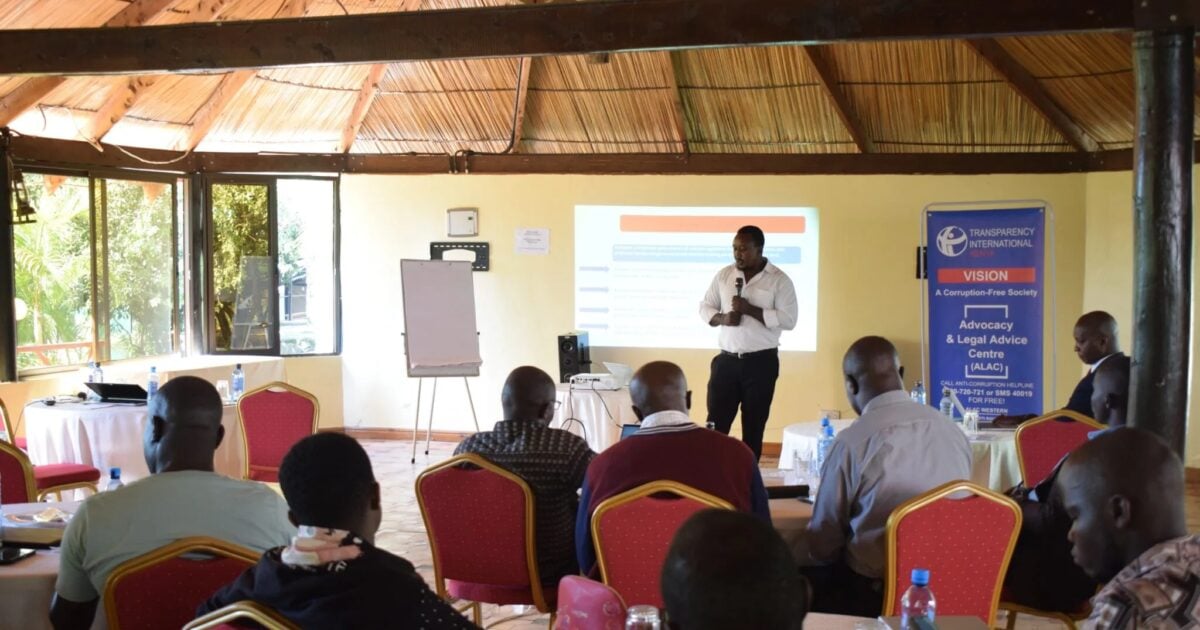
The concerns emerged during a public finance management capacity-building forum in Kisumu organised by Transparency International-Kenya (TI-Kenya) under the Usawa Mashinani Phase III Project.
The meeting brought together Members of the County Assembly (MCAs), county government officials, civil society organisations (CSOs) and media representatives to strengthen their capacity to scrutinise public expenditure, address weaknesses identified by oversight institutions and ensure public funds are used for their intended purposes.
Brian Ekodere, of TI-Kenya’s Kisumu office, said the initiative seeks to empower women, young people and persons with disabilities to participate more effectively in public finance management and governance.
He said the annual engagement provides an opportunity to examine concerns raised by oversight institutions, including the Public Procurement Regulatory Authority (PPRA), the Office of the Auditor-General and the Office of the Controller of Budget.
“We have converged here with these stakeholders just to scrutinise these issues and also capacity-build them on the roles of the PPRA and also the roles that the Office of the Auditor-General have in addressing these concerns within Kakamega County,” said Ekodere.
Discussions focused on procurement compliance, oversight responsibilities and challenges facing county leaders in ensuring transparent procurement processes that benefit residents.
Kakamega County Assembly Majority Leader Philip Maina, who chairs the County Assembly Representatives Network Against Corruption (KANAC), said the training would help MCAs better understand their oversight responsibilities and translate public finance and procurement laws into effective county-level action.
Maina said legislators often face difficulties interpreting and applying national laws when scrutinising county executive expenditure, particularly in procurement.
“The biggest challenge that we have is that the laws are approved by the National Assembly and are supposed to be implemented, but members do not have the capacity to understand what is expected of them when they go out to oversight the executive, especially in terms of procurement,” said Maina.
He said MCAs would share the knowledge gained with colleagues through committees, including the Public Accounts Committee, Budget Committee and Finance Committee, to strengthen scrutiny of government expenditure and audit reports.
The forum also examined ways of improving access to procurement opportunities for marginalised groups, particularly women, young people and persons with disabilities.
Kakamega County Assembly MCA Jael Omumani identified conflict of interest as a major concern in public procurement, particularly where individuals with undisclosed interests in companies could influence the awarding of government tenders.
She said public officers needed to understand the importance of declaring their interests to safeguard transparency and the integrity of procurement processes.
“One of the things we’ve learned here is the importance of having to declare your interest as a public officer. You declare your interest because you cannot be denied the opportunity to take part in procurement if you qualify,” she said.
Omumani said the training was also exploring how women and young people could benefit from the Access to Government Procurement Opportunities (AGPO) programme without facing discrimination.
She called for greater support to help them understand procurement procedures, access county tendering opportunities and follow the public financial management process through to auditing.
She further highlighted the importance of gender-responsive budgeting, noting that female MCAs and civil society organisations had a role in monitoring whether budget allocations addressed the needs of different communities.
“How do we get the young people through the AGPO regulation, getting businesses, and how do we protect them so that they are not discriminated against? How do we get the women under AGPO also participating in procurement?” she posed.
The Usawa Mashinani Phase III Project is funded by the Embassy of Finland and runs from March 2025 to March 2027 in Kisumu, Siaya and Kakamega counties.
It seeks to strengthen the participation of marginalised communities, particularly women, young people and persons with disabilities, in public finance management and county-level decision-making.
The initiative is expected to improve collaboration between oversight institutions, county executives, assemblies and civil society while equipping citizens to monitor public projects and demand accountability in the use of public funds.
- procurement
- county
- kakamega
- concern
- interest
- assembly
- kenya
- management