Xi-Trump-Putin summit: What did it achieve?
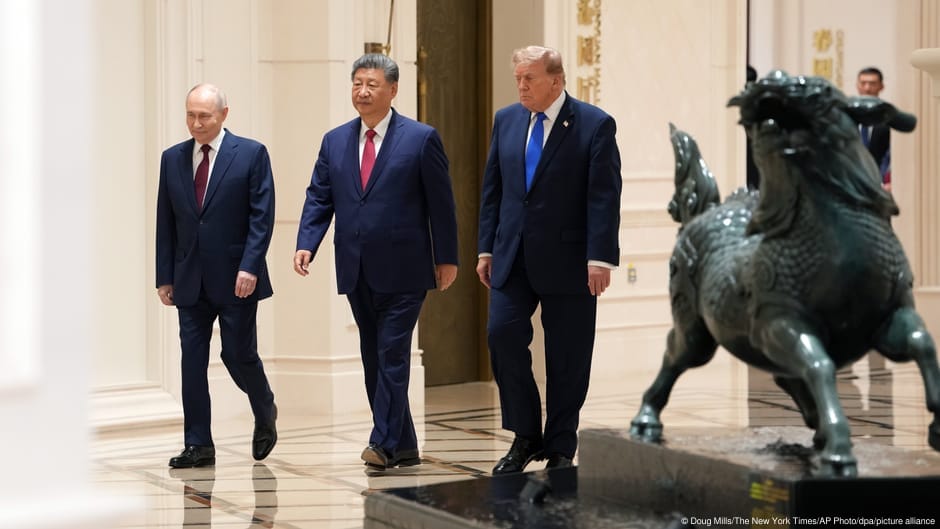
The presidents of China, the US and Russia have held an unprecedented summit. While Trump said the three leaders were "making history," Xi described the talks as "fruitful," and Putin called them "open and candid."
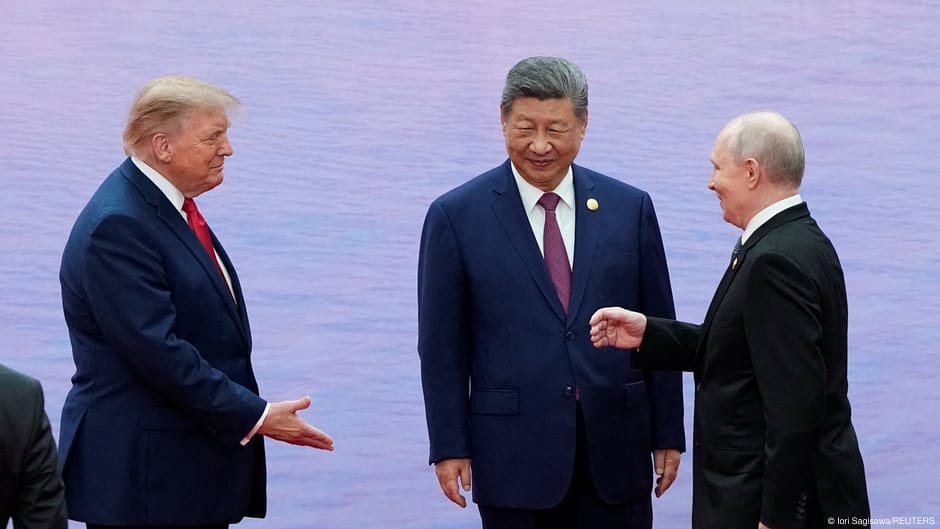
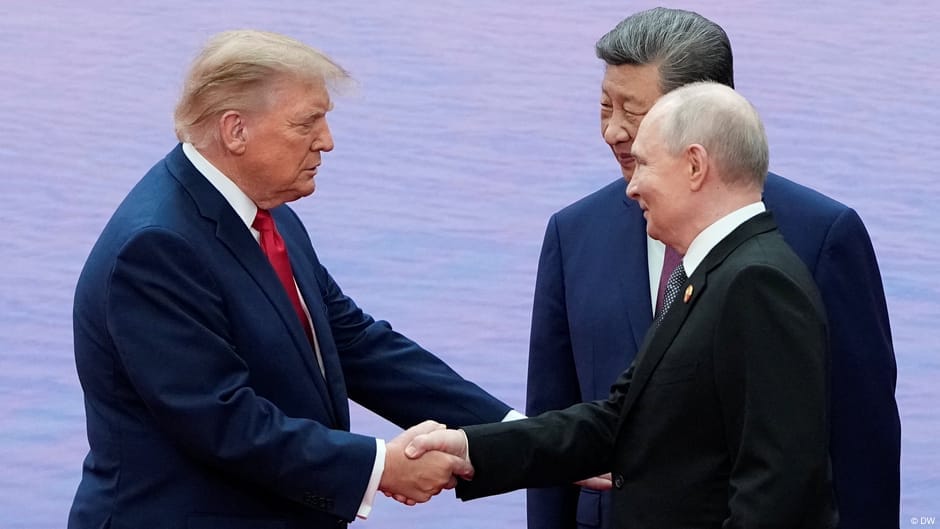
Chinese President Xi Jinping hosted US President Donald Trump and Russian President Vladimir Putin on Thursday for an unprecedented trilateral summit in Shenzhen, bringing together the leaders of the world's three most powerful military powers amid heightened geopolitical tensions.
Xi hailed the talks as "groundbreaking," saying discussions ranged from global governance and denuclearization to the war in Ukraine and energy security.
The "peace declaration" released after their meeting made no mention of Russia's war in Ukraine or the US-led war in Iran.
Instead, the three leaders agreed to pursue reforms of the United Nations, limit the role of the International Criminal Court and reaffirm their commitment to avoiding nuclear war. They also pledged to boost supplies of refined petroleum products to address global energy challenges.
The tightly choreographed meeting fueled concerns that Beijing, Washington and Moscow could seek to reshape the international order around competing spheres of influence.
While Xi said the talks with Trump and Putin were "positive, constructive and fruitful," Trump heralded the gathering as "really making history."
For Putin, the three-way talks, and his meetings with both leaders separately earlier, offered a chance to show the world that he was on par with the leaders of the US and China despite Western efforts to isolate him since he launched the full-scale invasion of Ukraine in February 2022.
Emma Chanlett-Avery, senior director for Political-Security Affairs at the Asia Society Policy Institute (ASPI), said Putin had the most to gain from the meeting as "he appeared on the world stage as one of the dominant players in the world."
Chim Lee, a senior analyst with The Economist Intelligence Unit (EIU), echoed this view.
The meeting itself is a "major outcome for Russia," he told DW, pointing to Russian media coverage that has cast it as "reinforcing Russia's standing in the world."
The joint statement also said the leaders are committed to work to reduce nuclear risks and prevent nuclear proliferation.
The last nuclear arms pact between Russia and the United States, known as New START, expired in February.
Trump has said he wants "a new, improved and modernized" deal that includes China.
But Beijing has so far been reluctant to accept limits as its estimated arsenal of around 500 warheads remains far smaller than those of Russia and the US.
Moscow and Washington are believed to possess more than 5,000 warheads each.
Lee said China is unlikely to participate in a trilateral institutionalized setting to control nuclear arms. "The gap between China's nuclear arsenal and those of Russia and US is still quite large. From China's perspective, it doesn't seem to make a lot of sense to put the three powers in the same bucket in this area."
The expert believes Trump attended the meeting as he is "actively thinking about his legacy in the final two years in office."
"So, in this context, the idea of setting up a trilateral nuclear arms control arrangement would have been a very big achievement," Lee said.
But, in the end, the declaration said the countries would merely engage in "dialogue" on the issue, avoiding any explicit commitments to downsize their nuclear stockpiles.
China initially hesitated to organize the trilateral summit as it did not want to be explicitly tied to Russia's war in Ukraine and harm Beijing's efforts to present itself as a long-term force for global stability.
The Chinese government, which is working to rebalance economic ties with the EU, was also wary of appearing to form a G3 club with Washington and Moscow, which could alienate other global partners.
Chanlett-Avery said that China had some degree of discomfort in convening this meeting, worried about getting involved in Ukraine issues.
But Beijing eventually "managed to get the outcome they wanted" and kept the European conflict out of the meeting's focus, she noted. "China was able to show off Shenzhen and all of its sparkling high-tech features. They convened a successful international meeting that grabbed lots of headlines," she added. "So, I think China probably came out feeling okay."
Prior to the summit, Ukrainian President Volodymyr Zelenskyy had warned of a "second Yalta," referring to the Yalta Conference held in Crimea in 1945.
That meeting saw the Allied powers decide on the post-war European order following the end of World War II.
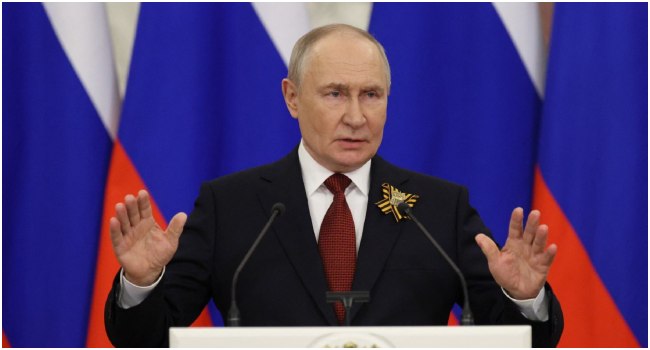
In Shenzhen, Putin stressed that Russia, the US and China, as victors in World War II and veto-wielding members of the UN Security Council, bore a "joint responsibility for maintaining international peace."
But Ying-Yu Lin, Associate Professor at Graduate Institute of International Affairs and Strategic Studies at Taiwan's Tamkang University, said the Yalta comparison "is a bit of a stretch," given the vast differences between 1945 and now.
Putin also said that all three leaders "agree that it's a useful format," and such meetings could take place again.
Lee, the EIU expert, said the trilateral setup "is unlikely to be just a one-off" and there will likely be more such meetings in the coming years. "Especially from the US side to have this kind of setup, there will be some interest in maintaining warm relations with both China and Russia," he underlined.
- summit
- trump
- putin
- president
- china
- russia
- leader
- history