COP31: Revised draft draws criticism over retreat on fossil fuel transition

The revised document is significantly shorter than the 18-page draft released on Monday, which contained 144 paragraphs. The latest version has 80 paragraphs and is still an unedited negotiating text, not an agreed outcome.
Fossil Fuels
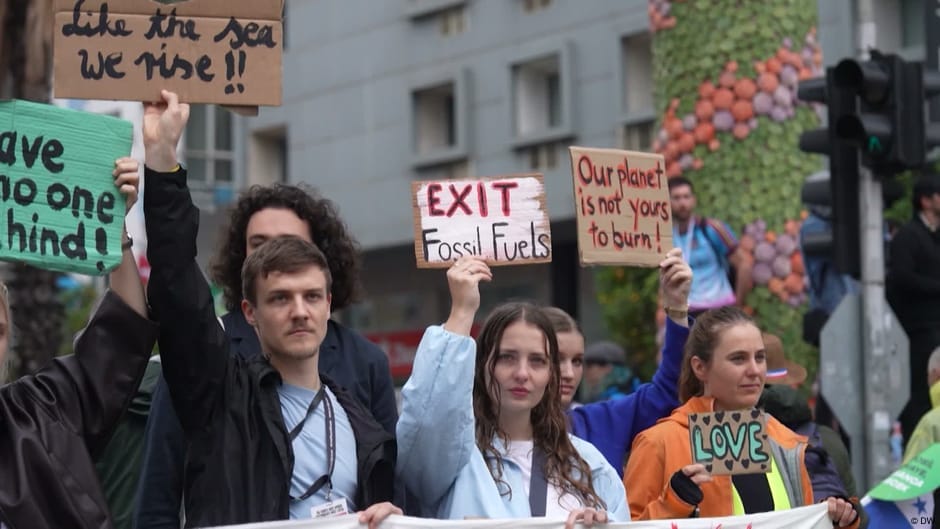
A revised draft of the proposed outcome of the United Nations climate conference (COP31) has removed all references to fossil fuels, including an earlier call for countries to accelerate the transition away from them, drawing criticism from climate organisations and campaigners.
The nine-page draft, released by the conference presidency on Thursday, also removes a proposed target of $120 billion in annual adaptation finance by 2035, while retaining provisions encouraging the expansion of carbon capture and storage technologies.
The changes have intensified concerns about the direction of the negotiations, particularly whether governments will agree on stronger measures to reduce greenhouse gas emissions and provide financial support to countries already experiencing the effects of climate change.
The revised document is significantly shorter than the 18-page draft released on Monday, which contained 144 paragraphs. The latest version has 80 paragraphs and is still an unedited negotiating text, not an agreed outcome.
One of the most-called-out changes concerns the language on fossil fuels.
The earlier draft contained two proposals on the issue, including a call for accelerated action to phase out fossil fuels through an immediate transition away from them in energy systems.
However, neither proposal appears in Thursday’s version.
The omission matters because countries agreed at COP28 in Dubai in 2023 to transition away from fossil fuels in energy systems in a just, orderly and equitable manner, accelerating this decade to achieve net-zero emissions by 2050.
That agreement, contained in paragraph 28(d) of the first global stocktake decision, marked the first time fossil fuels were explicitly mentioned in a COP final decision.
Reacting to the latest draft, Romain Ioualalen, global policy lead at Oil Change International, said governments had removed almost everything that could demonstrate their commitment to moving away from fossil fuels.
Mr Ioualalen also criticised the inclusion of carbon capture and storage (CCS) and carbon dioxide removal technologies, arguing that the provisions could create room for continued fossil fuel dependence.
“The crucial call to accelerate the transition away from fossil fuels is so diluted it might as well be absent,” he said.
Although the revised draft removes references to fossil fuels, it retains provisions encouraging the development and deployment of carbon capture, utilisation and storage (CCUS) and carbon dioxide removal technologies.
Carbon capture and utilisation and storage involves capturing carbon dioxide from industrial processes or other sources and either using it or storing it. Carbon dioxide removal, by contrast, involves taking carbon dioxide already present in the atmosphere out of circulation.
Paragraph 34 of the latest draft welcomes efforts to scale up both technologies.
It also contains proposed quantitative targets for CCUS by 2035, with alternative figures still in brackets, indicating that the wording remains under negotiation.
Paragraph 33 separately recognises a role for carbon dioxide removal in achieving the long-term temperature goal but states that it should complement, rather than replace or delay, deep emissions reductions.
The provisions have attracted criticism from organisations concerned that governments could rely on these technologies while failing to make sufficiently strong commitments to reduce fossil fuel use.
Mr Ioualalen said the inclusion of CCS was particularly troubling and called for the paragraph to be rejected.
He also questioned the proposed global electrification target, which seeks to increase electricity’s share of total final energy consumption to 35 per cent by 2035.
While the draft links the target to efforts to triple global renewable energy capacity by 2030 and double energy efficiency improvements, it does not explicitly require the electricity counted towards the target to come from renewable sources.
Mr Ioualalen argued that the absence of such a requirement could allow further investment in fossil gas-powered electricity generation.
Natalie Jones, senior policy adviser at the International Institute for Sustainable Development, also criticised the proposed emphasis on carbon capture technologies.
She said the draft did not provide a credible response to the urgency of limiting global warming, particularly as the world faces the prospect of exceeding the 1.5 degrees Celsius threshold set by the Paris Agreement.
Ms Jones called for restoring language on accelerating the transition away from fossil fuels, including in the COP30 presidency’s roadmap.
She also urged governments to agree on practical measures to implement previous commitments, including phasing out fossil fuel subsidies.
The revised draft has also dropped a proposed target of at least $120 billion in annual adaptation finance by 2. However, ugh, it retains a commitment to efforts to triple adaptation finance by that year.
It proposes further discussions on an implementation pathway under the existing climate finance work programme and an Antalya-to-Addis Ababa Roadmap on Adaptation and Resilience Finance, expected to report to the Paris Agreement’s governing body in 2027.
However, Amos Wemanya, senior climate adviser at Power Shift Africa, questioned whether these proposals offered a clear route to delivering the funding developing countries need.
He described the arrangement as a “shell game”, arguing that adaptation negotiations refer to the cover decision, which in turn points to the climate finance work programme, without establishing a clear delivery mechanism.
The draft estimates that developing countries will need approximately $305 billion annually for adaptation until 2035. It also puts funding requests under the Barbados Implementation Modalities of the Fund for responding to Loss and Damage at about $2.8 billion, against allocations of approximately $342 million.
Mr Wemanya said the draft acknowledged the possibility of global warming exceeding 1.5 degrees Celsius but failed to provide corresponding measures to strengthen emissions reductions and adaptation financing.
He also warned that the proposed roadmap could delay support rather than secure concrete commitments at the current conference.
The treatment of a just transition has also emerged as a point of disagreement.
A just transition seeks to ensure that the shift towards cleaner energy and economies does not leave workers, households and communities dependent on fossil fuel industries without alternative livelihoods, social protection or opportunities to participate in decisions affecting them.
Camila Mercure, climate policy coordinator at Argentina’s Fundación Ambiente Recursos Naturales (FARN), said references to a just transition had to be removed from the latest cover decision draft, even as negotiations on establishing a mechanism to support the transition remained unresolved.
She questioned how governments could deliver a fair transition while prioritising technologies that could benefit a limited number of actors without establishing a mechanism to mobilise resources and give affected workers and communities a voice.
Karla Maass of the Amazon Sacred Headwaters Alliance said negotiations on mitigation, adaptation and climate finance remained unresolved, despite being the central issues countries had come to Antalya to address.
She said the climate finance work programme needed to establish how countries with historical responsibility for greenhouse gas emissions would provide the funding developing countries need.
“The climate finance work programme needs to deliver more than procedural conclusions,” she said.
“It needs a clear plan for how countries with historical responsibility, and responsibility for emissions, will provide the finance that is needed.”
The removal of fossil fuel transition language has raised concerns about whether the revised draft builds on previous climate agreements.
Mohamed Adow, founding director of Power Shift Africa, described the changes as a setback, particularly after fossil fuels were included ls in a COP decision for the first time at COP28 in Dubai in 2023.
“After the progress made in 2023 at COP28 in Dubai, where fossil fuels were mentioned for the first time, there is now no mention of the f-word at all,” he said.
He also questioned the reliance on further dialogues, noting that countries had made insufficient progress on adaptation finance since COP30 in Belém, Brazil.
Beyond the draft’s content, disagreements over financial accountability have also complicated negotiations.
Iskander Erzini Vernoit, executive director of The Imal Initiative for Climate and Development, said disputes over responsibility for climate finance had hindered progress, leaving developing countries struggling to protect their rights and the ParAgreement’s principles.
He added that some Global South negotiators had privately raised concerns about perceived bias towards developed countries in the Australian co-presidency’s handling of negotiationstions.
Claudio Angelo, international policy coordinator at Observatório do Clima, also questioned the draft’s ability to help limit the severity and duration of a possible overshoot of the 1.5 degrees Celsius threshold, particularly as it removes fossil fuel references while retaining carbon capture provisions.
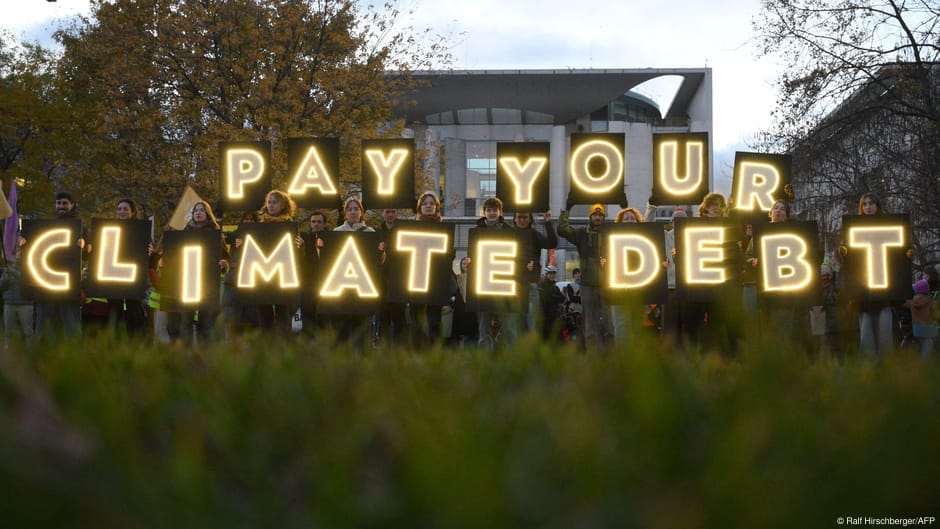
With progress within the formal negotiations remaining uncertain, Alex Rafalowicz, director of the Fossil Fuel Treaty Initiative, pointed to the proposed Fossil Fuel Treaty and the Santa Marta Process as alternative platforms for advancing international cooperation on a just transition.
Participating countries are expected to meet in Tuvalu next July to advance discussions on the proposed treaty.
- draft
- criticism
- retreat
- fossil
- fuel
- transition
- paragraph
- document