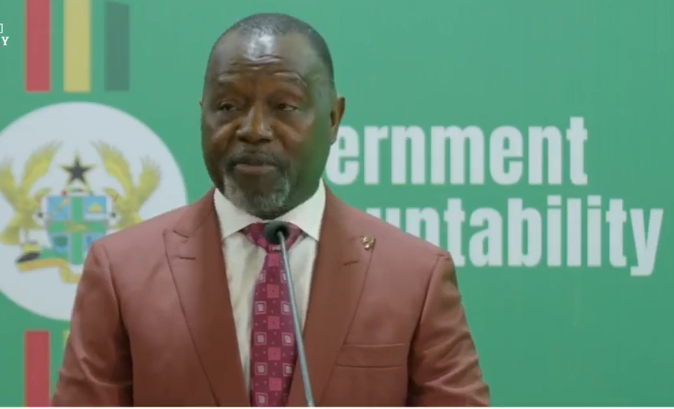
Recurring abuses in criminal investigations prompted AG’s directive – Press Secretary

The Press Secretary to the Attorney-General and Minister for Justice, Benjamin Alpha Aidoo, says longstanding concerns over how criminal investigations are conducted and suspects are treated in police custody informed the Attorney-General’s latest directive to law enforcement agencies. On enforcement, Mr Aidoo said “the directive requires heads of investigative and security agencies to take disciplinary action against officers who breach its provisions.”
The Press Secretary to the Attorney-General and Minister for Justice, Benjamin Alpha Aidoo, says longstanding concerns over how criminal investigations are conducted and suspects are treated in police custody informed the Attorney-General's latest directive to law enforcement agencies.
He says the directive was not triggered by any specific recent incident but by recurring practices that fall short of constitutional and legal standards.
Speaking in an interview on Thursday, November 19, he explained that the directive is intended to address these concerns while ensuring that the rights of suspects are respected throughout the investigative process.
"This directive is not prompted specifically by any recent or specific happening. I believe that we operate a criminal justice system that is quite problematic.
"Both lawyers, complainants, victims, and all of us who can, in one way or the other, have had cause to complain about how investigations are done, about how suspects are handled in police custody and all of that. It is these concerns, these perennial concerns, that are informing this new directive from the Attorney General," he said.
Mr Aidoo said the Attorney-General, Dr Dominic Ayine, wants investigations to be conducted in accordance with due process and supported by credible evidence to strengthen prosecutions.
He explained that evidence gathered through proper procedures would carry greater probative value and weight in court, helping the Attorney-General discharge his prosecutorial responsibilities.
The directive, which covers the Police Service, the National Investigations Bureau (NIB), the Economic and Organised Crime Office (EOCO), the Narcotics Control Commission and other investigative institutions, sets out requirements for arrests, detention, interrogations and bail.
It also prohibits torture, coerced confessions, unlawful searches and other practices that violate the rights of suspects.
On enforcement, Mr Aidoo said "the directive requires heads of investigative and security agencies to take disciplinary action against officers who breach its provisions."
He noted that most of the requirements are restatements of existing constitutional protections, criminal justice procedures and other relevant legislation.
The Attorney-General's Office has also outlined additional oversight measures, including quarterly compliance reports from the agencies and referrals for independent investigation where violations amount to criminal offences.
Mr Aidoo said the measures are intended to improve investigative practices, protect the rights of suspects and ensure that cases presented for prosecution meet the required legal and evidential standards.
- directive
- attorney
- general
- investigation
- suspect
- press
- secretary
- aidoo