Terror on Bondi Beach review – these astounding stories recreate every single second of horror
These Jewish Australians then talk about how, after Hamas’s 7 October 2023 attack on Israel and Israel’s subsequent bombardment of Gaza, they began to feel less safe. They had seen a flaring of antisemitic violence, vandalism and rhetoric; they attended the annual Hanukah festivities at Sydney’s Bondi beach with some trepidation.
From agonised parents trying to find their children, to the man who tackled a gunman – these gripping accounts of the 2025 Sydney attacks should never be forgotten
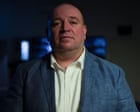
Milo Riley-Smith’s documentary is a simple piece of diligent work. It begins by spending a short time gathering the backstories of its interviewees: how they or their parents came to Australia seeking a new life, finding it to be a welcoming place where, as one woman remembers, Jews “could have a fair go” because anyone could, whatever their ethnicity.
These Jewish Australians then talk about how, after Hamas’s 7 October 2023 attack on Israel and Israel’s subsequent bombardment of Gaza, they began to feel less safe. They had seen a flaring of antisemitic violence, vandalism and rhetoric; they attended the annual Hanukah festivities at Sydney’s Bondi beach with some trepidation. After an extended account of the events of 14 December 2025, the documentary’s participants comment briefly on whether enough was done by the Australian authorities to protect them.
In between is a stunning, multiple-perspective account of the Bondi massacre, straightforwardly presented: a clock that occasionally appears on screen to tell us how far into the ordeal we are is the only embellishment on top of footage and verbal testimony, and even that is in keeping with a piece of film-making that makes us feel as if we are living every second of the terror. For just over six minutes, defenceless families cowered in fear as two men shot at them from a nearby footbridge. Fifteen people died.
Mothers and fathers grabbed their children and lay on them, desperately trying either to explain the need to stay close to the ground to kids too young to understand, or to communicate their love for kids too young to appreciate that it may be for the last time. Some parents were agonisingly unable to find their children; one woman in such a predicament found a different little girl wandering alone and protected that child instead, as fiercely as she would have her own.
All of them could see death looming and could do nothing. They could plainly see the gunmen, and as the attack progressed, they could then see one of the shooters leave the bridge and move closer to them. One man recalls experiencing a variation on life flashing before his eyes: he thought of the years of effort made by a person, a couple, a family, to build a life, and all the work done to make that life better and happier in a thousand tiny ways. For a random selection of people who were being targeted for no reason other than they were Jewish, that work was about to be erased.
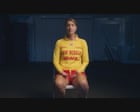
Those six-and-a-bit minutes contain numerous smaller stories. There were the lifeguards who realised that the training they’d received earlier that day, on how to treat shark bites, would be broadly applicable to gunshot wounds: one volunteer from an adjacent beach a kilometre away heard the shots and ran to Bondi, barefoot. There was the woman who, from the safety of a nearby building, kept her phone camera trained on the gunmen, thus providing much of the clearest footage. There was Nick, a professional cameraman who was yelled at for not putting his equipment down. We see his internal debate play out in real time as his record of the shootings is momentarily interrupted by an image of the ground in front of him, before he reconsiders and lifts his lens again, shouting back: “Someone has to document it!” In his interview, Nick is still wrestling with whether he made the right choice.
Plenty of amateurs with smartphones evidently took the same decision, because there are three different angles of the incredible drama of a passerby named Ahmed Al Ahmed, who had been taking cover behind a parked car, seeing that one of the attackers had moved within 10ft of him. Interviewed for this programme, Ahmed recalls instinct taking over as he tackled the “devil” and snatched his weapon, before finding he was unwilling to use the gun himself.
They are gripping tales, yet what abides is the sheer horror and outrage to which the victims were subjected. Several survivors speak of loved ones who, we slowly realise, did not survive the attack: they went to a happy, peaceful community event and never came home. Terror on Bondi Beach stands as a memorial to them, and as a warning about where hatred can lead. But the primary purpose of a film like this is to show us what it was like to be in the middle of such an extraordinary event – to document it, to say exactly what happened. It does that with unforgettable clarity.
- bondi
- beach
- terror
- review
- second
- horror
- parent
- account