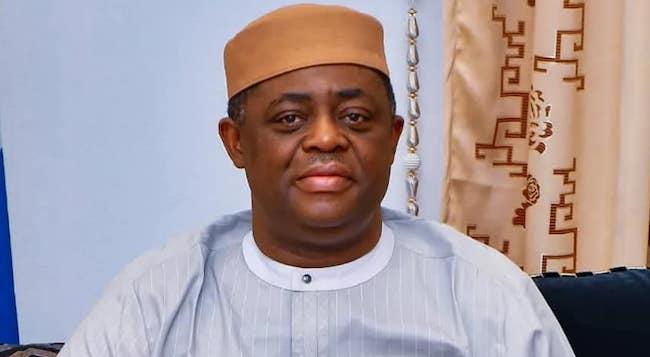
Korea sees Nigeria as gateway for K-Beauty in Africa – Deputy Head of Mission, Tak Namgung

By Nkiruka Nnorom Tak Namgung is the Deputy Head of Mission at the Korean Embassy in Abuja. He spoke to journalists on the sidelines of the Korea-Nigeria joint seminar at the Nigerian Institute of International Affairs (NIIA), Lagos.
By Nkiruka Nnorom Tak Namgung is the Deputy Head of Mission at the Korean Embassy in Abuja. He spoke to journalists on the sidelines of the Korea-Nigeria joint seminar at the Nigerian Institute of International Affairs (NIIA), Lagos. Let us start with K-beauty. Your Ambassador spoke briefly about collaboration in that field. He said in the short term, K-beauty in Nigeria will mainly be about trade.
What does that mean in practice? In the short term, it is about trade and expanding the market here in Nigeria. I recently spoke with fellow Korean diplomats who came to Lagos a month ago. They are based in Gabon, Senegal and Côte d’Ivoire. We share the same goal of promoting Korean beauty products. They told me they have a very strong chain — those trading in Gabon also have a network in Côte d’Ivoire, and a very strong branch in France.
They are all connected. As some of you mentioned, the African Continental Free Trade Area (AfCFTA) is important. When we see its full implementation, Nigeria will be a bridge, a gateway for all products. After speaking with my colleagues, I felt I must work harder to have a stronger market presence here in Nigeria, because they see more productivity and more profit in our neighbouring, front-running countries.
That is what the Korean Embassy is doing right now. We know consumers deserve genuine products, without counterfeits. Proper registration will help them rely on local distributors. There are strong online customers. They are the ones in desperate need, so that they can have strong confidence in great products. And that opens the way for Korean manufacturers to come to Nigeria for production.
The Ambassador also spoke about shea butter. How does that fit in? We spoke quite a lot about shea nuts. About 40 per cent of all shea nuts are produced here in Nigeria, but only about 1 per cent of the global shea market actually comes to Nigeria. Nigeria is heading to fill that gap. NIIA serves as a wonderful platform for such conversations. It provides the intellectual discourse between the Korean Embassy, the Korean government, and Nigerian authorities that will eventually contribute to policy, and also to the business side, for Korean business persons to come.
There is a good example. As was said during the presentation, we will have Beauty West Africa in Lagos. There will be a Korean pavilion, and we will present K-beauty products. What would Korea gain from this collaboration? Today we held a seminar on cultural cooperation, in collaboration with NIIA. From here, we navigated the possible cultural collaboration.
According to the data, Nigeria’s creative economy accounts for about 2.3 per cent of the GDP. Nigeria also expects, by 2030, to create 2 million jobs from the creative economy. So it gives more opportunities for Korea as well. Korea and Nigeria already have strong collaboration. For instance, we have had two joint dramas. One in 2024, titled My Sunshine, and this year, we also have My Alien Lover.
That is the outcome of the collaboration between Korea and Nigeria. It is in Korean, English and Yoruba. So it shows a clear example of how our cultural collaboration is well maintained. Can you tell us about Korea’s cultural success and what Nigeria can learn from it? I would say Korea and Nigeria both have their unique cultures. It is about how both countries can have the opportunity to see each other.
I am not saying this as a matter of capability or something. It is just a matter of time for Nigeria to flourish when it comes to cultural expansion. But what I would like to point out is that we need collaboration. With its unique culture, Korea also has some platforms to make use of. And Nigeria has the core culture that needs to be promoted across the world.
What key steps is the Korean government taking to strengthen its cultural relationship with Nigeria? I would like to highlight K-beauty as one of the potential collaboration points. This November, we will have a K-beauty showcase and conference here in Lagos. And in two weeks, we will also have Beauty West Africa, also held in Lagos. We will have a Korean pavilion.
So this is the first step we would like to take for Nigerians to enjoy Korean beauty products. But we also look forward to future collaboration in the near future because Nigeria has a large share in shea nut production. I also see it as an opportunity for potential collaboration in the field of cosmetics industry. One of the presenters mentioned cultural exchange between Korean and Nigerian artists.
Is this something you are looking at? Yes. Fortunately, we do have a platform in place. We have the Korea Cultural Centre Nigeria, which was established in 2010. Now it is 2026, so it has been working for 16, 17 years. We also have the Korean scholarship programme, which brings an average of 10 Nigerian university students and others to Korea. And we also have the KOICA scholarship programme.
KOICA is Korea’s development agency. We also have scholarships through i
- nigeria
- korea
- collaboration
- beauty
- product
- gateway
- africa
- deputy