From Germany, with love: a letter to the UK
As Andy Burnham pushes to reopen Brexit, Berlin won’t say it, but the truth is, we just want you back Dear British friends, Germans are not the love-letter writing kind of people. Klaus Brinkbäumer, a former executive editor at Der Spiegel, is an author and podcast and TV host in Germany Continue reading...
As Andy Burnham pushes to reopen Brexit, Berlin won’t say it, but the truth is, we just want you back
Germans are not the love-letter writing kind of people. When we write a letter, a complaint is usually not far off. But we cannot complain about you. About other things, yes: transatlantic relations, or Trump, ja, ja. Or our own chancellor, who every morning talks about reforms which, by the evening, we know will never get done. But when I think about Britain I feel only one thing: longing.
So this letter could very well be a declaration of love thinly disguised as a reproach. Has it reached your attention that in Germany, we (and by we, I mean most of us) want you back. And, when you consider our history, is that not spectacular? You gave us Brexit, then Bregret; can we please let Breverse lead to Breturn?
Europe is poorer, duller, more humourless and politically weaker without you. In a world dominated by the US, China and Russia, the European Union cannot even pretend to be a strong No 4 without your nuclear arsenal and your UN security council seat, or your financial and cultural strength.
We can turn a blind eye to details: your strange relationship with reality, for instance, your funny king, and your bizarre willingness to let an untalented comedian lead you into a historic dead end – none of these things matter now, in the dark times we are living in.
Back in 2016, when you voted to leave, we said fine, off you go. Without your endless demands and threats, we claimed, the EU would at last function efficiently. Then came the Hungarians.
And now? We have to admit that something fundamental is missing. Yes, British humour. That ability to take yourselves and your own disasters seriously and laugh at them at the same time. This continent, full of Germans and French people, desperately needs someone who can laugh at us both.
And your debating culture. How I love your ability to turn a political conflict into a linguistic spectacle. Yes, your cultural audacity, too. A country that has produced Shakespeare, Fleabag and the BBC should not retreat to an island, even if it happens to be located on one.
And yes, of course, your scepticism. Europe needs grumpy, smart people who will apply a critical eye and dismantle Brussels’ certainties. The EU without Britain is like a dinner party without the one guest we all know: the one who makes everyone uncomfortable, but tells the best stories.
I spent an evening onstage last week in Lübeck, northern Germany, with the German writer Annette Dittert, who lives on a houseboat in London. We talked about you, dearest Britain, and I said I thought the main problem with the idea of reversing Brexit was that stability had deserted international politics.
And even if Andy Burnham manages to complete his mission to take the UK back into the EU, how do we know that Nigel Farage or his successor won’t push through Brexit No 2, a few years from now? “We don’t,” Annette said. “Those days of stability are gone. But every week, every day with Britain is better for everybody involved, than another week or day apart.”
Then I spoke to some German diplomats, and you want to know what I heard again and again? “I hope Burnham succeeds.” Everybody I spoke to said that. But I also heard differing versions of: “A German telling the British what they ought to do is worth a few thousand votes for Nigel Farage.”
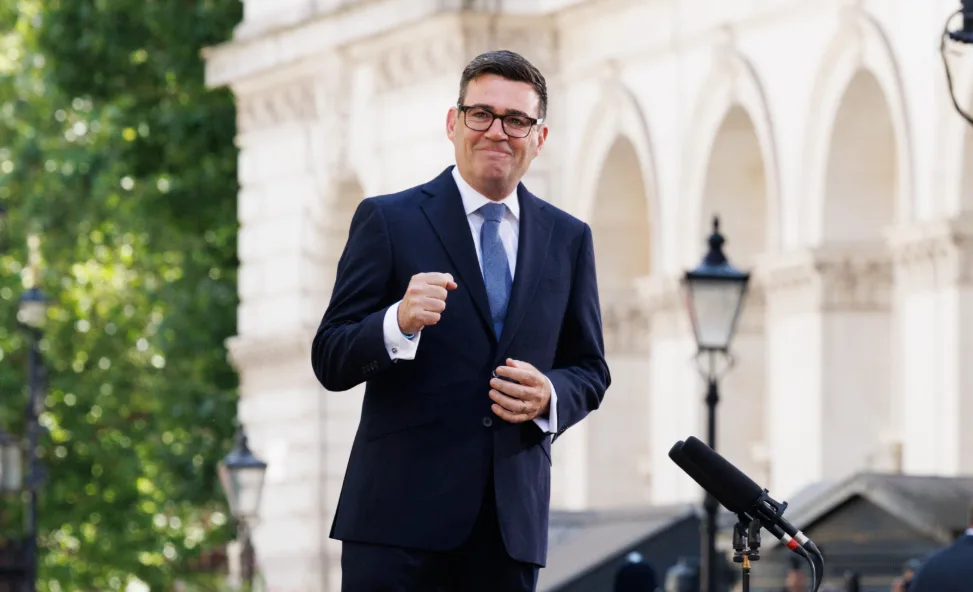
And this came straight from a German cabinet member, preparing for Friday’s big EU/UK summit – when Burnham, who has surprised everyone by choosing to spend his honeymoon period pursuing this mission, leads a negotiating delegation to Brussels: “We would rather stay silent in Berlin. But if the Brits were back, I’d be delighted.”
There is a bit of German angst about what may happen next. Will you arrive with a list of opt-outs and exceptions? Will we have to pretend to be surprised by your list? Our old arrangement is long gone, and we have both changed. We’d have to work out what makes sense today, but early talks about food, drinks and youth mobility have gone well.
Germans can forgive a lot – your separate taps, for instance. We can almost forgive Boris Johnson’s lies and Manchester City’s cheating.
Thinking about forgiveness, may I suggest you forgive yourselves for making a mistake? Brexit seemed to happen so rapidly: one referendum, and you were gone. In your position, we would have set up a working group then commissioned a 380-page feasibility study – and after that, made no decision.
Burnham has outlined four future possibilities: the status quo, a customs union, the single market, and full re-entry. “Win-win” is what he wants, he says. Once you crack open a heavy door and some light comes in, you should walk into the sunshine. The difficult part will come when the conversation moves from what Britain has lost, to how much of the European single market you want to share. How do you feel about people being free to move? Ideally, in both directions? Because that’s the idea.
You know you have always been Europeans, right? You still are. Nobody can vote geography away. Nor can you vote history away. Our future will not become any easier just because we try to shape it separately.
And finally, a secret: Europe needs you in order to become less German. My country is large, economically important and erratic, and politically cumbersome. You would make the EU more pluralistic, more pragmatic, more liberal, more Atlanticist, and, hurrah, more rebellious.
We loved you. You left us. We pretended not to care. Now you are suggesting we should get back together.
Klaus Brinkbäumer, a former executive editor at Der Spiegel, is an author and podcast and TV host in Germany
- letter
- germany
- love
- thing
- andy
- burnham
- brexit
- berlin