Why I take this posh salt scandal with a pinch of you know what
The revelation that German rock salt is used in Maldon’s Essex-made product is causing a stir – but, however you sprinkle it, it’s all just salt This week, a report by the Observer found that the king of flaky salt, Maldon, was using imported German rock salt in its Essex production plant.
The revelation that German rock salt is used in Maldon’s Essex-made product is causing a stir – but, however you sprinkle it, it’s all just salt
This week, a report by the Observer found that the king of flaky salt, Maldon, was using imported German rock salt in its Essex production plant. It has since followed that Cornish Sea Salt (another industry leader) is also importing European salt in its production. There has been a food media outcry, with a tone that has felt very “I’m not angry, I’m just disappointed”. According to the Observer report, “tonnes of mined rock salt are being poured into the production line” at Maldon. The scandal is that these brands call themselves sea salt (made by evaporating seawater), but rock salt is mined from dried-up underground seabeds (that were once also seas). Salt companies combine one type of salt with another to ultimately produce … salt. As food manufacturing goes, I don’t find it the most shocking transgression.
“Posh salt”, once marketed only to the upper classes in Harrods and Fortnums, has been gaining popularity over the last half century. In the early 00s, the major supermarkets started selling Maldon sea salt, and over the last 20 years, with the chef-ification of home cookery, flaky salt has reached never-before-seen heights.
The growth of salt personalities, as I will call them, has only furthered the cause. Nigella Lawson famously said she “always [has] a pinch pot of Maldon in [her] purse”. Molly Baz regularly pours flaky salt from the packet like it’s water from the tap on her popular YouTube channel. Then of course, there was Salt Bae, the restaurateur who went viral after delicately sprinkling flaky salt on top of a steak. Today you’ll find home cooks sprinkling flaky salt on porridge, chocolate mousse and even ice-cream.
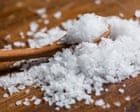
So what is so special about flaky salt? In cooking, the important thing with salt is the size of the flake or grain. This is what dictates how it behaves in your food. It’s the reason people say table salt tastes saltier: the reduced surface area means you get more grains per teaspoon than you do with flakes. It’s not materially saltier, there is just more of it. Fancy salt flakes are favoured for their texture and the way they can be crumbled with pressure from your fingers, à la Salt Bae, allowing for precise seasoning.
But ultimately, salt is salt: the chemical compound sodium chloride (NaCl). Whether from Essex estuaries, German mines or the flats of Mexico, it is essentially the same stuff. Neither rock salt nor sea salt is more refined than the other. With the exception of sulphurous black salt from the Himalayas, even the most impressive taste tester in the world would have no clue what country a salt was from in a blind tasting. If they say they do, they’re lying.
In other artisanal food production, provenance affects flavour. Think cheese (made with milk flavoured by the grass the animals graze on), or olive oil and coffee (where geography and climate have a huge effect on fruit and bean). Salt’s not like this. Artisanal salt’s USP is crystallisation, and how the shape of the flake behaves in our food. It is the production method that dictates whether you end up with chunky rocks, thin flakes, pyramids or tiny grains. Once processed, a salt’s characteristics won’t tell you anything about its origins. Even when posh salt actually is what it says it is, it’s still just salt.
There is a place for all salts. Table salt, the most refined salt product, is 99% sodium chloride, with the other 1% being anti-caking agents and iodine. But it’s cheap. In my cupboard sits Aldi’s own-brand table salt, and Maldon. The table salt is what I use in bread, stocks, stews and anything that needs a large quantity of salt that is going to dissolve away to nothing – fine grains are more easily dispersed in foods. Like most people, I can’t afford to pour Maldon by the cup each day. I reserve it for finishing dishes, vegetables, salads and desserts.
Maldon isn’t cheap, but neither is it the price of gold. I buy 1.4kg tubs of it for £15 from an Italian wholesaler in Croydon. At that price, I am not surprised that the source ingredient is imported. The Welsh salt company Halen Môn’s offering retails at £32.50 a kilo. The end product tastes pretty similar. Maybe Maldon is fancy salt for the masses. Maybe that’s fine. A family business making the big time and not being able to maintain its original protocols is a well-trodden path.
To me, the Maldon “scandal” is akin to going off your favourite band when you’re a teenager because they released a more mainstream third album that they recorded in LA. Mass production and popularity come at a cost. The demand for Maldon has simply become too great and it has had to dip into other sources to meet it. For some, that’s a great sin. It’s true that Maldon should declare the provenance of its product. But I won’t be getting salty about it: as the cheapest flake available to me, I’ll still be buying it by the bucketload.
Thea Everett is a London-based food writer who runs a recipe Substack called What’s That You’re Cooking, Thea?
- salt
- scandal
- rock
- maldon
- sea
- production
- food
- pinch