Parliament, accountability institutions call for new laws to regulate political financing

The call was made on Thursday at a high-level roundtable on political finance in Ghana, convened by Parliament of Ghana in collaboration with the United Nations Office on Drugs and Crime (UNODC), the Ghana Centre for Democratic Development (CDD-Ghana), the Commission on Human Rights and Administrative Justice (CHRAJ), and the Open Government Partnership (OGP) Caucus in Parliament House. Mr Emmanuel Kwasi Bedzrah, the Chairman of the OGP Caucus in Parliament, said the Caucus remains committed to promoting accountability, integrity, and ethical conduct in public life, and stands ready to…
Parliament, accountability institutions and development partners have renewed calls for comprehensive reform of Ghana’s political financing regime.
The institutions also warned that rising costs and alleged weak regulations were undermining fairness and public trust in elections.
The call was made on Thursday at a high-level roundtable on political finance in Ghana, convened by Parliament of Ghana in collaboration with the United Nations Office on Drugs and Crime (UNODC), the Ghana Centre for Democratic Development (CDD-Ghana), the Commission on Human Rights and Administrative Justice (CHRAJ), and the Open Government Partnership (OGP) Caucus in Parliament House.
The day’s engagement, held at Parliament House, Accra, followed an earlier high-level roundtable on Monday, 17 August 2026, and aimed to move the discussion from broad agreement to concrete legislative proposals.
Bernard Ahiafor, the First Deputy Speaker, who spoke on behalf of Mr Alban Bagbin, the Speaker of Parliament, said the increasing monetisation of politics raised serious concerns about electoral fairness, equal participation, inclusiveness, and the independence of parties and elected representatives.
He noted that parties traditionally depended on membership contributions, voluntary donations, and fundraising.
“However, the rising cost of primaries, campaigns, rallies, and constituency engagement has increased dependence on wealthy individuals and corporate entities,” he said.
He added: ” Where financial support is motivated by expectations of future rewards, political financing risks becoming a transactional arrangement rather than a genuine contribution to democratic participation.”
He said the task was to establish a robust regulatory and institutional framework that prevented political contributions from becoming instruments for purchasing influence or securing privileged access to public resources.
Mr Ahiafor said that despite Article 55 of the 1992 Constitution and the Political Parties Act, 2000 (Act 574), there was a compelling need for comprehensive reform to address emerging challenges and enforcement gaps.
He identified key areas to curb the challenges as reasonable limits on political contributions and campaign expenditure; mandatory disclosure of political parties’ resources; independent auditing of political parties’ accounts; and effective enforcement mechanisms
“Let us therefore collectively resolve to ensure that money serves democracy, rather than democracy serving money,” he said.
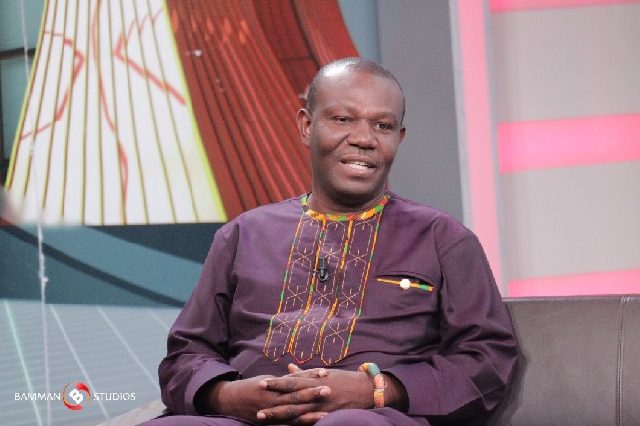
Mr Emmanuel Kwasi Bedzrah, the Chairman of the OGP Caucus in Parliament, said the Caucus remains committed to promoting accountability, integrity, and ethical conduct in public life, and stands ready to support Parliament.
He said that when bills come before Parliament, it will present a memorandum outlining its institutional perspectives and recommendations.
He said the engagement provided an opportunity to ensure Ghana’s commitments are reflected in enforceable law.
He noted that Ghana was preparing its 6th OGP National Action Plan and that it should consider political finance transparency within that framework, alongside commitments such as publishing financial management compliance data.
“Open government principles of transparency, accountability, integrity, and responsiveness must extend beyond the management of public resources to the process through which political power is sought and exercised.
Mr Bedzrah, also the National Democratic Congress (NDC) Member of Parliament (MP) for Ho West, said he was speaking as both an advocate and a practitioner, having just returned from a regional election.
He said policy proposals should matter more than financial capacity and called for a democracy in which citizens exercise electoral choices free from financial inducement or undue influence.
He affirmed the OGP Parliamentary Caucus's commitment to championing political finance reform through advocacy, legislative action, and oversight.
He added that Parliament had reports before committees and that the OGP Committee, the sister committee, African Parliamentarians’ Network Against Corruption (APNAC), and the Legal and Parliamentary Affairs Committee would work to ensure they become law.
He said deliberations should result not only in recommendations but also in actionable commitments and a clear roadmap.
Dr Kojo Asante, Director of Advocacy and Policy Engagement at CDD-Ghana, highlighted the practical burden on MPs and candidates, noting that the high cost of contesting elections pressures representatives and can affect accountability to constituents.
He argued that reform was not only about controlling money but also about protecting competent people's ability to participate regardless of wealth.
Ms Isatou Batonon, UNODC Advisor, said political finance is a global concern and that transparency in funding is essential to preventing corruption and protecting election integrity.
She commended Ghana for its leadership in advancing Resolution 11/7 and for convening Parliament to consider domestic implementation.
Dr Joseph Akanjolenur Whittal, the Commissioner, CHRAJ, noted that adopting the resolution was a significant milestone, but not the end.
He said its value would depend on how the principles were translated into enforceable domestic laws and effective institutional arrangements.
Other speakers recalled Ghana’s role at the 11th Session of the Conference of State Parties to the United Nations Convention Against Corruption, held in Doha, Qatar, in December 2025.
Madam Lydia Lamisi Akanvariba, the Minister for Public Sector Reforms, said Ghana joined Norway, Albania, and Mongolia in sponsoring Resolution 11/7 on preventing and combating corruption by enhancing transparency in funding for political parties, candidates for elected public office, and electoral campaigns.
She said the resolution was subsequently adopted.
She noted that Ghana’s delegation to the conference was led by Mr Alban Sumana Kingsford Bagbin, the Speaker of Parliament, and included the Chief Justice, the Deputy Chief of Staff in charge of Administration at the Office of the President, senior government officials, and representatives of civil society.
Participants agreed that financial resources are indispensable to political participation, but without safeguards governing their sources, management, and use, they can create opportunities for undue influence and compromise the integrity of public office.
Participants also pointed to ongoing continental work, particularly the development of an African Union Model Law on political finance, as a useful reference for Ghana, while reforms must still respond to national circumstances.
Participants agreed that the next step is to sustain momentum towards reforming electoral and related laws, clarify institutional responsibilities, and ensure that commitments made in Doha find meaningful expression in Ghana’s legal and institutional framework
- parliament
- accountability
- ghana
- financing
- ogp
- caucus
- party
- contribution