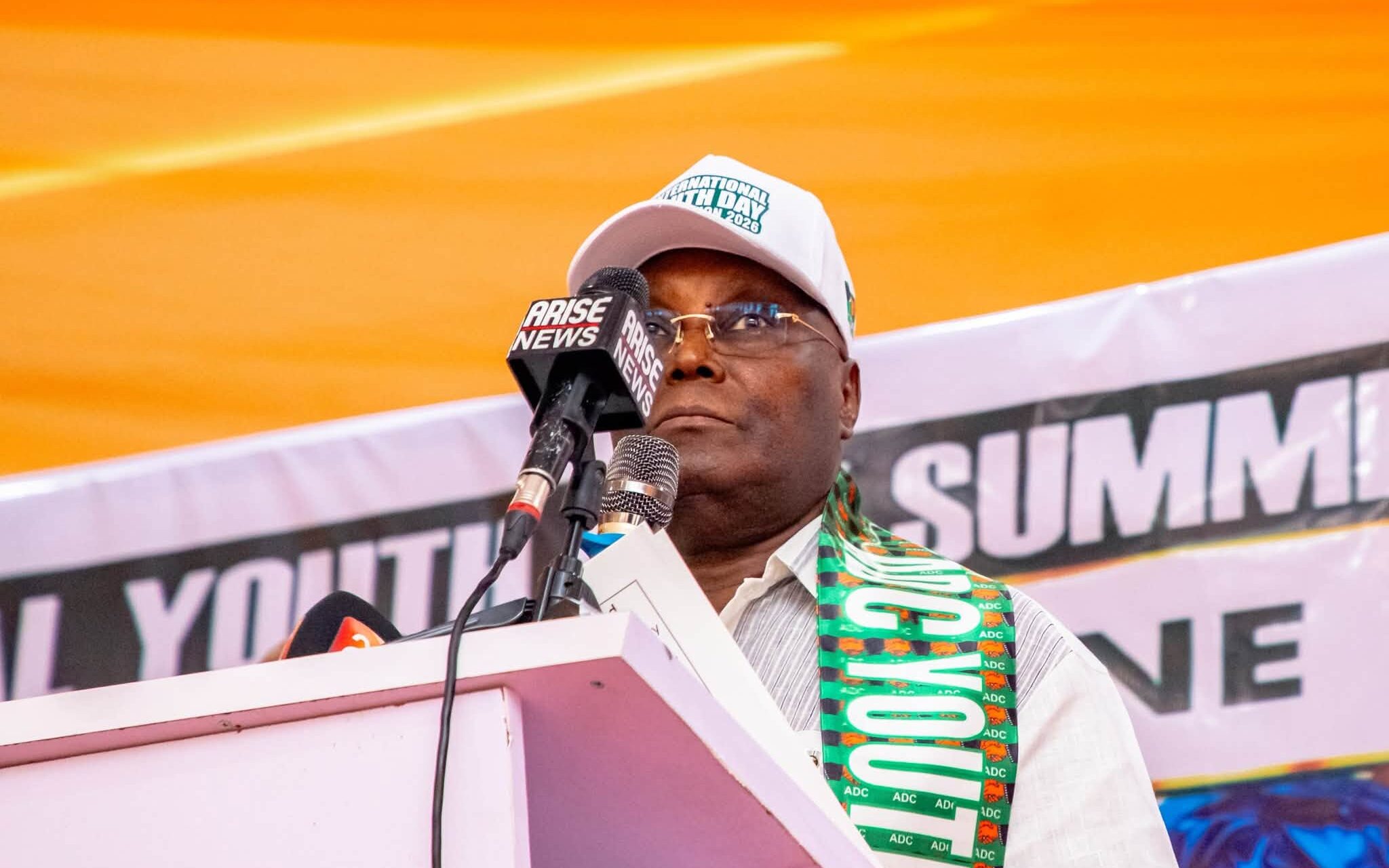
ADC questions Tinubu’s reliance on World Bank over fuel subsidy removal

“Since when did the economic recommendations of an international financial institution become instructions that a sovereign government must obey, regardless of the suffering they could inflict on its citizens?”
ADC secretariat
The National Publicity Secretary of the African Democratic Congress (ADC), Bolaji Abdullahi, has questioned President Bola Tinubu’s handling of the fuel subsidy removal, accusing his administration of prioritising the World Bank’s recommendations over Nigerians’ welfare.
Mr Abdullahi said the president should explain why his administration appeared to implement the World Bank’s recommendations on fuel subsidy removal without adequately considering the consequences for citizens.
He raised the concerns in an opinion article titled ‘Who Governs Nigeria, Tinubu or the World Bank?’ published on his X handle on Friday.
Mr Tinubu announced the removal of the petrol subsidy on 29 May 2023, shortly after taking the oath of office as Nigeria’s 16th President.
In his inaugural address at Eagle Square, Abuja, he declared, “The fuel subsidy is gone,” explaining that the 2023 budget made no provision for subsidy payments beyond June.
He said the funds would instead be redirected towards infrastructure, education, healthcare and job creation. The announcement immediately triggered an increase in petrol prices and raised concerns about the cost of living.
Mr Abdullahi was reacting to comments by former Lagos State Governor Babatunde Fashola, who defended the removal of the fuel subsidy during an interview on Channels Television’s Politics Today on Tuesday.
Mr Fashola argued that the decision was influenced by the country’s financial circumstances and the World Bank’s position, which, he said, indicated that Nigeria would no longer receive financing if it continued to fund the petrol subsidy.
The former governor also cited provisions of the Petroleum Industry Act (PIA), which established a market-based framework for petroleum product pricing, and questioned the financial sustainability of proposals to restore the subsidy.
However, Mr Abdullahi said the former governor’s explanation raised questions about the independence of the Tinubu administration’s economic decisions.
He argued that international financial institutions could offer policy recommendations but should not determine how Nigeria manages its economy.
The ADC spokesperson said the World Bank’s recommendations should be considered alongside the country’s circumstances, not treated as binding instructions.
He wrote, “Since when did the economic recommendations of an international financial institution become instructions that a sovereign government must obey, regardless of the suffering they could inflict on its citizens?”
Mr Abdullahi also questioned whether the president had adequately considered alternatives before implementing the policy, arguing that the Nigerian government remained responsible for its consequences.
“International institutions are entitled to offer recommendations. They are not elected to govern Nigeria. The President is,” he said.
Beyond the World Bank’s involvement, Mr Abdullahi challenged Mr Fashola’s reliance on the Petroleum Industry Act to justify removing the fuel subsidy.
He argued that laws should serve citizens’ interests and should be reviewed when their implementation undermines public welfare.
The ADC spokesperson maintained that the legislation should not prevent the government from considering measures that could make petroleum products more affordable.
He said the PIA, which was passed in August 2021, had remained before the National Assembly for several years before its eventual passage because of concerns about some of its provisions.
Mr Abdullahi, however, argued that the same legislation contained provisions that could support the ADC’s proposed alternative to the current fuel pricing arrangement.
He specifically cited Section 109 of the Act, which provides for a Domestic Crude Supply Obligation (DCSO), requiring crude oil producers to dedicate specified volumes of crude oil towards supplying domestic refineries.
The provision also empowers the Nigerian Upstream Petroleum Regulatory Commission (NUPRC) to issue regulations and guidelines for enforcing the obligation.
According to Mr Abdullahi, the provision allows the government to support local refineries through domestic crude supply arrangements rather than relying entirely on imported petroleum products.
He said the ADC and its presidential candidate, Atiku Abubakar, were proposing a production subsidy that would use domestic refining capacity to reduce the cost of petroleum products.
“The question then is: Why has this administration failed to enforce that aspect of the law and use it as a lever to support local refineries so they can deliver cheaper fuel to Nigerians?” he asked.
However, Section 109 also stipulates that domestic crude oil supplies should generally operate on a willing-supplier, willing-buyer basis, with prices commercially negotiated between producers and licensed refineries, taking prevailing international prices into account.
The provision does not automatically guarantee cheaper petrol for consumers, but it establishes a framework to ensure crude supply to operational domestic refineries.
Mr Abdullahi also challenged the argument that removing the fuel subsidy was necessary to address Nigeria’s financial difficulties.
Mr Fashola had recalled the financial challenges faced by the administration of former President Muhammadu Buhari, when debt servicing consumed a substantial proportion of government revenue.
He argued that the country’s inability to sustain the subsidy arrangement had made its removal necessary.
However, the ADC spokesperson said the country’s current debt profile raised questions about the policy’s benefits after more than three years.
Citing the federal government’s budget implementation figures, Mr Abdullahi said Nigeria spent N4.63 trillion on debt servicing in the first quarter of 2026, against total revenue of N5.08 trillion.
He calculated that the debt service obligations represented approximately 91 per cent of government revenue.
Mr Abdullahi further cited figures from the Debt Management Office (DMO), which showed that Nigeria’s total public debt increased from N87.38 trillion in June 2023 to N166.79 trillion as of 30 June 2026.
The DMO’s latest debt report puts the country’s public debt at N166.79 trillion, comprising N91.59 trillion in domestic debt and N75.20 trillion in external debt.
The ADC spokesperson also criticised the government’s budget implementation, claiming that capital releases remained between 20 and 24 per cent.
He questioned whether the economic reforms had delivered sufficient benefits to Nigerians, given the continued pressure of debt servicing and the country’s rising public debt.
“We must therefore ask: After more than three years of painful sacrifice, what exactly have Nigerians gained from this fuel subsidy removal?” he asked.
Mr Abdullahi also dismissed the prompt payment of salaries and the Nigerian Education Loan Fund (NELFUND) as insufficient justification for the hardship associated with the subsidy removal.
Mr Fashola identified regular salary payments and the introduction of student loans as benefits of the Tinubu administration’s economic policies.
However, the ADC spokesperson argued that these interventions had not adequately addressed the economic difficulties confronting the wider population.
He cited an estimate of 144 million Nigerians, representing 66 per cent of the population, as being affected by economic hardship, contrasting this with the proportion of the population represented by federal government salary earners.
Mr Abdullahi argued that the benefits of salary payments could not be compared with the widespread consequences of increased petrol, food and transportation costs.
He also questioned the sustainability of the N70,000 minimum wage, arguing that the amount could no longer adequately cover basic living expenses following the removal of the fuel subsidy and the devaluation of the naira.
While acknowledging that NELFUND had benefited some students, he questioned whether the initiative constituted a comprehensive response to the challenges facing the country’s higher education sector.
He described the scheme as more of a political initiative than a comprehensive higher education policy.
The ADC spokesperson also challenged the government’s argument that restoring fuel subsidy would require identifying additional sources of funding.
He argued that the government should first address wasteful spending and reduce the cost of governance before asking citizens to bear additional economic sacrifices.
Mr Abdullahi cited the acquisition of new aircraft and a yacht for the presidential fleet, expanded convoys for public officials and the purchase of luxury vehicles for political supporters as examples of what he described as government excesses.
He also questioned spending on presidential facilities and other official privileges, arguing that the administration appeared able to fund such expenditures while struggling to provide relief for ordinary Nigerians.
“The right question is: Why does this government always seem able to find money for its own comfort and luxuries, buying new yachts and jets for the presidential fleet, but cannot find the money to make life a little better for the people?” he wrote.
He said the ADC believed that government spending should prioritiseitise citizens’ welfare and that economic management should not begin with imposing additional burdens on low-income households.
“The difference is simple: This government is asking Nigerians to sacrifice for the comfort of government. The ADC believes that government should sacrifice for the comfort of Nigerians,” he said.
Mr Abdullahi maintained that the party’s position was to reduce government expenditure, eliminate waste and pursue policies that would improve the living conditions of Nigerians.
His intervention comes amid the political debate over the future of fuel subsidy, with Atiku, the ADC’s presidential candidate for the 2027 election, proposing its restoration if elected.
Mr Fashola had questioned the feasibility of the proposal, arguing that restoring the subsidy would require legislative backing and a sustainable funding arrangement.
He also challenged Atiku to explain how the government would finance the policy without creating further pressure on public finances.
- adc
- tinubu
- reliance
- world
- bank
- fuel
- subsidy
- removal