French Ambassador to Ghana warns of AI threats, urges Africa not to ‘wait for the West’

French Ambassador to Ghana, Diarra Dimé-Labille, has sounded an alarm over the potential threats of Artificial Intelligence, warning that humanity could be approaching a crossroads where its ability to control the technology and determine its own destiny could increasingly come into question. The ambassador also participated in the opening session of the Winter School at KNUST, where she reiterated France’s commitment to strengthening scientific research, academic cooperation and innovation partnerships with African countries, particularly Ghana.
French Ambassador to Ghana, Diarra Dimé-Labille, has sounded an alarm over the potential threats of Artificial Intelligence, warning that humanity could be approaching a crossroads where its ability to control the technology and determine its own destiny could increasingly come into question.
She believes the dangers are too significant to ignore, insisting that Ghana and the African continent must lead the charge in shaping the future of AI and establishing safeguards to protect humanity.
The Ambassador says the continent must not wait for global technology giants in the West to determine how a technology, whose consequences will affect every society, operates.
Speaking during a diplomatic visit to the Kwame Nkrumah University of Science and Technology (KNUST), she expressed concern about how quickly AI is evolving and whether humanity is adequately prepared to manage its potential risks.
“Ghana and the African countries, the European countries, and all those countries can do something together. We are responsible. There is no need to wait for others to do it for us. And it's not only the expert or the scientific that has to deal with it. It's also all of us as citizens,” she said.
The French Ambassador to Ghana and a delegation from the embassy paid a diplomatic visit to KNUST to acquaint them with the activities of the university in promoting AI education and deployment.
The visit is part of a two-day tour by the ambassador to the region to inspect projects and other infrastructure being rolled out and funded by the embassy to foster socioeconomic and technological advancements.
After touring the Responsible AI Lab (RAIL) at the university, the ambassador expressed hope that AI experts in the College of Engineering were also particularly concerned about the threats of the technology despite harnessing its benefits.
“It’s important for us to treat this carefully. I was definitely impressed and amazed visiting the AI lab in KNUST, and one of the first reflections when I saw all those young AI experts, they were talking about safeguard. They were talking about the need for humanity to really do the best possible to contain the threat of AI,” she said.
She continued: “You are an AI expert, are you not afraid? And, they told me, it's not because we failed to prevent this kind of threat yesterday that we cannot do it today. It's never late.
"So, seeing those young Ghanaian AI experts thinking about it, having this kind of hope, makes me, very hopeful. Those young people are definitely very committed to working in a very ethical and responsible AI."
The ambassador also participated in the opening session of the Winter School at KNUST, where she reiterated France’s commitment to strengthening scientific research, academic cooperation and innovation partnerships with African countries, particularly Ghana.
Ambassador Dimé-Labille highlighted that France considers Africa an important partner in scientific advancement and is keenly concerned about developing sustainable partnerships that would foster bilateral cooperation and provide practical solutions to pressing societal challenges.
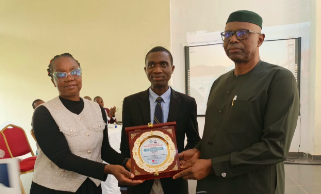
Meeting with some faculty members and the governing council of the university, Ambassador Dimé-Labille emphasized deepening the cooperation between the university and the embassy.
“The cooperation between the French embassy and KNUST definitely needs to continue in this way. We know that we are having this cooperation and the partnership through different initiatives,” she said.
Representing the Vice Chancellor, Prof Samuel Asare Nkansah, who is a professorial member of the university council, highlighted some initiatives undertaken by the university to enhance AI education and its application.
He noted that the university is ready to explore AI applications in the Sustainable Development Goals, particularly ensuring social inclusion with a focus on physical challenges.
- ambassador
- ghana
- university
- threat
- technology
- knust
- expert
- cooperation