2027: Tinubu promises to halve out-of-school children, recruit 20,000 teachers by 2031

Tinubu promises to halve out-of-school children, recruit 20,000 teachers by 2031. President Tinubu also promises an annual education dashboard to track enrolment, dropout and completion rates, creating a proposed mechanism for monitoring progress.
President Bola Tinubu has promised to halve the number of out-of-school children in Nigeria by 2031 as well as recruit and train 20,000 additional teachers, setting measurable targets for a sector still grappling with poor access, inadequate facilities and weak learning outcomes.
The president’s promises are contained in the All Progressives Congress (APC)’s 2027–2031 manifesto, “From Reforms to Prosperity,” which was presented on 10 November in Abuja.
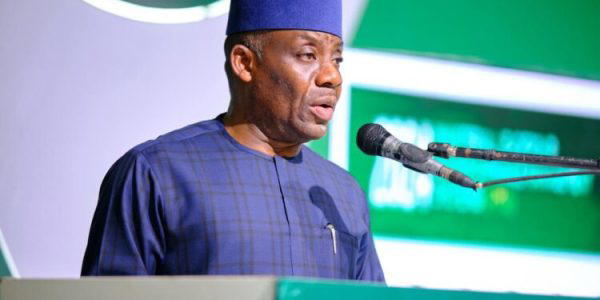
The Minister of Industry, Trade and Investment, Jumoke Oduwole, who presented an overview of the document on behalf of the president, outlined plans to expand school access, improve retention, strengthen teacher capacity and make learning environments safer.
Under the section titled “We Will Guarantee School Access, Safety, And Educational Retention,” the president says it will “scale HOPE-EDU nationwide to halve the number of out-of-school children by 2031.”
He also promised to extend the Adolescent Girls Initiative for Learning and Empowerment (AGILE), which currently operates in 18 states, to other states with high numbers of girls excluded from education.
He further proposed “dedicated return-to-school pathways for teenage mothers,” recognising the barriers that often prevent young mothers from continuing their education
On teacher recruitment, President Tinubu said he will build on the 80,284 teachers already certified and licensed by recruiting and training another 20,000, with priority given to female educators and underserved rural communities.
He also pledged to enforce safe-school standards, expand access to water and sanitation facilities and publish an annual education dashboard tracking enrolment, dropout and completion rates.
The proposed reduction in out-of-school children comes against the background of a long-standing national education challenge.
A 2024 UNICEF report estimated that 10.2 million primary-school-age children and 8.1 million children of junior secondary school age were out of school in Nigeria.
The federal government has also provided a different estimate. In April 2026, the Minister of Education, Tunji Alausa, reportedly put the figure at 15 million, while the ministry said nearly one million children had been mapped for reintegration into formal schools and alternative learning pathways.
The different estimates make it necessary for the government to establish a clear baseline for its 2031 target. Although the president promised an annual education dashboard, he did not state the precise number of out-of-school children against which the proposed 50 per cent reduction will be measured.
He did not also provide annual targets showing how many children the government expects to enrol or retain in school each year.
The challenge also extends beyond getting children into classrooms. UNICEF has reported that 74 per cent of Nigerian children aged 7 to 14 lack basic reading and mathematics skills, highlighting the need to assess learning outcomes alongside enrolment figures.
Education was also a major component of Mr Tinubu’s 2023 manifesto, Renewed Hope: Action Plan for a Better Nigeria.
The earlier document promised improvements in school infrastructure, teacher training, curriculum development, digital learning and girls’ access to education. It also proposed stronger accreditation standards, professional development for teachers and improved learning facilities.
Several of those priorities remain in the 2027 document, particularly teacher development, girls’ education, technical training and the use of technology in schools.
The new manifesto, however, attaches specific numerical targets to some commitments. These include halving the number of out-of-school children by 2031 and recruiting and training 20,000 additional teachers.
The 2027 document also promises an annual education dashboard to track enrolment, dropout and completion rates, creating a proposed mechanism for monitoring progress.
The manifesto presents several figures as evidence of progress under the Tinubu administration.
It reports that 3.7 million girls have been enrolled in secondary schools across 18 states through the AGILE programme, while more than 10,000 schools have been rehabilitated.
The document also says 80,284 teachers have been certified and licensed, about 978,000 teachers have received training and 10,000 classrooms have been renovated nationwide
These are figures reported by the government in the manifesto. They do not, on their own, establish whether the interventions have improved learning outcomes or significantly reduced the number of children excluded from school.
The manifesto acknowledges that the next phase must ensure that children can enrol, learn effectively and complete their education safely.
It states that the immediate priority is “ensuring every child can enrol, learn effectively, and complete their education safely,” supported by more trained teachers, stronger school protection and modern learning environments
Beyond access and retention, the president proposes measures to improve the quality and relevance of education, particularly in science, technology, engineering, mathematics and digital learning.
The manifesto says the government will “prioritise foundational learning, science, technology, engineering, mathematics, and digital capabilities across all educational levels.”
It also promises stronger partnerships with industries to provide practical, work-linked training and align courses with labour-market needs.
On technical and vocational education, the president proposes expanding training programmes, building on the Technical and Vocational Education and Training (TVET) initiative. The manifesto reports that the initiative has enrolled 117,152 verified trainees, while monthly stipends increased from ₦22,500 to ₦30,000
He says the success of these programmes will be assessed through graduate employment, business survival and workplace productivity.
At the tertiary level, the manifesto promises to scale the Nigerian Education Loan Fund (NELFUND), expand the National Smart Learning Initiative and extend the Student Venture Capital Grant and Diaspora BRIDGE to more institutions [p. 42].
The document reports that NELFUND had processed 1,659,853 applications and paid ₦355.87 billion in student loans. Of the amount, ₦192.89 billion went towards institutional fees for students in 319 institutions, while ₦162.98 billion was paid as upkeep allowances [pp. 37–38].
It also says the Renewed Hope Energising Education Programme has provided electricity to 37 federal universities and seven teaching hospitals.
However, the manifesto leaves unanswered how the government intends to address the financial and social pressures that keep children out of school, particularly in communities where poverty, distance to schools and other barriers affect attendance.
The annual education dashboard could provide a basis for public scrutiny, but its usefulness will depend on whether it publishes verifiable, state-level data and tracks actual learning outcomes.
For a country still struggling to get millions of children into classrooms, the success of the proposed education plan will depend on whether the commitments translate into sustained enrolment, improved teaching and better learning outcomes.
- tinubu
- school
- child
- teacher
- president
- education
- dashboard
- enrolment