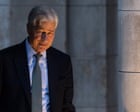
Highly lucrative: Bank of England directors illegally profited from post-abolition enslavement in Cuba
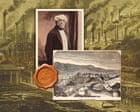
New research finds that the British-led Cobre Mining Company helped industrialise Manchester via copper deposits and enslaved African people • Slave-trade wealth was embedded in Britain’s financial system, research finds British businesses run by long-serving directors of the Bank of England profited from “brutal” enslavement in Cuba for decades after slavery’s abolition in the British empire, according to research. Men and boys were enslaved in prison conditions at the El Cobre copper ore mine near Santiago de Cuba, which supplied British firms during the Industrial Revolution, the historian
New research finds that the British-led Cobre Mining Company helped industrialise Manchester via copper deposits and enslaved African people
Slave-trade wealth was embedded in Britain’s financial system, research finds
British businesses run by long-serving directors of the Bank of England profited from “brutal” enslavement in Cuba for decades after slavery’s abolition in the British empire, according to research.
Men and boys were enslaved in prison conditions at the El Cobre copper ore mine near Santiago de Cuba, which supplied British firms during the Industrial Revolution, the historian Chris Evans has found.
In the 1840s, Cuba was the most important foreign source of copper ore for the UK. Copper was critical to Manchester’s cotton industry, railways and telegraphy.
Previous research has revealed that dozens of financiers involved in the founding in 1694 of the Bank of England invested in enslavement.
Now, Evans’s research reveals that ties between key figures in the UK’s financial system and enslavement of African peoples continued even after the government outlawed it.
Britain abolished its trade in enslaved people in 1807 and passed legislation abolishing slavery in most of its empire in 1833.
However, as Britain’s Slavery Abolition Act was coming into force, “City of London figures” were developing mining of El Cobre’s copper ore deposits, an operation which depended on enslavement in Spanish-controlled Cuba.
Key players in the highly lucrative operation included the Bank of England directors Charles Pascoe Grenfell (1790-1867) and William Thompson (1792-1854), acting in a private capacity.
Enslaved copper miners at El Cobre were likely to have been trafficked to Cuba by illegal voyages from the Bight of Biafra, in modern-day Nigeria, as Evans details in his book, Slavery’s Long Goodbye – Capitalism, Nationalism and Christianity in the Age of British Emancipation.
The death rate at El Cobre means it is likely that thousands of Africans were exploited there. Their life stories remain largely undocumented. At the time, slavery was legal in Cuba but the importation of enslaved people was not.
As a partner in the Cobre mining and export company, Grenfell was a driving force in enslaved miners’ exploitation.
Cobre was “likely to be the largest slave enterprise in the western hemisphere” by the 1840s, Evans said. Investors who held Cobre shares from the outset received £102 in dividends for every £40 share between 1836 and 1865.
Grenfell was also a partner in a Swansea-based smelter Pascoe, Grenfell & Sons, which bought imports from the mine, in an era when the Welsh port was the centre of the global copper trade.
Meanwhile, Thompson, a former lord mayor of London, exploited enslaved miners through the ore export firm he directed, the Royal Santiago Company.
The UK is facing increased pressure to make a formal apology to Caribbean and African nations for Britain’s centuries-long perpetuation of transatlantic chattel slavery. Commonwealth leaders say “structured dialogue” with the UK prime minister, Andy Burnham, will begin in the next year.
While the Tory leader Kemi Badenoch has claimed Britain has nothing to apologise for, scholarship – dating back to the Trinidadian statesman Eric Williams’s 1944 book, Capitalism and Slavery – reveals the global impact of the colonialism and chattel enslavement that was integral to British capitalism’s success.
Evans, a former professor at the University of South Wales, said: “As Britain ostentatiously winds down its own slave system in the 1830s, British capital is boosting slavery elsewhere in the western hemisphere.
“The illegal trade, involving French and Spanish merchants, was flourishing and substantial. There were British (anti-slavery) patrols off the coast of Cuba, but they’re relatively few in number and intercept only a very small proportion of slave ships.”
Conditions at El Cobre were “extremely brutal”, with daily violence and torture. “Slave catchers” were employed to snatch miners who tried to escape to the mountains.
In 1817, under British pressure, Spanish authorities signed a treaty that banned trafficking enslaved Africans to Cuba. But as Cuba’s sugar and coffee plantations relied on enslaved African workers, local colonial authorities ignored it, with 25,000 captives arriving in 1859 alone.
In 1843, pressure from the British and Foreign Anti-Slavery Society prompted legislation intended to prohibit British subjects from owning enslaved people in other jurisdictions, after undercover investigations exposed British mining companies’ activities in Brazil and Cuba, including at El Cobre.
But after lobbying by mining interests, parliament diluted the legislation, allowing companies to retain enslaved workers as their “property” and hire others. The concessions prompted abolitionists to withdraw their support for the law, which failed to end the exploitation.
Neither Grenfell nor Thompson appears to have faced legal penalties for their involvement. Grenfell became the Liberal MP for Preston in the late 1840s, later boasting that his father had been an abolitionist. Grenfell remained a B of E director until 1864.
Enslavement at El Cobre finally ended after Cuban revolutionaries captured the town from Spanish forces in November 1868. The rebel commander proclaimed the miners’ emancipation on New Year’s Eve, and formerly enslaved workers later joined Cuba’s liberation army.
Evans’s book explores Britain’s overlapping histories of slavery, capitalism and missionary Christianity through the lives of Grenfell and two of his cousins.
Evans added: “The British in the early 19th century had started to understand slavery as a national sin.
“In the classical age of abolition, you could do things like abstain from eating sugar from the West Indies.
“But with copper, you can’t do that because it’s embodied in the industrial world, and, in the age of joint-stock capitalism, you have many British people who invest in mining companies who genuinely didn’t know these companies were using enslaved workers.
“Slavery was rendered invisible by the complexity of industrial society. But British engagement with slavery continued long after Emancipation. It involved the mercantile-financial elite of London as well as hundreds, possibly thousands, of rank-and-file investors from the Victorian middle class.”
A Bank of England spokesperson said: “We have previously acknowledged the role of former governors and directors in the slave trade.”
- cuba
- bank
- england
- enslavement
- research
- director
- cobre
- copper