NELFUND considers increase in N20,000 monthly student upkeep
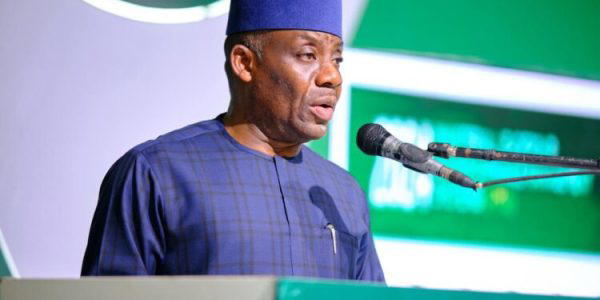
By Joseph Erunke Millions of Nigerian students benefiting from the Federal Government’s student loan scheme may soon receive higher monthly upkeep allowances as the Nigerian Education Loan Fund, NELFUND, considers a review of the current N20,000 payment amid mounting pressure from rising living costs. The fund’s Managing Director, Akintunde Sawyer, disclosed this during an interview on Beyond the Headlines,a TVC news programme, where he said the monthly upkeep payment was under constant review.
By Joseph Erunke Millions of Nigerian students benefiting from the Federal Government’s student loan scheme may soon receive higher monthly upkeep allowances as the Nigerian Education Loan Fund, NELFUND, considers a review of the current N20,000 payment amid mounting pressure from rising living costs. The possibility of an increase emerged as NELFUND acknowledged that the existing allowance might require adjustment to better reflect the financial realities facing students struggling to meet the costs of feeding, transportation, accommodation and other basic necessities while pursuing their education.
The fund’s Managing Director, Akintunde Sawyer, disclosed this during an interview on Beyond the Headlines,a TVC news programme, where he said the monthly upkeep payment was under constant review. Although he did not announce a new figure or a timeline for implementation, Sawyer signalled that an adjustment was being considered, raising expectations among students who have repeatedly complained that the current ₦20,000 monthly allowance is inadequate to survive on in the face of escalating prices.
“Are we considering it? Yes, of course. It’s under constant review,” he said. The indication of a possible increase comes against the backdrop of growing concerns over the purchasing power of students, many of whom depend on the NELFUND intervention to cushion the financial burden of higher education. With food prices, transportation fares, accommodation costs and other essential expenses continuing to weigh heavily on households, the N20,000 monthly upkeep has increasingly come under scrutiny over its capacity to provide meaningful relief to beneficiaries.
However, Sawyer said any decision to increase the allowance would have to be carefully weighed against the fund’s financial capacity and the need to sustain support for the growing number of students enrolled in the scheme. He explained that while NELFUND was conscious of the need to improve students’ welfare, it could not make adjustments without considering the implications for the entire beneficiary population.
“What we need to do is plan it in such a way that it doesn’t put us in a situation where we can’t cater for the totality of the people that we need to cater for,” Sawyer said. Beyond the proposed review by NELFUND, Sawyer disclosed that President Bola Tinubu was also considering an intervention aimed at providing students with more meaningful financial support to enable them to remain in school and successfully complete their academic programmes.
Although he did not disclose the nature, scope or financial details of the proposed presidential intervention, the NELFUND chief suggested that the government was exploring ways to improve the level of assistance available to students. “I know the President certainly is looking at intervening in a way that helps the students have more meaningful sustenance so that they can get through their courses,” he said.
Sawyer further hinted that changes could be expected in the future, although he stopped short of making a definite commitment on when the review would be concluded or how much beneficiaries could receive if the allowance is increased. “I suspect that if you watch this space, you’ll see some changes coming up in the future,” he added. The proposed review is coming at a time when the Federal Government’s student loan programme is expanding rapidly, with millions of applications received from students seeking financial assistance to pursue tertiary education.
NELFUND’s figures indicate that the fund has disbursed ₦180.5 billion to students as upkeep allowances since the scheme commenced in May 2024, while another N194.7 billion has been paid to tertiary institutions to cover tuition fees. The combined disbursement of approximately N375.2 billion underscores the growing scale of the intervention, which is designed to reduce financial barriers to tertiary education and prevent students from abandoning their studies because of economic hardship.
The fund has also recorded more than 2.5 million applications and about 1.6 million loan transactions across 320 beneficiary institutions, reflecting the increasing demand for financial assistance under the scheme. Despite the growing reach of the programme, the adequacy of the monthly upkeep allowance remains a major concern, particularly for students who rely on it to meet their day-to-day needs without additional financial support from their families.
While Sawyer’s remarks offer hope of a possible adjustment, students will have to wait for the Federal Government and NELFUND to announce the details of any new arrangement, including the proposed amount, eligibility considerations and commencement date. For now, the N20,000 monthly allowance remains in place, but the fund’s acknowledgment of a possible review, coupled with the President’s reported interest in a fresh intervention, suggests that the government may be considering a more substantial financial lifeline for st
- student
- nelfund
- increase
- allowance
- review
- sawyer
- education
- upkeep