COP31 climate talks end without consensus on how to fund vulnerable countries or move the world away from coal, oil and gas use
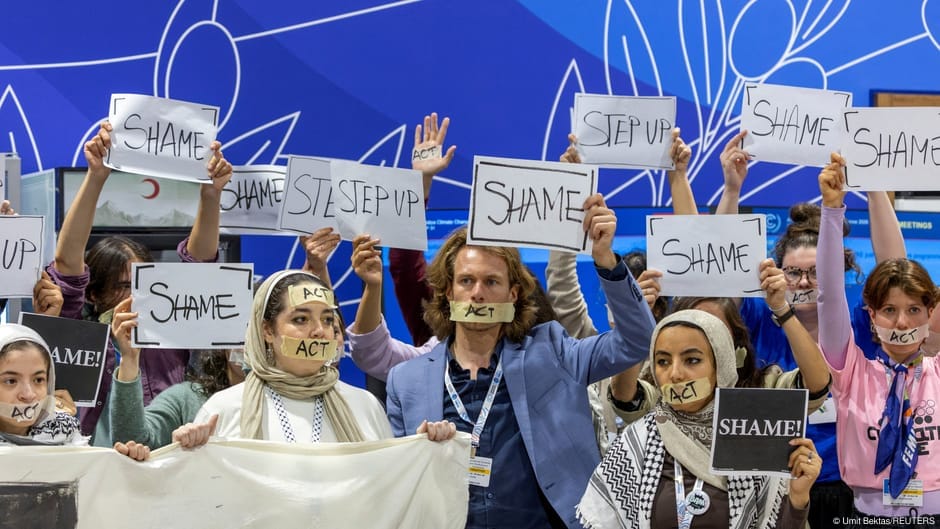
After two weeks of tough talks, the COP31 climate summit has closed without a consensus on how to quit fossil fuels or fund countries struggling to adapt to a hotter world.
Almost two days into overtime, climate talks in the Turkish city of Antalya have collapsed as countries led by the European Union rejected a deal that critics say undermines the shift away from planet-heating fossil fuels.
After two weeks of tough negotiations, the EU said it could not support the proposed agreement, known as the Antalya Pact, put forward by the COP presidency, saying it does not respond to the science.
"We will not endorse a cover decision that does not even mention fossil fuels, the driver of climate change. And we will not accept negotiating backward in time," said Irish climate minister Darragh O'Brien, speaking on behalf of the EU on Sunday.
He said adopting a decision that omitted fossil fuels would be "unconscionable" and risked "deepening the chasm between global commitment and the action required."
Panama also rejected the deal, describing it as a step backwards in addressing the climate crisis, and adding that any decision must acknowledge "the truth about the collective failure on 1.5 degrees Celsius [2.7 degrees Fahrenheit]." That is the threshold outlined in the 2015 Paris Agreement to avert runaway climate change.
"Those who contributed to this crisis ... must shoulder the responsibility to deal with it," the Panamanian delegation said.
The Marshall Islands, which faces an existential threat from sea level rise, formally objected to the cover decision, saying "we will not compromise our future to benefit fossil fuel interests." Chris Bowen, Australia's COP31 negotiating president said the breakdown in talks was very disappointing. Russia, however, supported the decision to leave out wording on accelerating a phaseout of fossil fuels, arguing that they are still a necessary power source and that each country should be able to determine its own pathway on how to cut emissions.
Pakistan and Ghana, defended the agreement as a necessary compromise in the spirit of multilateralism. "We need to build bridges not barriers," said the Pakistan negotiator.
The marathon talks, held at a time when the window is rapidly closing to avoid the escalating impacts of climate change, including drought, deadly heat and flooding, also saw major disputes over financing. Developing states blamed the collapse in talks on the EU and other wealthier nations for failing to scale up financing to help them adapt to climate-linked weather extremes and the damage they cause. The EU is the largest provider of climate finance and has resisted new adaptation finance targets.
Harjeet Singh of the Fill the Fund campaign accused wealthy countries of demanding greater climate ambition while refusing to stump up the cash to pay for it.
"You can't ask developing countries to transform their economies while they're drowning in disasters and debt," he added.
The final cover decision had proposed further discussions on "an implementation pathway for tripling adaptation finance by 2035" but without mentioning a figure. It noted that developing countries need some $300 billion annually for adaptation until 2035, and expressed concern about "the gap between climate finance flows and needs."
Outside formal negotiations, a separate initiative to Transition Away from Fossil Fuels (TAFF) has been gaining momentum.
Maina Talia, Tuvalu's minister for climate change and the environment, said TAFF was "moving beyond debating whether fossil fuels are simply mentioned in a text, to creating detailed plans for a global transformation."
At the same time, a growing number of states, including Ireland, Denmark, the Netherlands, France, Germany and Finland, have either completed or are working on so-called national roadmaps to wean themselves off fossil fuels. But Brandon Wu, director of Policy and Campaigns ActionAid USA, dismissed such plans as "meaningless" and "nothing more than restatements of inadequate existing policy" on the part of rich countries not stepping up on climate finance. "COP31 was one of the worst COPs ever, and it's because the EU and other developed countries came with zero spirit of solidarity, cooperation or compromise. They may as well have come to the COP shouting at vulnerable communities: 'we don't care if you die.'"
The rejected cover decision had recognized that electrification can deliver emissions reductions, improve energy security and expand access to energy.
It included a call to increase the share of electricity in final energy demand from around 20% now to 35% by 2035 — a proposal heavily touted by co-host Turkey. Still, about 75 countries, including solar powerhouse China, adopted the pledge outside of the formal negotiations. It is non-binding and does not specify whether that additional electricity must come from clean sources. Critics say this leaves open the possibility that expanded electricity demand could be met by fossil fuels.
The talks in Turkey marked the first time a COP was taking place under the explicit knowledge that global temperatures will exceed 1.5 degrees Celsius above pre-industrial levels. Countries were split on how to deal with that so-called "overshoot."
The cover decision had called on states to commit to limiting overshoot , acknowledging that every increment of warming above current levels would "result in increasingly adverse, and in some cases irreversible, impacts and risks to human and natural systems.”
It also recognized the need for "deep, rapid and sustained" emissions cuts and for action on ramping down potent greenhouse gas methane.
Another contenious issue at the talks and in the final draft decision was a call for "increasing" carbon capture and storage technologies that entails capturing CO2 and burying it. The text said the world should aim to reach "gigaton scale" by 2035.
Scientists say some carbon removal technologies will be necessary to curb emissions and bring temperatures back down. But critics argue they are unproven at scale, expensive and risk giving polluters an excuse to keep burning fossil fuels.
Vanuatu's climate minister Ralph Regenvanu said carbon capture and storage "had been singled out for special attention that it doesn't deserve."
The stakes were high at COP31. The summit followed a string of recent climate-related disasters, from deadly heat waves in Europe to a glacier collapse in Nepal that killed more than 1,400 people.
At the same time, geopolitical shocks that sent oil prices rising globally shifted the focus onto energy security and the future of fossil fuels.
Speaking near the end of the conference in Antalya, Ethiopian foreign minister Gedion Timothewos, who will preside over COP32, said his country aimed to "restore hope, rebuild trust and mobilize collective action" at the next summit to be held in 2027 in the Ethiopian capital Addis Ababa.
"We will work with you all to rebuild confidence in multilateral climate cooperation. This confidence must be earned through delivery. The decisions we take at COPs must advance climate action and implementation."
With reporting from Tim Schauenberg and Katharina Schantz in Antalya.
- climate
- consensus
- world
- talk
- country
- coal
- oil
- gas